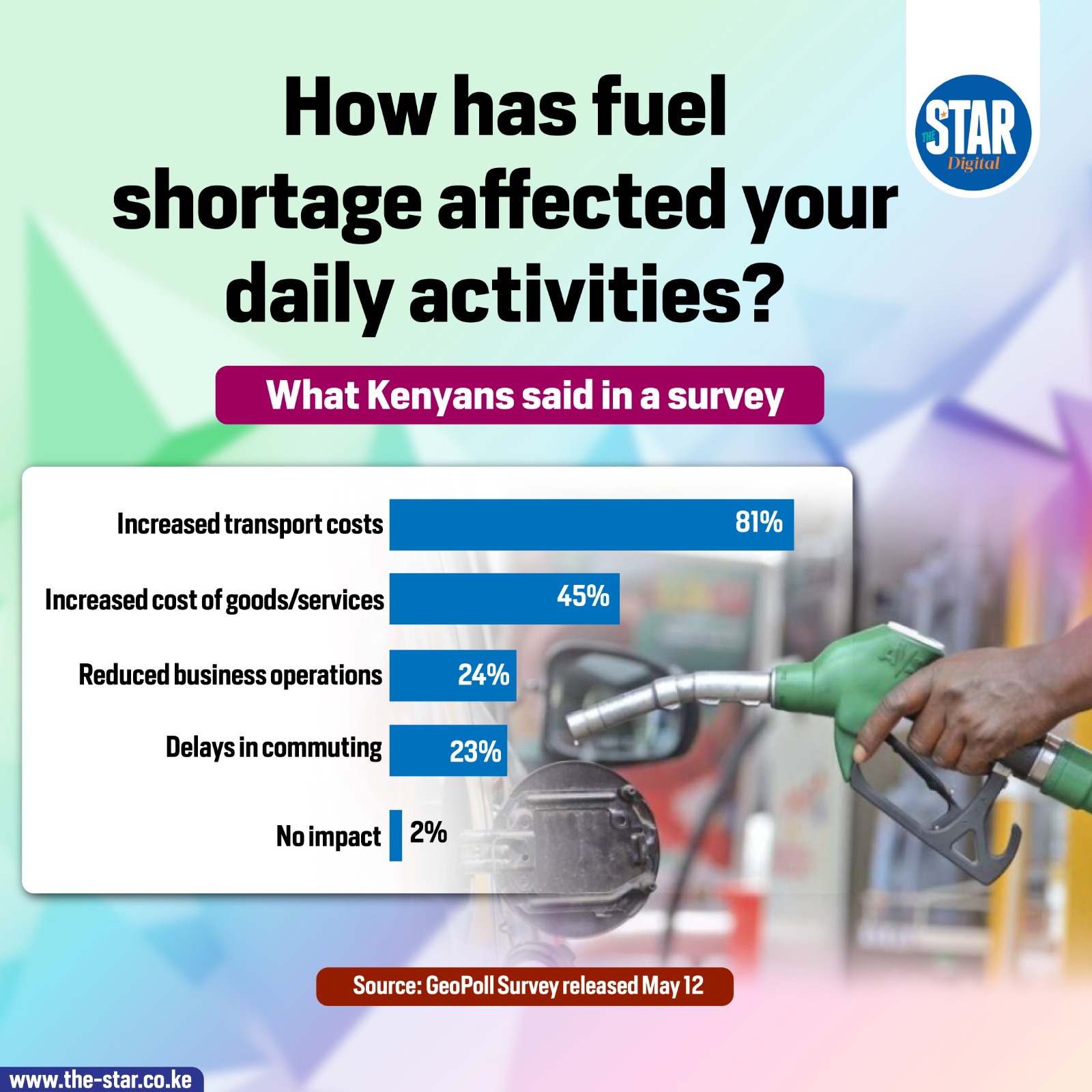
A severe fuel shortage continues to ripple through Kenya, dealing a heavy blow to citizens' wallets and disrupting daily life across the country. According to a recent GeoPoll survey released on May 12, the crisis has triggered a sharp rise in living expenses, with the transportation sector bearing the brunt of the shock.
A staggering 81 per cent of Kenyans reported facing increased transport costs as a direct result of the shortage. This spike in commuting expenses has triggered a domino effect across the economy, forcing 45 per cent of respondents to grapple with the increased cost of everyday goods and services. As fuel prices and transport overheads climb, businesses have passed the burden down to consumers, further straining household budgets.
Beyond the immediate financial toll, the shortage has created significant operational bottlenecks. Nearly a quarter of the population—24 per cent—noted that the crisis has forced reduced business operations, slowing economic activity. Commuters are also losing valuable time, with 23 per cent experiencing persistent delays in commuting as they navigate limited public transport options or long queues at petrol stations.
Amid the widespread disruption, only a microscopic two per cent of Kenyans reported feeling no impact from the shortage.
The findings underscore the deep interconnectedness of fuel availability with the broader economy, painting a stark picture of a nation heavily burdened by supply chain disruptions. For the vast majority of Kenyans, the crisis is no longer just a headline, but a daily struggle impacting their mobility, productivity, and purchasing power.

![[PHOTOS] The new Ngong –Naivasha Road viaduct](https://cdn.radioafrica.digital/image/2026/06/64d4f771-4432-4aee-ba3c-2f304c4436ec.jpg)









![[PHOTOS] 'Mr Speaker Sir' Gen Z protester in court](https://cdn.radioafrica.digital/image/2026/06/b3e62d8e-25c3-4780-90f9-4eb48b1ce8a7.jpg)