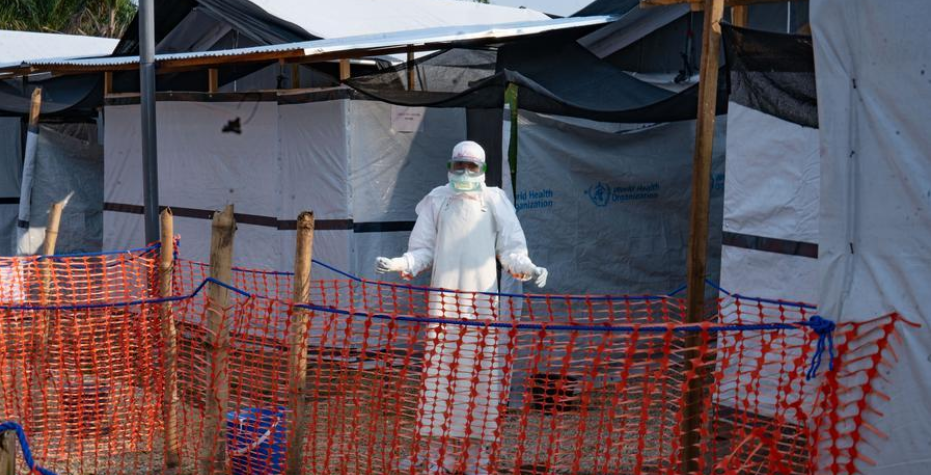
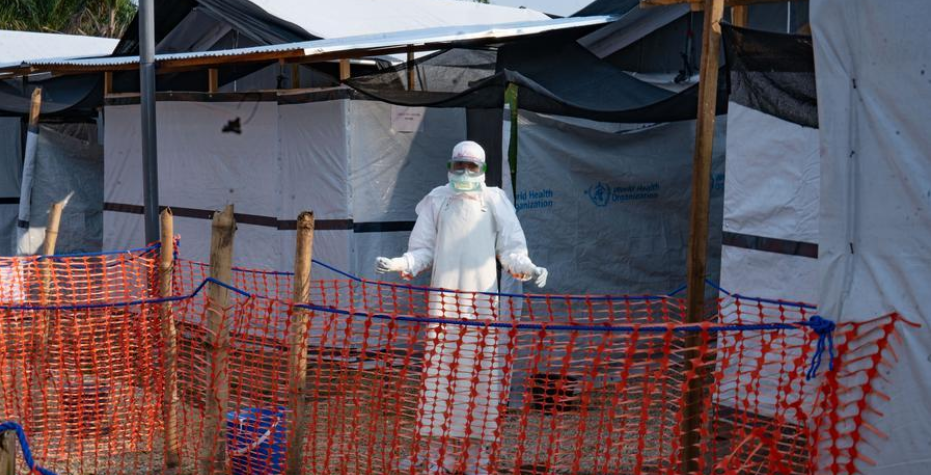
According to the World Health Organization, Ebola symptoms often appear suddenly and can worsen rapidly if treatment is not sought early.
The disease is caused by the Ebola virus and spreads through direct contact with infected bodily fluids or contaminated surfaces.
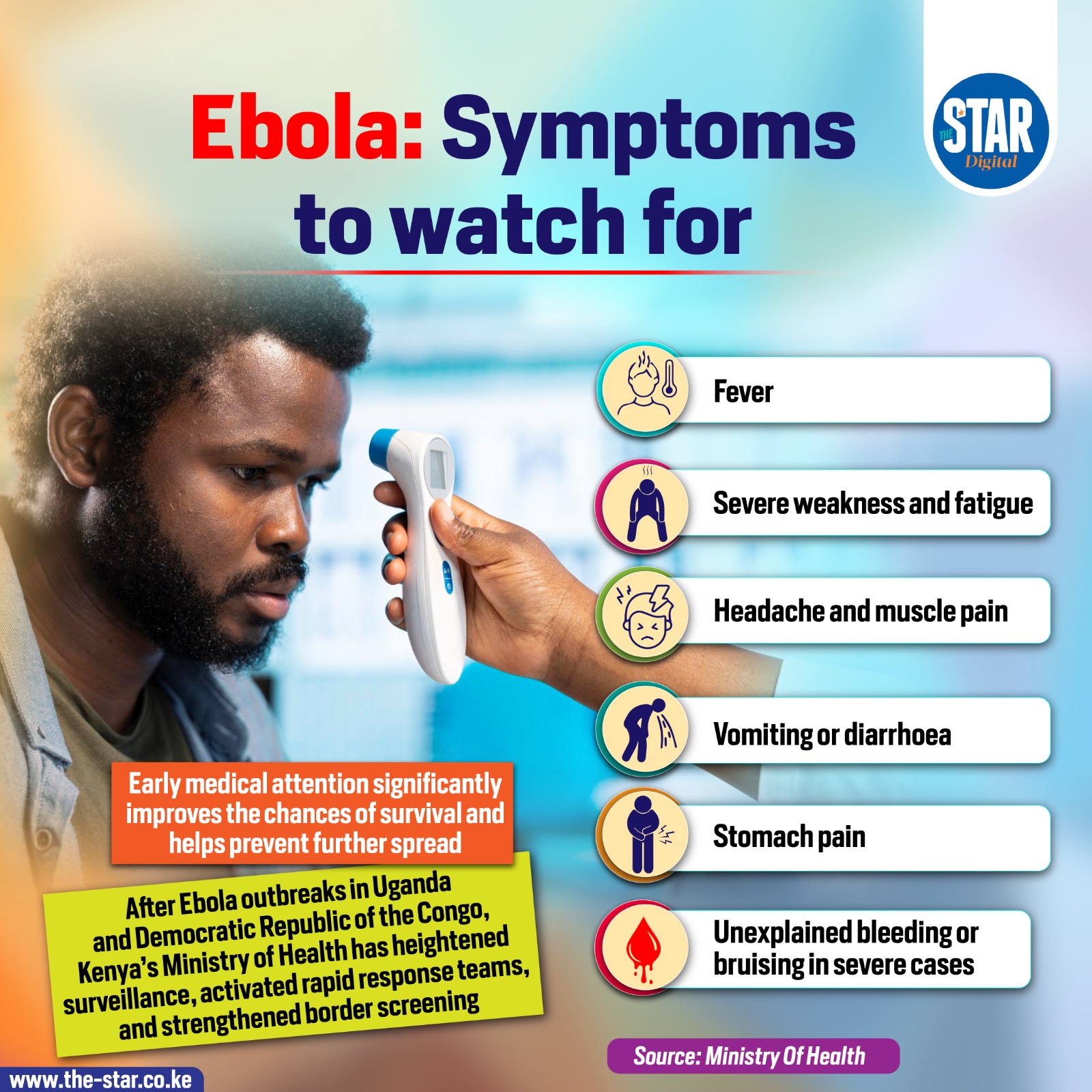
Some of the first signs to watch out for include high fever, severe headache, muscle pain, weakness and fatigue.
Patients may also develop sore throat, loss of appetite and joint pain in the early stages of infection.
As the illness progresses, symptoms can become more severe, including vomiting, diarrhoea, stomach pain and unexplained bleeding or bruising.
In some cases, patients may experience internal bleeding, bleeding from the gums or blood in stool and vomit.
The WHO advises anyone showing Ebola symptoms, especially after contact with a suspected case, to seek immediate medical attention.
Early diagnosis, isolation and supportive treatment greatly improve survival chances and help prevent further spread of the disease.

![[PHOTOS] The new Ngong –Naivasha Road viaduct](https://cdn.radioafrica.digital/image/2026/06/64d4f771-4432-4aee-ba3c-2f304c4436ec.jpg)











![[PHOTOS] 'Mr Speaker Sir' Gen Z protester in court](https://cdn.radioafrica.digital/image/2026/06/b3e62d8e-25c3-4780-90f9-4eb48b1ce8a7.jpg)