
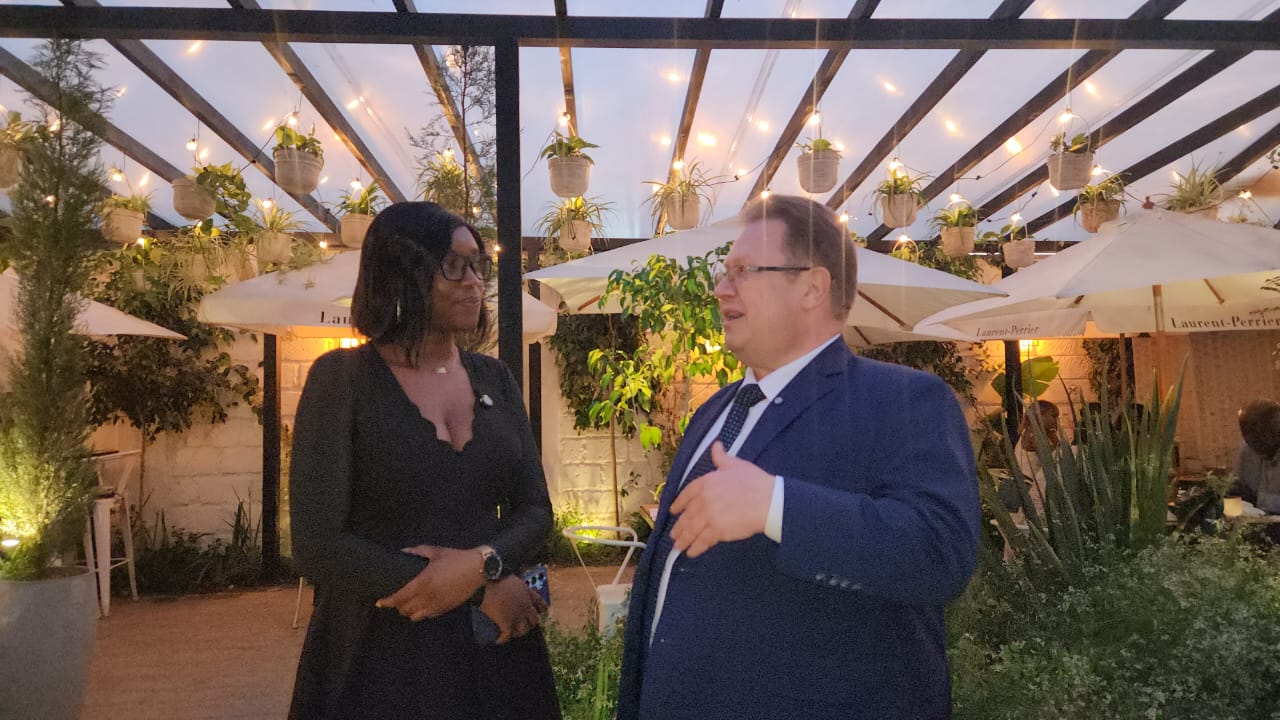
On a warm Nairobi evening inside a softly lit wine cellar, a select group of Kenya’s sommeliers, collectors, hoteliers, chefs and wine enthusiasts gathered with the quiet anticipation of people about to discover something unfamiliar yet exciting.
It was not a French, Italian or South African showcase — the worlds Kenya’s wine community is most accustomed to. Instead, the invitation had promised something different: a curated journey into the rapidly rising but little-known wine regions of Russia.
Organised by the Russian Embassy in Kenya, the tasting was far more than an ordinary swirl-and-sip affair. What unfolded was a deep immersion into centuries of history, forgotten grapes, revived traditions and a surprising freshness that many in the room admitted they had never associated with Russia.
Among the guests was Russian Ambassador Vsevolod Tkachenko, whose passion for his country’s wine sector helped colour the evening with stories of ancient beginnings and modern reinvention.
Addressing the audience with warmth and humour, he anchored the event in a history few in Kenya had ever heard.
“The Russian winemaking industry is quite young but at the same time, it is very ancient. Wine was produced in the territory of modern Russia for more than 1,000 years since the ancient Greeks came to the shores of the Black Sea,” he said.
“They found fertile soils and started to produce wines in the ancient city. They then spread the vineyards to the East and North.”
From Crimea’s breezy coastline to the ancient terraces of the Don River and the dramatic mountain slopes of the North Caucasus, the evening’s wines came from places remote to Kenya yet connected through the universal language of taste.
And so began a sensory journey — sparkling, rosé, aromatic whites, tropical-leaning whites and deep reds — all woven with history and paired with dishes designed to reveal their character.
SIX WINES, SIX STORIES
The first pour of the evening was a sparkling Brut from Vino Valeriy Zakharyin, made from Kokur, one of Crimea’s oldest white grape varieties. To many in the room, the name alone was unfamiliar. But as the pale straw bubbles danced upward, the grape’s ancient legacy began to speak.
Fine, delicate streams of bubbles rose elegantly. On the palate came crisp green apple, quince and white flowers, lifted by hints of freshly baked brioche.
Experts praised its mineral character as sharp, refreshing, almost sea-kissed. The wine’s lively structure, shaped by traditional bottle fermentation and 18 months on lees, offered depth and finesse. Kokur, cultivated since Greek colonisation, felt like an ancient voice revived.
The second wine, a rosé from Usadba Sarkel, glowed with a salmon tint that captured the room’s attention even before the first sip. Crafted from Denisovsky and Tsvetochny grapes grown along the Don River Valley, the 2022 vintage reminded many of Provence: wild strawberry aromas, rose petals, a sparkle of white pepper, and a dry, elegant palate layered with red currant and grapefruit zest. Using the saignée method, the winemakers created a rosé with deeper colour and a concentrated, expressive core. The wine carried whispers of the region’s heritage — river terraces shaped by centuries.
Then came a white wine that quickly became the evening’s most talked-about pour: the 2024 Sibirkovy from Vedernikov Winery. Once nearly extinct, this indigenous grape from the Lower Don returned with luminous golden colour and expressive aromas of pear, lime zest and acacia blossom.
On the palate, it revealed orchard fruit wrapped around a mineral core, finishing with a faint spicy-bitter lift. An expert captured its charm perfectly: “It is a grape once nearly extinct and the region, considered the cradle of Russian wine culture, has documented winemaking since 1756.”
Crimea returned to the spotlight with a wine made from Vostorg, a grape originally bred as a table fruit during the Soviet era. The Zhakov Estate 2023 vintage shimmered lightly with peach, pineapple, citrus and mountain herbs. Soft, rounded and fresh, it charmed the room with its gentle acidity. The story of its legal reclassification, fought for by winemakers, drew fascination. As one reviewer noted, "Its name says it all since Vostorg means ‘delight’ and that is exactly what it delivered."
The first red of the evening brought weight and history. The 2020 Tsimlyansky Black from Vina Arpachina offered black cherry, plum, blackberry, spice and tobacco. Once famed for sparkling reds enjoyed by the Tsars, this still version showed its nobility through velvety tannins and balanced acidity. Experts praised the still wine for showcasing what they called its noble potential.
The finale arrived with quiet ceremony: a Krasnostop Zolotovsky from Soberbash Winery, often called the King of Don grapes. Deep garnet in colour, it opened with dried black currants, prunes, cherries and undertones of chocolate, coffee and tobacco.
One reviewer, echoing a popular Russian phrase, said, “The grape is the King of Don grapes, admired for its thick skins, high tannins and strong ageing potential.”
By the time glasses were set down, a theme had crystalised: Russian wines may be unfamiliar, but their stories are profound.
A WINE INDUSTRY REBORN
While the tasting celebrated flavour, aroma and craftsmanship, Amb Tkachenko’s remarks painted a broader picture of a wine culture rebuilding itself after centuries of change.
“I am happy to be here and even more happy to introduce some Russian wines to the Kenyan public and to the famous sommeliers of Nairobi,” he said.
“Yes, I am surprised as well as you, because Russian wines in Kenya is something extraordinary.”
Although Russia’s modern wine industry is young, he said, its roots go deep. “Russian winemaking has come a long and complicated way, from ancient traditions to its modern revival,” he said, tracing vineyards back to ancient Greek colonies along the Black Sea, including Crimea and Taman.
He reminded guests that wine has been produced “in the territory of modern Russia for more than a thousand years, since the ancient Greeks came to the shores of the Black Sea.”
But the true revival, he said, only gained momentum in the last 30 years.
During the Soviet era, wine production leaned heavily toward quantity rather than identity. “The industry became widespread: large state farms, scientific research and grape variety selection appeared. However, the main focus was on quantity rather than terroir and style,” he said.
The 1990s ushered in a crisis, but what followed was a renaissance. Private wineries emerged. Technology improved. Standards rose.
In 2014, Russia established PGI and PDO protections. By 2019, the Wine Law laid the foundation for a modern, quality-driven industry.
Tkachenko’s message to Kenya was clear: revival is possible when innovation respects tradition.
“I know that you think Russia is famous only for growing vodka, but it's not so,” he said.
“For the last 30 years, we paid a lot of attention to reviving the winemaking industry, bringing in new technologies. Hundreds of new wineries emerged, and now they are producing many very interesting sorts of wines.”
He championed one principle above all: the preservation and celebration of indigenous grapes.
“For me, the best one is the Divnomorskaya Estate. They specialise in indigenous grapes from the Russian soil, not imported, not Pinotage, not Cabernet but indigenous ones,” he said.
“I can tell you a thousand words about them, but it's better to make one sip.”
Delivered with a smile, the line became the evening’s refrain.
A CULINARY BRIDGE
Later, at Cave à Manger along Nairobi’s bustling culinary circuit, a second event deepened the city’s introduction to Russian wine. The Russian Embassy tasting transformed the restaurant into a sensory classroom where wine met food, identity met curiosity and Moscow met Nairobi through flavour.
The evening followed a structured journey, with each wine paired intentionally with a dish designed to reveal its personality.
Chicken Liver Pâté, paired with Kokur Classic Brut, let the wine’s acidity cut through the pâté’s richness. The sparkling Brut’s green apple and quince notes brightened the rhubarb ginger jam, instantly proving the finesse of Russian bubbles.
Then came a Heirloom Tomato Caprese with buffalo mozzarella, paired with Usadba Sarkel Rosé, whose wild strawberry and red currant flavours echoed the freshness of basil and tomatoes. The room softened into appreciative murmurs.
A deep-fried Camembert met its match in the aromatic Sibirkovy, whose pear and lime zest notes swept neatly across the cheese’s creamy richness. It was a palate-cleansing breeze between bites.
Mediterranean Snapper on wasabi mash found harmony with the fruity Vostorg white, which offered peach, pineapple and floral tones that intertwined with lemon butter and coriander.
A plate of Black Angus Sirloin arrived next, paired with Tsimlyansky Cherny Red — silky, expressive and layered with black cherry and spice. Its soft tannins balanced the steak’s depth and the mushroom brandy sauce.
The finale was Chocolate Cremeaux with salted caramel, paired with Sober Bash Red Wine whose bold dried fruit, chocolate and tobacco undertones held their own against the dessert’s intensity.
In six dishes and six glasses, Nairobi discovered not just Russian wine, but Russian character.
LESSONS FOR KENYA
Throughout the events, one question lingered: What can Kenya, still in its early stages of wine development, learn from Russia’s story?
For the ambassador, the answer was straightforward.
Russia succeeded by blending indigenous grapes with modern technology, protecting terroir through law, investing in research, nurturing private wineries and building wine tourism.
Kenya, he suggested, could follow a similar path.
With vineyards already emerging in Naivasha, the Rift Valley and parts of Central Kenya, and with microclimates as diverse as Russia’s, the ambassador believes Kenya has the potential to craft a wine identity of its own.
“We have many new and promising wines in Russia,” Tkachenko said, emphasising that diversity and experimentation are essential.
Wine tourism, a growing force in Russia, could become a strong pillar in Kenya’s own approach, connecting wine to landscapes, culture and travel.
“Russian winemaking continues to develop its own style and strives to take its rightful place on the world wine map,” he said.
“I hope that today's event will help our Kenyan friends to taste the sun and fertile products of the sun and fertile soils of Russia.”
The ambassador’s lighter moments drew laughter, too. “On a normal day, a couple of glasses will do for me of course. However over the weekend, four is not bad,” he joked, earning warm applause.
By the end of the tastings, one sentiment united the guests: Russian wines may be new, but they arrive with stories worth hearing and flavours worth exploring.
Experts described the wines as “a showcase of distinctive terroirs, revived traditions and grapes that have survived centuries”. For Kenyan wine lovers eager to explore beyond traditional European labels, the evening revealed a new frontier.
The ambassador’s message echoed through the night: respect tradition, embrace innovation, protect identity and let wine tell the story.
“I decided to bring only autochthonous traps, wine made from autochthonous grapes. Therefore, it is for your judgement. I hope you will enjoy the evening,” he said.
As glasses were raised for a final toast, guests lingered, discussing pairings, comparing notes and imagining how Kenya’s own wine future might unfold.
For now, Russia has extended a hand through culture, history and taste. And Kenya, with its rising appreciation for wine, appears ready to take the journey — one sip at a time.

![[PHOTOS] The new Ngong –Naivasha Road viaduct](https://cdn.radioafrica.digital/image/2026/06/64d4f771-4432-4aee-ba3c-2f304c4436ec.jpg)










![[PHOTOS] 'Mr Speaker Sir' Gen Z protester in court](https://cdn.radioafrica.digital/image/2026/06/b3e62d8e-25c3-4780-90f9-4eb48b1ce8a7.jpg)