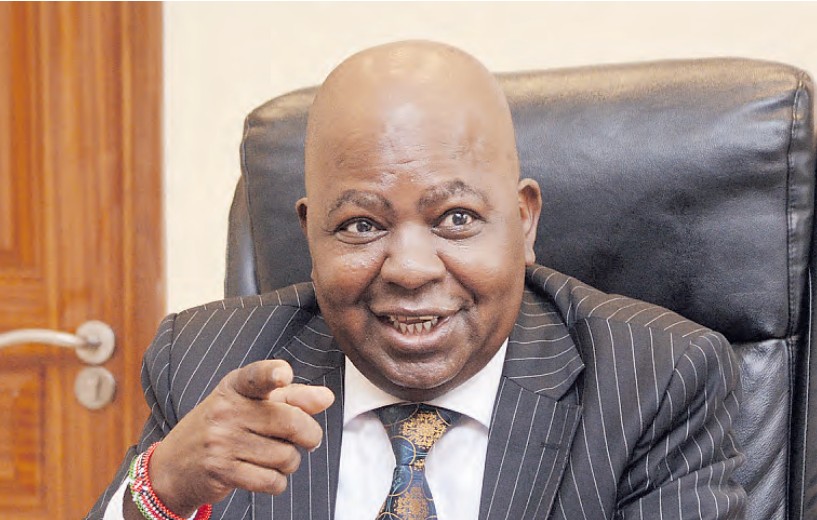
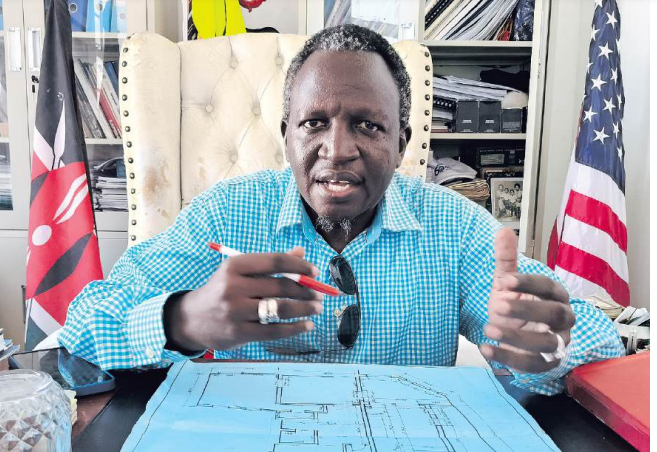
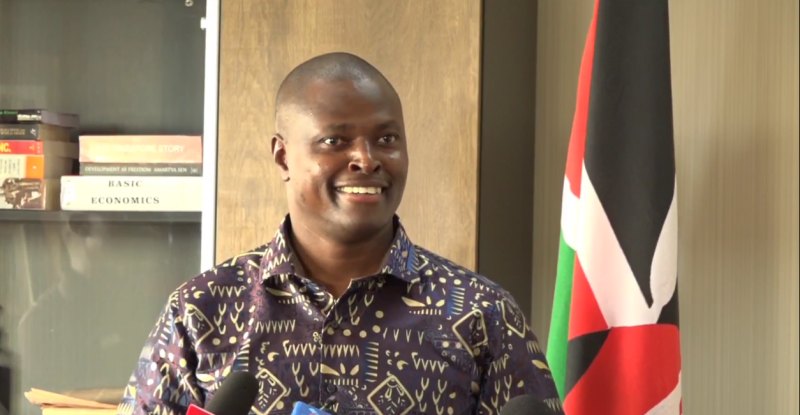
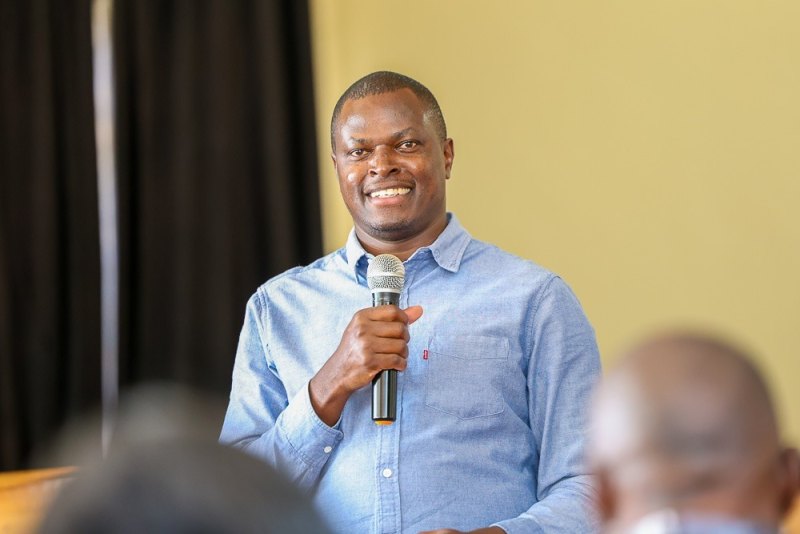
His hand gestures resemble those of
American rap mogul 50 Cent, a subtle
indication of the influence hip hop
music on him.
He has two rap albums under his
belt, with 32 songs to his name, produced both in Kenya and in Germany,
and has five music videos.
He once curtain raised for American rap group Lost Boys when they
came to Kenya and in Mombasa.
However, Jomeli Malidadi is not
your ordinary music artiste.
Born David Jomeli, the civil-structural engineer has many gifts and can
rap, draw caricatures and design
buildings with the precision of vernier callipers.
The nickname Malidadi was given
to him back in college because of his
organisational skills.
“I would arrange things and make
them look lovely in a design that just
came to mind. People used to call
me to arrange rooms and desks for
them and they would look ‘Malidadi’— which is Swahili for marvelous,”
Jomeli says.
The name, which he was given
while pursuing his diploma in building construction at the then Mombasa
Polytechnic (now the Technical University
of Mombasa), stuck and would be
part of his identity to date.
“That is the same time I was actively
doing music as a hobby. I used my music to get some money to buy books.
I remember I bought an engineering
mathematics book which was very
expensive then and everybody wondered how I managed,” Jomeli says.
After completing his diploma, he
got a stint as a radio presenter at 91.5
Pulse FM in Mombasa.
It was one of the latest radio stations then and had stars like Janet
Mbugua and Chiko Lawi, now household names.
“I started by doing Hip Hop shows
on Sundays before I was given a
breakfast show,” he said.
By this time he had established a
fully equipped recording studio of
his own.
Although he was into rap music, he
somehow felt he could not continue
doing it as he felt he would make
more money from architecture than
rapping.
“One of the reasons I got into radio
is because of the frustrations I saw in
fellow artistes who were taking music
as their careers and I felt it was not
for me,” he says.
He then upgraded his education
and earned a Bachelor of Science Degree
in Civil Engineering course at TUM,
graduating with a second upper.
That is when his career took off,
starting as a contractor for several
years while gaining valuable experience.
“The National Industrial Training
Authority had a World Bank project that I was incorporated in, giving
me a consultancy job where I started picking up.
“I started training contractors for
National Construction Authority
which I still do to date,” Jomeli says.
He is now a technical director
at the Kenya Federation of Master
Builders and a board member of the
Joint Building Construction Council
where he was nominated by the Institution of Engineers of Kenya.
Jomeli is also a brand ambassador
of the IEK.
“We are trying to make engineering
interesting,” he says.
Last week, he was at TUM together
with the Engineers Board of Kenya
where they were talking to engineering students on the process of registration as an engineer in Kenya and
how they can move from graduate
engineers, professional engineers to
consultant engineers eventually.
Jomeli says he likes merging the
two fields of engineering and music
because it challenges his mind to do
better every day.
He says international rap artistes
like Rick Ross and Ice Cube also
have university degrees and so hip
hop, contrary to popular belief, is not
only for education failures.
“There is this wrong mentality that
music is for people who have not gone
to school. Rick Ross has a degree
from Howard University. Rowan
Atkinson (Mr Bean) has a Masters
Degree in Electricals,” he says.
During his free time, Jomeli says, he
draws caricatures to unwind.
“I may sit at a hotel and just draw
sketches of the scenery I see at the
beach, the camels passing and it just
gives me joy and peace of mind. I am
gifted at drawing,” he says.
He says for one to do structural
engineering, they have to do a lot of
calculations.
That is why he is opposed to the
proposal to scrap off maths as a compulsory subject in high school.
It will affect the people who might
later want to do engineering as one
cannot take engineering without
physics, chemistry and math.
“By the time I’m giving you a detailed drawing, I have done calculations of dead loads, imposed loads,
I’ve looked at the earth quick loads,
if there are dynamic loads probably
there.
“All those and using the code of
practice to come up with a certain
design,” Jomeli says.
He says his love for drawing had
pushed him to become an architect
but a chance came up to do civil engineering and he grabbed it without
hesitation.
Funny enough, he did not want to
study structural engineering because
of its demanding nature but somehow found himself pursuing it.
“If you ask me today why I chose
structural engineering I cannot tell
you,” the Alidina Visram High School
alumnus says.
He says if someone told him 20
years ago that he would be a civil structural engineer today, he would
have laughed at them.
His parents’ strictness helped him
become who he is today. The rod, he
says, is the one that kept him in the
straight and narrow.
“Today, it is difficult to use the rod
on our children because they are just
different. You cannot beat them, you
cannot do anything that was done to
us. They will sue you,” he says.
The effect is more indiscipline cases
today than in the past.
Jomeli says he is now planning to
pursue a PhD.
“Because I see myself in future
getting into academics and doing research and all these things that can
make our country go into a second-world country status,” he says.
“I am looking at the Bottom Up
Economic Transformation Agenda,
Vision 2030, the 17 Sustainable Development Goals and most importantly the fourth medium term goal
2023-2027,” he says.
Jomeli now looks at the training gaps in the country’s Technical
Training Institutes and universities, and construction industry to push Kenya
forward.
The engineer was part of the formation of the National Building
Code 2024 and makes curricula
for different institutes.