The political landscape in Nairobi is undergoing a dramatic transformation, threatening the dominance ODM has enjoyed in the capital for nearly two decades.
For years, Nairobi has been regarded as one of ODM’s strongest political bastions.
The city consistently delivered overwhelming presidential votes for the party’s longtime leader, Raila Odinga (now deceased), while also electing a majority of ODM-backed MPs, senators and MCAs.
But as political alliances shift ahead of next year's the general election, ODM finds itself confronting its toughest battle yet.
The death of Raila, the collapse of the Azimio coalition and the emergence of new political formations have combined to reshape Nairobi’s political equation.
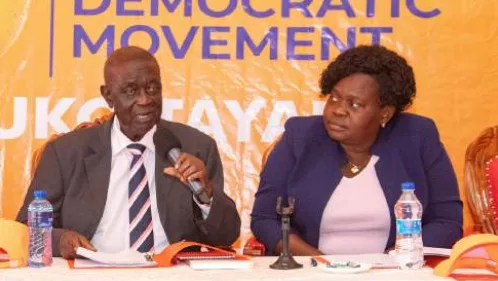
ODM leaders insist the party remains firmly in control.
“Nairobi is an ODM zone. We will retain our seats and win even more in 2027. We are strategising and consolidating our support base in all the 17 constituencies,” Nairobi ODM chairman George Aladwa said.
ODM national chairperson Gladys Wanga has been equally confident.
“As ODM, we are united and the party is strong here in Nairobi. As we head to the 2027 elections, all seats in Nairobi belong to ODM,” she said.
“When we say the MCA is ODM and the MP is ODM, we will also organise ourselves to win even more parliamentary seats than we currently hold.”
Political observers, however, say the optimism may not match the realities on the ground.
Political analyst Martin Andati argues that ODM’s electoral machine was built around Raila’s personal appeal and a coalition of major voting blocs that may no longer remain intact.
“ODM’s strength in Nairobi was never just about the party. It revolved around Raila. He attracted support from Luos, Luhyas, Kambas, Kisiis and many other communities. That coalition is no longer guaranteed,” Andati said.
The numbers from the 2022 general election illustrate just how dominant ODM once was.
The party won eight of Nairobi’s 17 parliamentary seats — Westlands, Makadara, Dagoretti North, Embakasi East, Kibra, Mathare, Ruaraka and Lang'ata.
ODM also secured the Senate and Woman Representative seats, giving the party 10 of the available 20 seats.
Its Azimio coalition partners added four more constituencies, with Jubilee winning Kamukunji, Starehe and Embakasi West, while Wiper retained Embakasi South.
President William Ruto’s UDA, under Kenya Kwanza, won the governor’s seat and four constituencies — Dagoretti South, Roysambu, Embakasi North and Embakasi Central.
In the presidential contest, Raila defeated Ruto in Nairobi by 767,395 votes against 561,775.
Those victories reflected more than ODM’s organisational strength.
Raila’s popularity cut across political parties and ethnic communities.
He successfully brought together Luo, Luhya, Kamba, Kisii and sections of other voting blocs under the Azimio coalition, giving ODM a commanding advantage in the capital.
That coalition has since fractured.
ODM has effectively parted ways with former Azimio allies, including Wiper, Jubilee and DAP-Kenya.
At the same time, the party has moved closer to President Ruto through a working political arrangement with UDA.
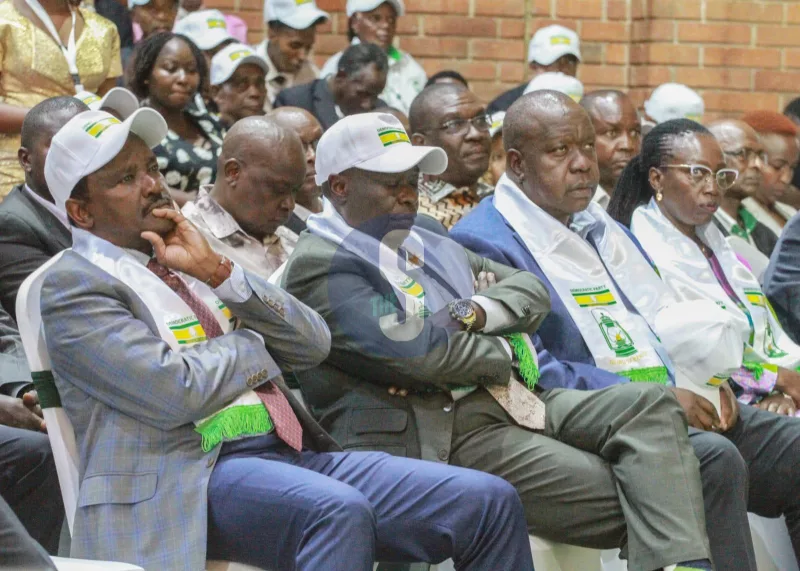
The former allies are now regrouping under the united opposition coalition alongside DCP, led by former Deputy President Rigathi Gachagua, following his dramatic fallout with Ruto and subsequent impeachment in 2024.
The new alliance significantly alters Nairobi’s electoral arithmetic.
Wiper commands a substantial share of the Kamba vote, one of Nairobi’s largest voting blocs after the Kikuyu and Luhya communities.
DAP-Kenya enjoys influence among Luhya voters, while Jubilee retains pockets of Kikuyu support across the city.
DCP, meanwhile, has rapidly become the main vehicle for mobilising the Kikuyu vote while simultaneously attracting leaders from across the opposition.
Analysts say the strategy mirrors the coalition politics that once benefited ODM.
Instead of ODM bringing together Nairobi’s dominant communities, the opposition is now attempting to unite them under a new political banner.
The shift has also exposed ODM to internal cracks.
Embakasi East MP Babu Owino has increasingly distanced himself from the party.
The outspoken second-term legislator is preparing a bid for Nairobi governor and is expected to contest outside ODM.
His departure presents a major challenge for the party in Embakasi East, a constituency where his personal popularity has often outweighed party affiliation.
Political observers believe any candidate endorsed by Babu would stand a strong chance of retaining the seat, regardless of the party ticket.
Dagoretti North is also emerging as another potential flashpoint.
A political rivalry is brewing between area MP Beatrice Elachi and Kileleshwa MCA Robert Alai, who is reportedly preparing to challenge her for the constituency.
The seat has traditionally drawn support from Luhya and Kisii voters, communities whose dominant political parties are now aligning with the opposition.
Several other ODM-held constituencies are also becoming increasingly competitive.
Westlands, Makadara and Mathare have diverse voting populations comprising Luos, Luhyas and Kikuyus, making them vulnerable to shifting coalition politics.
The battle is equally intense in constituencies currently held by Jubilee.
Embakasi West MP Mark Mwenje has declared his intention to seek re-election on a DCP ticket.
Gachagua recently disclosed details of their meeting.
“Mark Mwenje informed me he had been instructed by his supporters to defend his seat next year under the DCP Party ticket,” Gachagua posted on social media after hosting the MP at his Wamunyoro residence.
The move signals that the opposition intends to consolidate rather than split its vote in Nairobi.
The race for Nairobi governor presents perhaps ODM’s biggest challenge.
Incumbent Governor Johnson Sakaja is expected to defend the seat on a UDA ticket.
Babu has declared his interest, while Embakasi North MP James Gakuya is positioning himself as the DCP candidate.
The three are widely viewed as early frontrunners.
ODM, by contrast, has yet to produce a candidate with comparable citywide appeal.
Only Aladwa has openly expressed interest in seeking the party’s nomination.
The Senate race also reflects the changing political dynamics.
Nairobi Senator Edwin Sifuna has emerged as one of the leading voices questioning ODM’s current direction through his Linda Mwananchi movement.
His growing national profile has fuelled speculation that he may pursue higher office instead of defending his Senate seat.
Should Sifuna opt out, ODM would face the difficult task of identifying a successor capable of retaining one of its most visible positions in the capital.
The party also confronts uncertainty in the Woman Representative contest.
Two-term Woman Representative Esther Passaris has announced she will not seek another term.
Former nominated Senator Millicent Omanga, who has since left UDA for DCP, is among the early names being mentioned as potential contenders.
ODM has yet to unveil a clear successor.