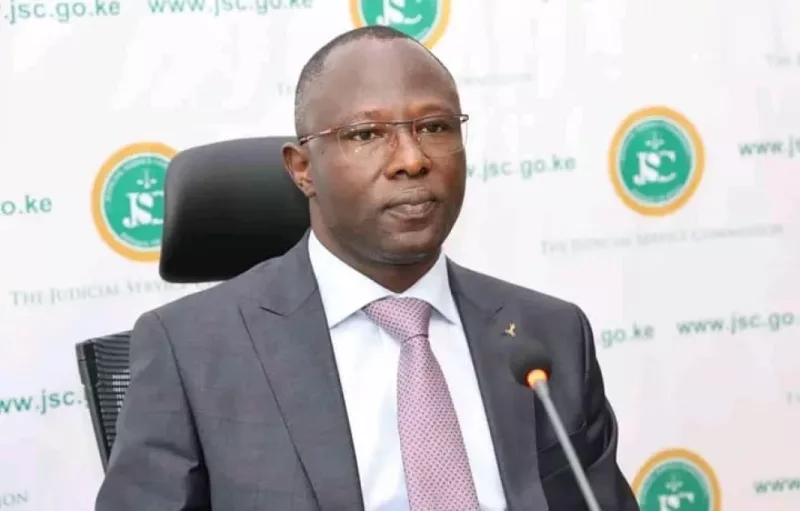
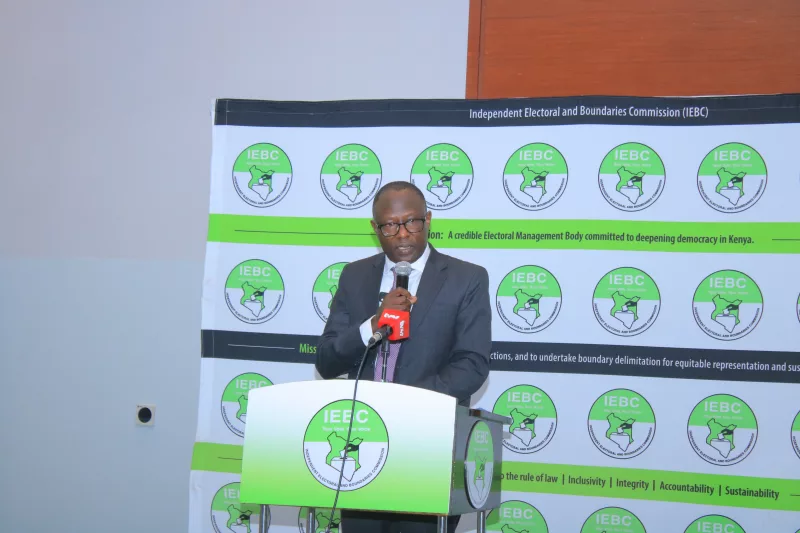
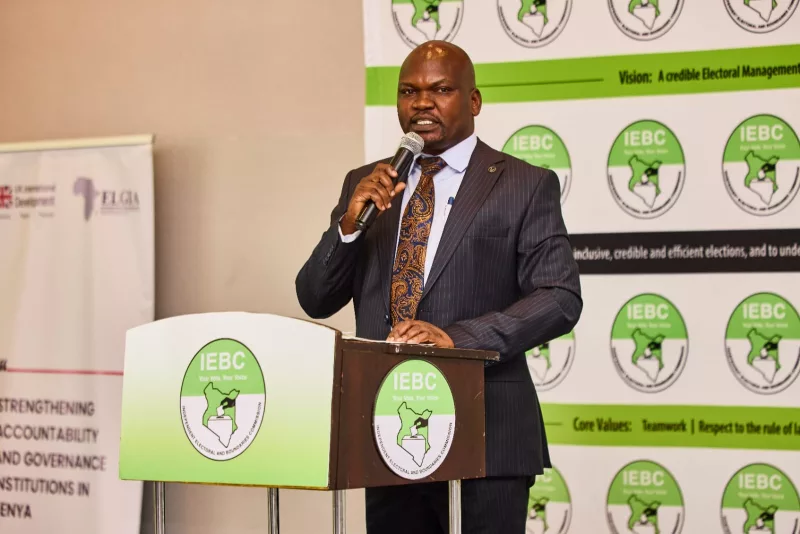
 IEBC Director of Legal Services Chrispine Owiye during the launch of the report on July 8 /IEBC
The Independent Electoral and Boundaries Commission (IEBC) has revealed that it resolved 323 pre-election disputes within just 10 days during the 2022 general election period, highlighting the speed and efficiency of its dispute resolution mechanism.
The commission said the disputes were handled by its Dispute Resolution Committee (DRC), which was established under Section 74 of the Elections Act to determine disputes arising from the registration of candidates before the August 9, 2022 general election.
Presenting an overview of the IEBC's dispute resolution process Thursday, the commission explained that the framework was guided by Article 88(4)(e) of the constitution and the Elections Act, which empower it to settle electoral disputes relating to nominations before elections.
The commission said the election period was officially gazetted on January 9, 2022, setting timelines for various electoral activities, including the registration of candidates.
It said a total of 323 complaints were lodged before the DRC during the nomination period and all were heard and determined within the 10-day statutory deadline provided under the Elections Act.
According to the commission, the experience gained during the 2022 electoral cycle has provided a strong foundation for strengthening future pre-election dispute resolution.
The report notes that the committee worked under immense pressure to hear and determine all disputes within the legal timelines while ensuring parties were accorded a fair hearing.
"The committee heard and determined a total of 323 complaints that were lodged with the IEBC-DRC within 10 days. The members of the commission, staff and external counsel worked professionally within the legal framework to dispense with all matters filed," the report states.
IEBC said the disputes covered a wide range of issues, including candidate eligibility, party nominations and compliance with electoral laws.
The commission said in developing its dispute resolution framework, it relied on the provisions of the Elections Act and the Rules of Procedure on Settlement of Disputes to ensure consistency and fairness.
However, the commission acknowledged that several challenges emerged during the process, prompting recommendations for reforms ahead of future elections.
Among the issues identified was the strict 24-hour timeline for filing complaints after a dispute arises.
IEBC observed that the period is too short for complainants to gather evidence, prepare pleadings and, where necessary, instruct legal counsel.
The commission has recommended extending the filing period to 48 hours to allow parties sufficient time to prepare their cases while maintaining efficient electoral timelines.
Another challenge involved disputes over compliance with Section 43(5) of the Elections Act, which requires public officers intending to contest elective seats to resign within the prescribed period.
The commission noted difficulties in verifying resignation documents presented by some aspirants and recommended requiring former public officers to produce both resignation letters and certificates of service as proof of compliance with the law.
IEBC also raised concerns over disagreements on the exact time candidates reported to registration centres for clearance, saying differing personal watches occasionally led to disputes over whether the 4 pm deadline had lapsed.
To address the issue, the commission recommended enhanced sensitisation of candidates on the importance of observing gazetted timelines and arriving early for nomination clearance.
The report adds that lessons from the 2022 electoral cycle will help improve the commission's dispute resolution framework and strengthen the credibility, transparency and efficiency of future elections.