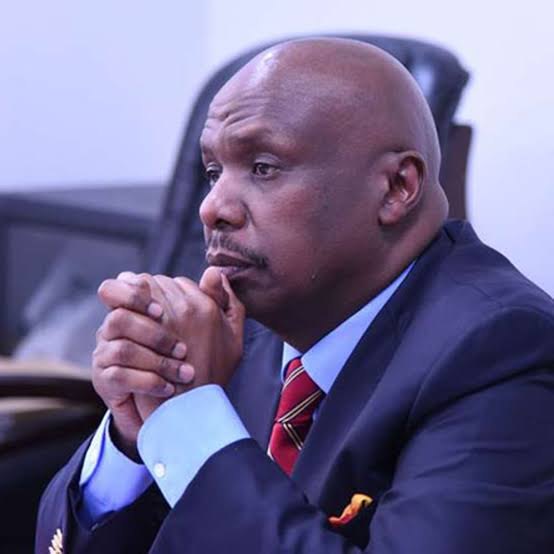
 A photo collage of Embakasi East MP Babu Owino and his Belgut counterpart Nelson Koech/
Embakasi East MP Babu Owino has emerged as Kenya's best-performing Member of Parliament in the latest Infotrak survey, while his Belgut counterpart, Nelson Koech, has been ranked among the country's top legislators after posting one of the highest approval ratings nationwide.
The nationwide survey, conducted between January and May 2026, ranked Babu first with an approval rating of 80 per cent, followed by Kabuchai MP Majimbo Kalasinga at 78 per cent and Taveta MP John Bwire at 76 per cent.
Koech, who represents Belgut Constituency, scored 73 per cent, tying with Kiharu MP Ndindi Nyoro, Kimilili MP Didmus Barasa, Mogotio MP Reuben Kiborek and Keiyo South MP Gideon Kimaiyo among the country's top-performing MPs.
Others in the national top tier include Aldai MP Marianne Kitany, Samburu East MP Jackson Lekumontare, Wundanyi MP Danson Mwashako and Mumias East MP Peter Salasya, who each recorded 72 per cent.
In the Rift Valley, Koech emerged among the region's best performers alongside Reuben Kiborek, Gideon Kimaiyo and Samburu West MP Josephine Lesuuda, all of whom attained ratings above 70 per cent.
Kabuchai MP Majimbo Kalasinga topped the Western region with 78 per cent, ahead of Kimilili MP Didmus Barasa (73 per cent) and Mumias East MP Peter Salasya (72 per cent).
Khwisero MP Christopher Aseka ranked fourth with 70 per cent, while Emuhaya MP Jeremiah Milemba and Ikolomani MP Bernard Masaka tied on 69 per cent.
In Nairobi, Babu led the rankings with 80 per cent, followed by Westlands MP Tim Wanyonyi (65 per cent), Embakasi Central MP Benjamin Gathiru Mejjadonk (63 per cent) and Embakasi North MP James Gakuya (61 per cent).
Uriri MP Mark Nyamita emerged as Nyanza's top performer with 71 per cent.
He was followed by Awendo MP John Walter Owino, Suna West MP Peter Masara and Ugenya MP David Ouma Ochieng, who each scored 70 per cent, while Alego Usonga MP Samuel Onunga recorded 68 per cent.
At the Coast, Taveta MP John Bwire led with 76 per cent, ahead of Wundanyi MP Danson Mwashako (72 per cent), Changamwe MP Omar Mwinyi (70 per cent) and Nyali MP Mohammed Ali (69 per cent).
Rabai MP Anthony Kenga Mupe completed the regional top five with 65 per cent.
In the Eastern region, Mbooni MP Erastus Nzioka ranked first with 71 per cent.
He was followed by Kathiani MP Robert Mbui and Chuka/Igambang'ombe MP Patrick Munene Ntwiga, who both scored 70 per cent, while Kitui Central MP Makali Mulu registered 68 per cent.
Nyoro led Central Kenya with 73 per cent, alongside Mukurweini MP John Kaguchia, who posted the same score.
They were followed by Kikuyu MP Kimani Ichung'wah (70 per cent), the late Ol Kalou MP David Kiaraho (64 per cent), and Kipipiri MP Wanjiku Muhia and Kigumo MP Joseph Munyoro, who each scored 63 per cent.
In the North Eastern region, Eldas MP Adan Keynan topped the rankings with 63 per cent, followed by Lafey MP Mohamed Abdi (62 per cent), Mandera East MP Mohamed Abdirahman (61 per cent) and Banissa MP Ahmed Maalim Hassan (60 per cent).
Infotrak said the findings were based on interviews with 87,286 respondents across all 47 counties, 290 constituencies and 1,450 wards.
The first phase of the survey involved 36,200 respondents between January and March, while a second phase involving 51,086 respondents was conducted to ensure every constituency had at least 300 respondents.
Data were collected through Computer-Assisted Telephone Interviews (CATI) and analysed using SPSS.
Respondents rated their MPs, senators and women representatives on a scale of one to 10, with the average constituency score determining each leader's overall performance.
Infotrak said the ratings reflect wananchi's perception of the performance of elected leaders, particularly MPs, whose constitutional responsibilities extend beyond law-making.
"Members of Parliament have a constitutional role to represent their constituencies, legislate and exercise oversight. Yet in public perception, MPs are also closely associated with local development because of the visibility of NG-CDF-funded projects such as bursaries, classrooms, school infrastructure and community facilities," the research firm said.
It added that many voters judge MPs based on their accessibility and delivery of development projects because successive election campaigns have emphasised tangible achievements at the constituency level.
"This expectation did not arise in a vacuum. Over successive electoral cycles, MPs have campaigned on development records, constituency presence and support for local projects. Citizens have therefore learnt to associate the office not only with Parliament but also with visible benefits in the constituency," it said.
Besides legislating and providing oversight over the national government, MPs are also expected to represent constituents, sponsor Bills, influence national policy, support development initiatives through the NG-CDF, and address residents' day-to-day concerns—factors that continue to shape public perception of their overall performance.