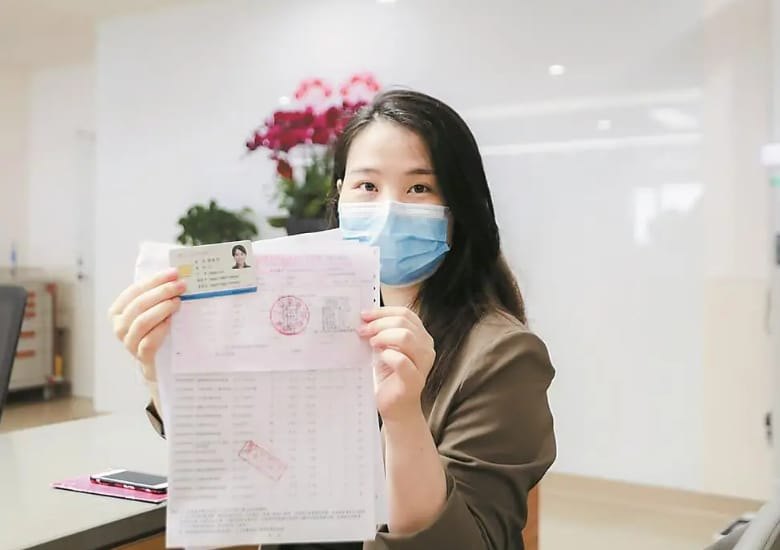
 Ms Lai from Xiamen completed China’s first 'instant approval' newborn medical insurance enrollment and reimbursement/MOSES OGADA
China’s
National Development and Reform Commission (NDRC) has officially endorsed and
promoted a groundbreaking medical insurance enrollment model from the city of
Xiamen, setting it up as a national template for advancing universal coverage.
The
initiative, pioneered by the Xiamen Medical Insurance Bureau in Fujian
Province, is being hailed as a transformative practice with strong
replicability in other countries.
Proponents
say it offers a potential roadmap for nations worldwide, especially those
struggling to achieve universal health coverage.
For
African countries like Kenya, where UHC remains a central policy goal, the
lessons are immediate and practical.
The
Xiamen model focuses on closing access gaps for four demographics:
newborns, students, workers in new forms of employment, and vulnerable
populations.
Through
mechanism optimisation, digital empowerment, and interdepartmental
coordination, the city has dismantled long-standing bottlenecks in enrollment
and strengthened the universal healthcare safety net.
A
defining feature is the shift from passive enrollment to proactive service
delivery.
Instead
of requiring citizens to seek out policies, the system is designed so that
“policies actively reach people.”
Xiamen
pioneered China’s first “instant approval” service for newborn medical
insurance enrollment and reimbursement.
Parents
can complete the process online in as little as one minute, enabling “insurance
upon birth and instant settlement upon discharge.”
The
system links hospital records with insurance and tax databases, so coverage
activates at birth and bills are settled directly on discharge.
This
eliminates advance payments and cuts unnecessary travel for families.
Coverage
now extends to all maternity hospitals across the city. To date, more than
110,000 newborn families have benefited from the instant approval service.
 China’s second batch of national regional medical centre pilot projects—the West China Xiamen Hospital of Sichuan University, located in Jimei New Town, Xiamen
For students, the Xiamen Medical Insurance Bureau worked with tax authorities, education departments, and universities to build a “student enrollment in one integrated process.”
The
model uses data sharing, batch processing, and intelligent reminders to enable
“one form, one-click submission, and one-stop online processing.”
The
rollout has pushed enrollment among primary and secondary school students in
Xiamen to nearly 100 per cent.
University
student enrollment reached 92.8 per cent in 2026, with 156,000 students
insured, which is a record high.
The
system reduces lapses that typically occur when students change schools or lose
parental coverage.
Xiamen
also tackled the challenge of insuring gig economy workers, such as delivery
riders and ride-hailing drivers, who face high mobility, fragmented enrollment,
and identification difficulties.
By
strengthening multi-departmental data coordination and governance, the city
built a “One Person, One File + Grid Connectivity” universal medical insurance
system.
The
unified record system tracks eligibility and prompts enrollment without
requiring workers to navigate multiple offices.
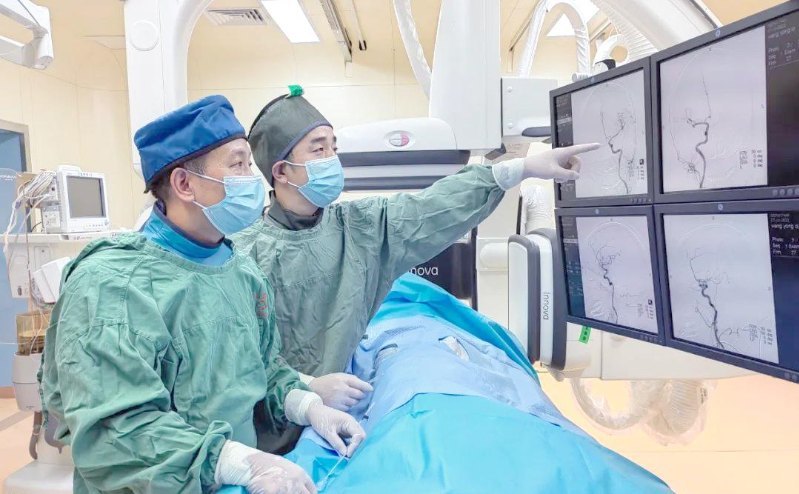 The neurosurgery team at Xiamen Fifth Hospital has completed various complex and high-difficulty surgeries with the support of 5G technology, improving medical outcomes.
As of May 2026, nearly 500,000 workers in new employment sectors in Xiamen were enrolled, with the enrollment rate exceeding 90 per cent.
The
system won first prize at the 2025 China National Smart Medical Insurance
Competition.
For
vulnerable groups, Xiamen adheres to a people-centred approach by improving
dynamic enrollment, targeted subsidies, and one-stop settlement services.
The
move has shifted the workflow from “people seeking policies” to “policies
actively reaching people,” ensuring full coverage and benefit access.
Through
targeted subsidies and flexible mechanisms, the system provided support to
31,500 vulnerable individuals as of May 2026.
Officials
say this addresses the “last mile” of healthcare accessibility and allows the
public to feel the warmth of inclusive medical insurance policies.
As
African nations continue to grapple with the complexities of achieving Universal
Health Coverage, the Xiamen model offers a practical reference point.
Kenya’s
quest for UHC has been a cornerstone of the government’s development agenda,
yet fragmented data systems, exclusion of informal sector workers, and
cumbersome enrollment remain persistent hurdles.
Xiamen’s
experience shows that political will paired with technological innovation can
overcome these barriers.
The
“instant approval” system for newborns and the “one-click” model for students
could be adapted to enhance enrollment under Kenya’s Social Health Insurance
Fund, moving from bureaucratic delays to digital inclusivity.
The
“One Person, One File” approach is especially relevant for Kenya’s growing
digital economy, which still lacks formal social protection for many platform
workers.
More
practically, the “policies actively reaching people” philosophy offers a
crucial lesson that safety nets must be visible and accessible to be effective.
The
Xiamen Medical Insurance Bureau continues to refine the strategy, strengthening
the healthcare safety net so that every insured person can “receive medical
treatment when needed and enjoy medical protection.”
 The Cardiovascular Hospital Affiliated to Xiamen University has established an International Medical Center, where international young cardiovascular physicians participate in training programs