The government has allocated just Sh3.2 billion in the 2026/27 financial year for it's bid to achieve a 30 per cent tree cover by 2032.
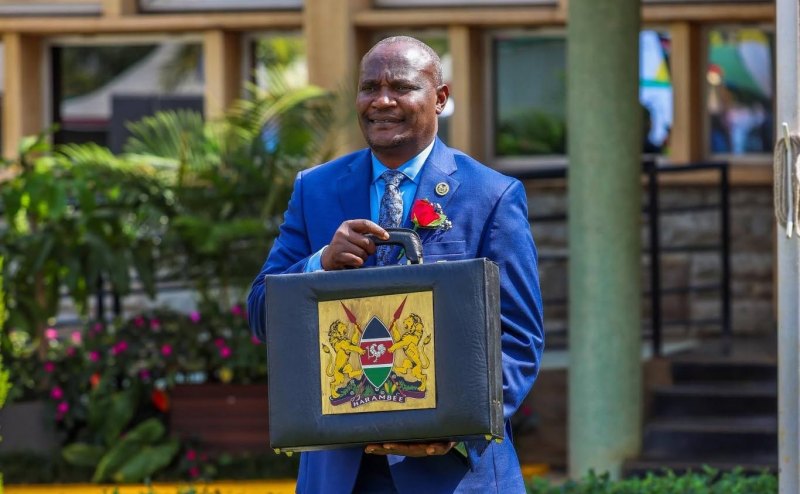
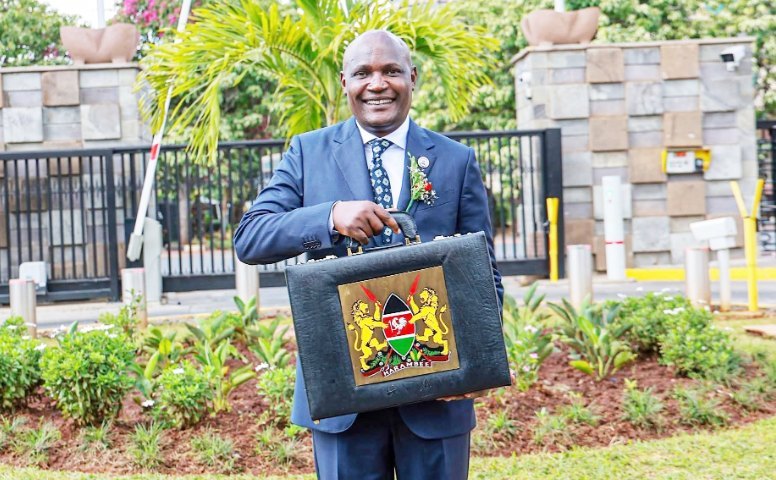
Treasury CS John Mbadi on Thursday said environmental conservation, climate resilience, reforestation, biodiversity protection and land restoration are central to sustainable development.
“To safeguard ecosystems and tackle climate risks, I propose Sh13.4 billion for forest resources conservation and management and Sh1.7 billion for forest research and development. I also propose Sh3.2 billion for the Tree Growing Campaign,” Mbadi said.
The amount announced by the CS puts to question the commitment by the government to ensure the tree-growing campaign is actualised.
The state plans to grow 15 billion trees in the next 10 years at a cost of Sh600 billion.
This means that each year, the budget is approximately Sh60 billion.
The 15 billion tree campaign translates to 30 trees per Kenyan per year over the next 10 years.
The state hopes that by 2032, the country’s tree cover will have hit 30 per cent from the current 12.13 per cent.
The forest cover increased from 5.9 per cent in 2018 to 8.83 per cent in 2021, while the national tree cover stands at 12.13 per cent above the constitutional target of 10 per cent.
Results generated from the National Forest Resources Assessment 2021 show that the country has 5,226,191.79 hectares of national forest cover, which represents 8.83 per cent of the total area.
In addition, results reveal that the country has a tree cover per capita index of 1,507.48 m² per person.
The report shows 37 counties have a tree cover percentage greater than the constitutional set target of 10 per cent tree cover.
Central region and parts of the Western and Coast regions are the most forested.
The proportion of total land area under forests and tree cover varies significantly by ecological regions and counties.
Nyeri has a tree cover of 45.17 per cent, Lamu 44.06 per cent and Vihiga 35.92 per cent.
Counties with the lowest tree cover include Kisumu (8.85), Busia (8.39), Uasin Gishu (8.04), Taita Taveta (6.87), Isiolo (6.7), Machakos (6.03), Siaya (5.27), Wajir (4.45), Mandera (3.61) and Marsabit (2.06).
The report shows that wooded grasslands account for the highest land cover in Kenya, with approximately 70 per cent of the total land area.
Mbadi in the budget also allocated Sh124.8 billion to scale up efforts on access to clean water, improved sanitation and expanded irrigation.
Another Sh4.7 billion was allocated for environment management and protection, Sh8.9 billion for the Kenya Financing Locally Led Climate Action Project, and Sh1.8 billion for meteorological services.
Mbadi also allocated Sh2.5 billion to support solid waste management in Nairobi and Sh1 billion for the removal of asbestos.
Other allocations to the sector include the following Sh13.2 billion for wildlife security, conservation and management; Sh1.2 billion for wildlife research and development; Sh1.1 billion for human-wildlife conflict compensation; and Sh800 million for wildlife insurance.
To expand water infrastructure and ensure water security, Mbadi allocated Sh51.5 billion for water and sewerage infrastructure development, Sh6.3 billion for water resources management and Sh2.5 billion for water storage and flood control.
Treasury also allocated Sh1.1 billion for irrigation and drainage development, Sh1.8 billion for large-scale commercial irrigation development, Sh3.3 billion for community-managed irrigation development, Sh3.0 billion for public irrigation schemes, and Sh1.6 billion for revitalising irrigation in ASAL areas.
During the financial year 2025/26, Sh10.7 billion was set aside to safeguard natural ecosystems, ensure sustainable water use and tackle the impact of climate change.
Some Sh1.6 billion was set aside for forests research and development; Sh3.7 billion for environment management and protection; Sh11.5 billion for the Kenya Financing Locally Led Climate Action Project; Sh1.6 billion for meteorological services; and Sh13.2 billion for wildlife security, conservation and management.
Another Sh953 million was set aside for wildlife research and development, Sh1.1 billion for human-wildlife conflict compensation, and Sh950 million for wildlife insurance.