E-procurement crackdown to ramp up anti-corruption fight
Treasury CS unveils ambitious accountability agenda to end misuse of public funds
by MOSES OGADA
Audio By Vocalize
The government has unveiled an ambitious anti-corruption
and accountability agenda in the 2026-27 budget, betting on technology,
stricter oversight and stronger institutions.
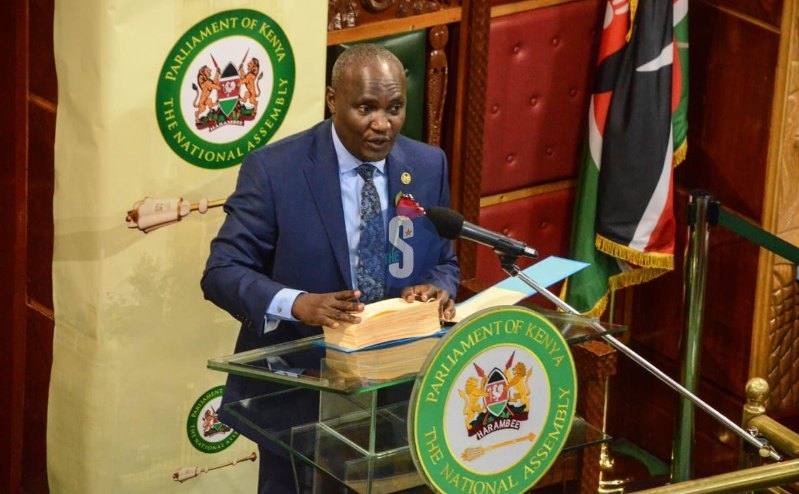
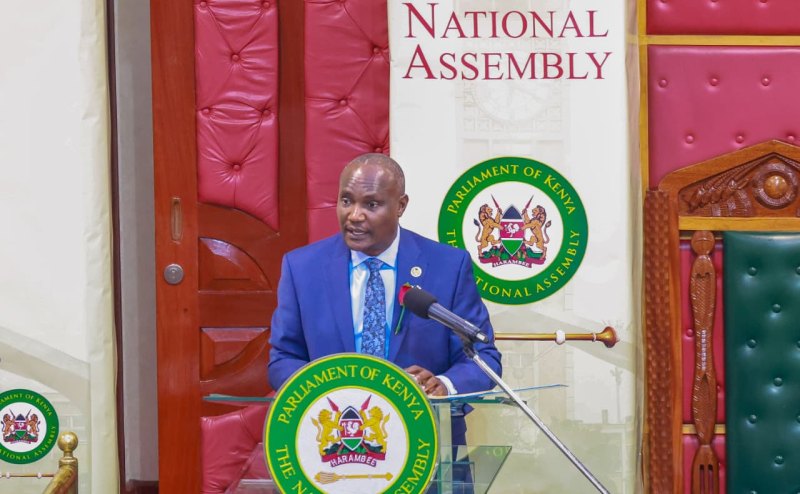
The aim, according to Treasury CS John
Mbadi in his budget speech, is to curb the misuse of public resources and
restore public confidence in government spending.
Mbadi said the state was keen to
block leakages in procurement, improve financial reporting and strengthen
institutions charged with safeguarding public funds.
Corruption remains one of the most persistent concerns
among Kenyans, with public anger over wastage, inflated contracts and stalled
projects dominating national debates.
The key government's anti-graft strategy is the full
rollout of the electronic Government Procurement (e-GP) system.
The Treasury boss said the system has in a big way changed how public contracts are awarded and managed.
It is to replace manual systems that have often been
blamed for creating opportunities for manipulation, collusion and loss of
public funds.
Officials can now track procurement transactions more
effectively through platform integrated with key government systems.
According to the budget statement, 1,543 procuring
entities have already been registered on the system alongside more than 40,000
suppliers.
More than 22,000 government officers and 12,000
suppliers have been trained, while over 8,000 tenders and 1,863 contracts have
been published through the platform.
Mbadi declared that beginning July 1, 2026, no
government entity will be allowed to procure goods or services outside the
electronic platform.
"Beginning July 1, 2026, there will be no exemption
to procure outside the system," he said.
The government has also submitted the Public Procurement
and Asset Disposal (Amendment) Bill, 2026 to Parliament.
The proposed law seeks to introduce mandatory disclosure
and reporting requirements, anchor electronic procurement in law.
Beyond procurement, the budget proposes increased
funding for key institutions charged with investigating, prosecuting and
auditing corruption cases.
Mbadi has allocated Sh5.1 billion to the Ethics and
Anti-Corruption Commission, Sh7 billion to the Office of the Director of Public
Prosecutions, Sh6 billion to the State Law Office and Sh9.8 billion to the
Office of the Auditor General.
Treasury says the allocations are intended to strengthen
accountability and intensify anti-corruption efforts across government.
"These allocations will intensify anti-corruption
efforts and reinforce public sector integrity," Mbadi said.
Parliament and the Judiciary, which play oversight and
accountability roles, are also set for increased funding, receiving Sh50.9
billion and Sh30.4 billion respectively.
Treasury argues that stronger institutions are critical
to sustaining transparency and public trust.
Another major reform targets weaknesses that have
repeatedly been flagged by auditors.
Treasury plans to amend the Public Finance Management
Act and related regulations to strengthen the mandate of internal auditors and
improve oversight across public institutions.
The reforms are aimed at creating mechanisms for tracking
the implementation of recommendations issued by Parliament, the Auditor
General, and audit committees.
Government agencies will also be required to strengthen
internal audit functions, adopt an integrated Internal Audit Management System
and expand the use of enterprise risk management tools.
Mbadi said the measures are designed to strengthen
transparency, improve internal controls and ensure prudent management of public
resources.
The budget also seeks to improve accountability
through better management of state assets.
It also emerged that Treasury has operationalised Assets
and Inventory Management modules within IFMIS, giving government real-time
visibility of assets held across ministries, departments and agencies.
An assessment conducted through the new system shows
public entities collectively control assets worth about Sh4.9 trillion.
Mbadi said the Treasury has developed a government asset
valuation policy framework and a public assets tagging framework.
The measures are expected to make it easier to identify,
track and account for public property, he said.
The government is also pushing ahead with a transition
from cash-based accounting to accrual accounting.
This is expected to provide a more complete picture of
public finances by capturing assets, liabilities, debts, inventories and other
obligations that may not be visible under the current system.
Treasury says the shift will allow Parliament, citizens
and investors to obtain a more accurate account of the country's financial
position.
The exchequer says it would reduce opportunities for
hidden liabilities and opaque financial reporting.
Further scrutiny is being directed at pending bills, long
characterised by questionable claims and disputed obligations.
The Pending Bills Verification Committee reviewed 91,911
claims worth Sh637.6 billion and recommended settlement of verified claims
amounting to Sh235.6 billion.
Treasury has proposed Sh68 billion in the coming
financial year to clear verified obligations owed to suppliers and contractors.
To curb illicit financial flows, the government says it
has strengthened anti-money laundering measures.
Mbadi cited increased investigations and asset recovery
efforts, improved transparency about beneficial ownership and better coordination
among enforcement agencies.
The measures signal a shift toward preventing corruption
through systems and controls rather than relying solely on enforcement after
public funds have already been lost.
This is premium content
Subscribe to Continue Reading
Help us continue bringing you unbiased news, in-depth investigations, and diverse perspectives. Your subscription keeps our mission alive and empowers us to provide high-quality, trustworthy journalism. Join us today to make a difference!