
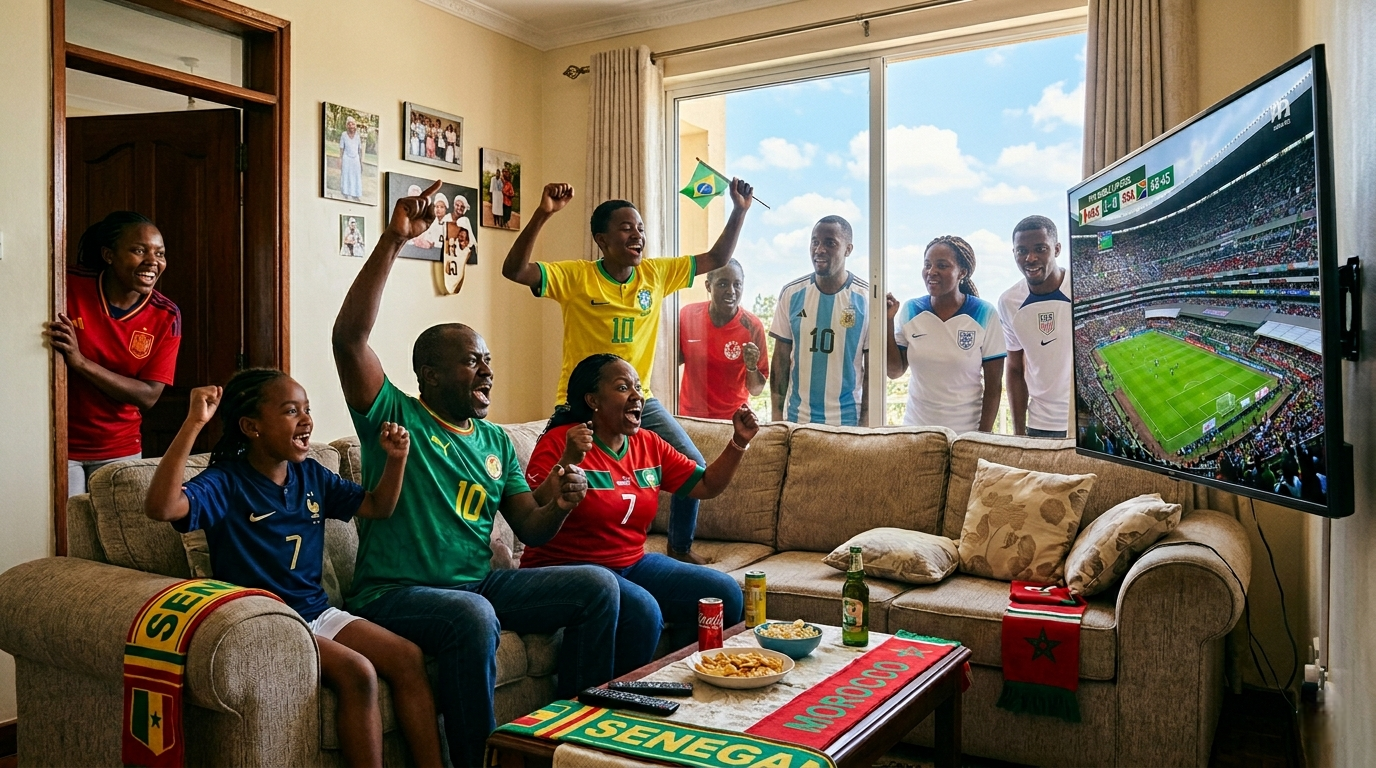
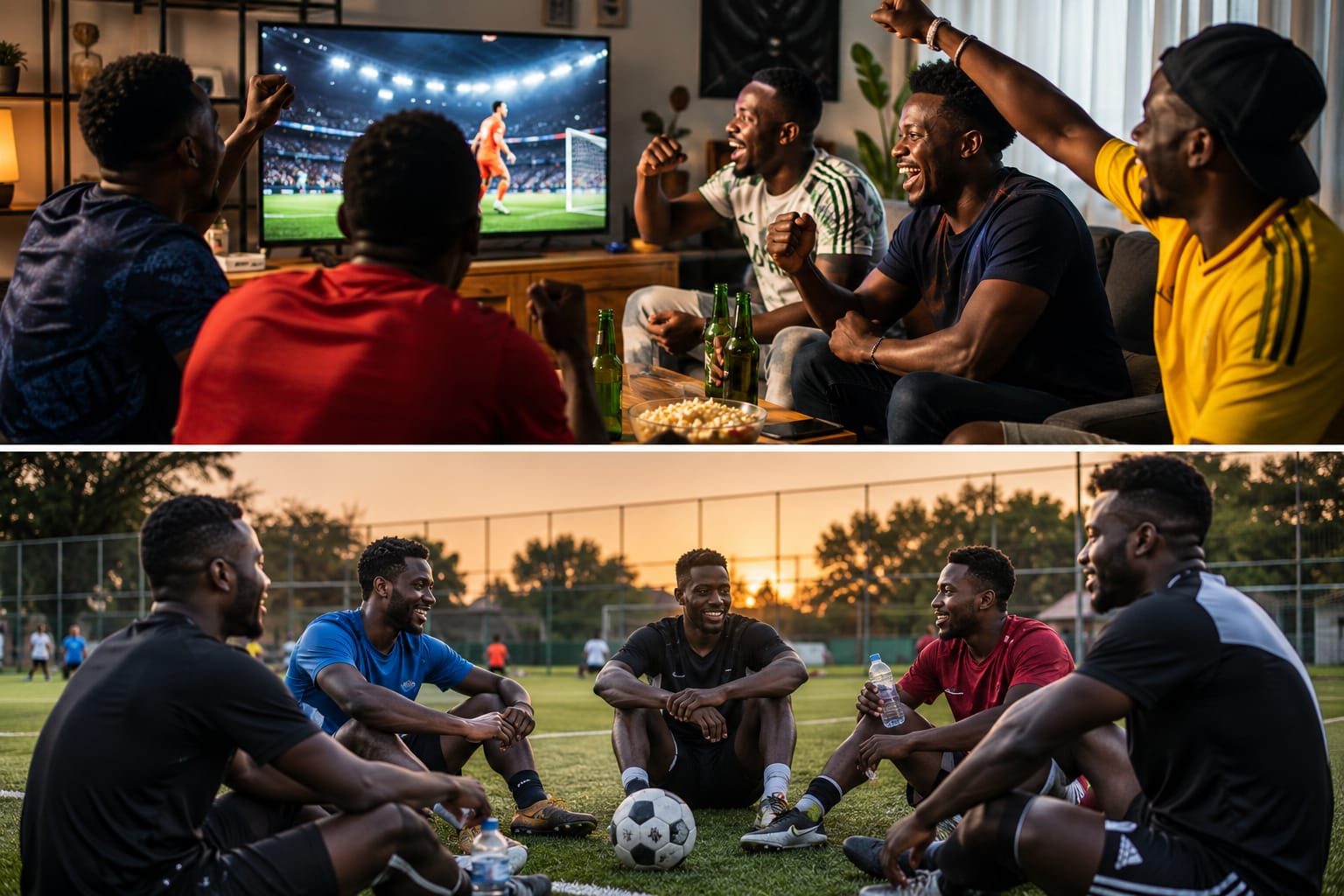
 AI-generated image
As the FIFA World Cup approaches, excitement is building across living rooms, viewing centres, and online spaces.
But beyond the goals, trophies, and rivalries, psychologists and fans say the tournament plays a quieter but powerful role in men’s mental health—creating space for connection, conversation, and emotional release.
Counselling psychologist and mental health advocate Virginia Naishoki says major sporting events like the World Cup offer men something often missing in daily life: permission to pause.
“I think sometimes we underestimate what football is actually doing for men,” she explains.
“Men carry a lot of responsibility as providers, fathers, employees, and leaders. Life becomes very serious very quickly. The World Cup creates a moment to reconnect with friendship, laughter, and community.”
According to Naishoki, what appears like simple entertainment often becomes something deeper.
“When men gather to watch football, they are not just watching the game. They are checking on each other indirectly,” she says.
“Through jokes, banter, and shared reactions, conversations about work stress, money, relationships, and life challenges naturally emerge. It doesn’t look like therapy, but in many ways, it functions like emotional processing.”
Why football becomes an easier language than feelings
Experts say many men find it easier to connect through football than direct emotional conversations due to cultural expectations around masculinity.
Naishoki notes that football removes pressure.
“Many men were raised to believe vulnerability is risky,” she says. “So instead of directly expressing emotions, they communicate indirectly. Football creates a safe space where conversation flows naturally. No one feels interrogated. It starts with the match, but often moves into life.”
That shared focus allows conversations to happen side by side rather than face to face—making emotional expression feel less intense and more natural.
Belonging, identity, and the fight against loneliness
For many men, especially as they grow older, maintaining friendships becomes difficult. Work, family responsibilities, and financial pressure often reduce social interaction.
But
football, especially the World Cup, creates a reason to reconnect.
Supporting a team, watching matches together, or even debating results gives men a shared identity and a sense of belonging.
“It gives people a reason to gather, laugh, argue, and celebrate together,” Naishoki says. “That sense of belonging is one of the strongest protective factors for mental health.”
A community effect that goes beyond the stadium
Mental health experts often emphasise the importance of community in emotional well-being. The World Cup, in many ways, recreates a communal environment where people feel seen and connected.
Abdirahman Adan Mala, a football lover, says the tournament goes beyond entertainment.
“It creates social connections and strengthens relationships,” he says. “It gives people a shared identity and reduces loneliness. Even watching alone can lift mood, but watching with others builds bonds.”
He adds that football also creates space for emotional release.
“Celebrating goals, arguing over decisions, or just sharing reactions helps people release stress. It brings joy and a break from daily pressure.”
From football talk to life conversations
For mental health writer Carson Anekeya, the real value of the World Cup lies in what happens beyond the match.
“It creates rare spaces where men can connect without pressure,” he explains. “Talking about football feels easier than talking about personal struggles. But that shared language often opens deeper conversations.”
He notes that while the World Cup does not solve mental health challenges, it creates entry points into support systems.
“The real impact is when those connections continue beyond football into genuine relationships where men feel safe to talk and be supported.”
More than tactics, more than results
For fans like Clifford Ndiema, football is not just a game; it is emotional relief.
“It is more than people kicking a ball,” he says. “Every pass, every goal, every tactic is fascinating. When I am sad or bored, football always lifts my mood. Watching it with friends makes it even better because it creates bonds.”
As the World Cup nears, many fans share that same anticipation, not just for competition, but for connection.
Experts agree that football will not replace professional mental health support. But it can complement it by opening conversations where men already feel comfortable.
Football organisations and campaigns, they say, have a unique opportunity: to meet men where they already are.
By using the global reach of the World Cup, mental health advocates can normalise emotional conversations through players, fans, and shared experiences.
At its core, the World Cup is about competition, but for many men, it is also about connection.
In living rooms, viewing centres, and online chats, the tournament creates moments of laughter, debate, and belonging. And in those moments, something deeper happens: men check on each other, talk without pressure, and realise they are not alone.
Sometimes,
healing does not begin in silence or in a clinic. Sometimes it begins with a
match, a conversation, and a shared celebration of the game that brings the
world together.