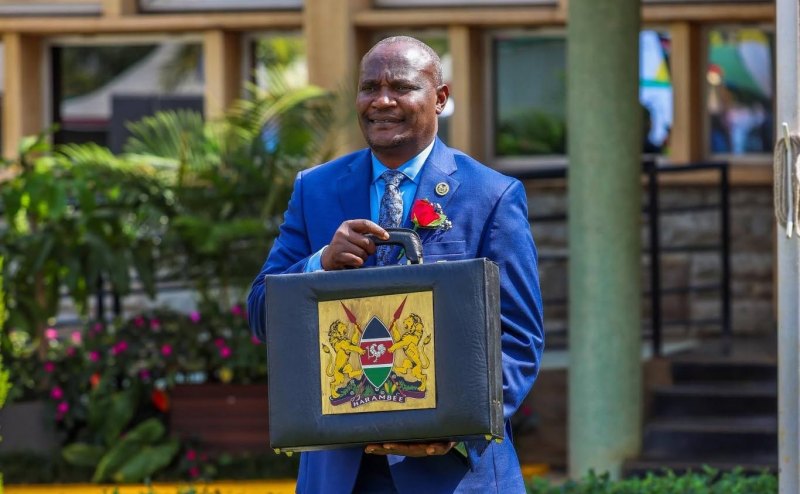
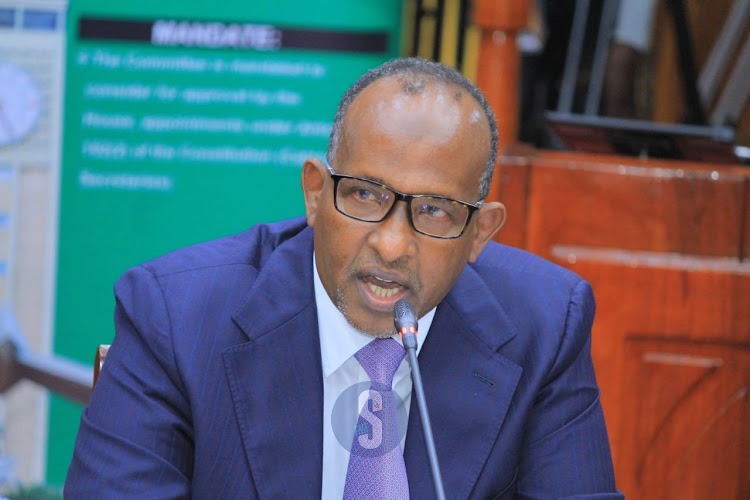
 Health CS Aden Duale/FILE
Kenya has sufficient Ebola testing kits, reagents and personal protective equipment (PPE) to support the management of about 200 patients, Health Cabinet Secretary Aden Duale has said.
Duale said the country had strengthened its preparedness measures and designated four laboratories to conduct Ebola testing should the need arise.
Appearing before lawmakers on Wednesday, the CS told MPs that the government has identified four facilities capable of testing for the virus, which is classified as a high-risk pathogen.
“I wish to be very candid. While laboratory capacity is strong, the test kits, reagents and personal protective equipment estimated to support the management of about 200 victims are in place,” Duale said.
"Due to the virus being an extreme risk, four laboratories have been designated for Ebola testing: the National Public Health Laboratory in Nairobi, KEMRI laboratories in Nairobi and Kisumu, and the mobile laboratory in Busia."
According to Duale, the facilities are equipped with molecular testing technology that enables rapid detection and diagnosis of suspected Ebola cases.
The Health CS also revealed that screening and surveillance measures had been stepped up at key entry points into the country as part of efforts to prevent the importation and spread of the disease.
“Screening has been strengthened through thermal scanners, holding rooms and ambulance systems, which are being reviewed and activated in all our priority points of entry, including major airports and high-volume land border points,” he said.
Kenya has heightened its preparedness efforts following an Ebola outbreak in neighbouring Uganda, with health authorities increasing surveillance, testing and emergency response measures to reduce the risk of transmission.
The government has maintained that it remains on high alert, with response systems being reinforced to ensure any suspected cases are identified and managed quickly.
According to the Ministry of Health, more than 2,200 health workers have already been trained to respond to potential Ebola cases, with additional training conducted during recent surveillance exercises following outbreaks in the region. Authorities have also intensified monitoring of travellers arriving from Ebola-affected areas, including the Democratic Republic of Congo (DRC) and Uganda, as part of early detection efforts.
The government has maintained that designated facilities, including quarantine and isolation centres, are being readied to handle suspected cases while ensuring strict infection prevention and control measures.
Speaking on Tuesday, Principal Secretary for Medical Services Ouma Oluga said Kenya is prepared for a worst-case Ebola outbreak scenario and has put in place contingency measures, including shared quarantine facilities.
He said Kenya’s preparedness is informed by prior experience and continuous monitoring of regional outbreaks, particularly in neighbouring countries.
"The Laikipia Ebola facility is for everyone; it's for Kenyans and for Americans. What we are looking at is a quarantine facility. Kenya is preparing itself to deal with Ebola adequately. We are prepared for the worst-case scenario,” Oluga said.