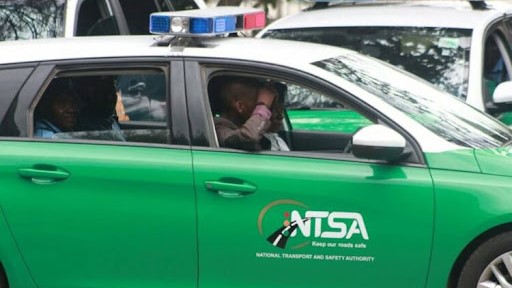
For decades, a traffic offence in Kenya often meant a roadside confrontation with police, a court summons, long queues at traffic courts and, in many cases, lost time and productivity for motorists.
That is about to change.
Beginning June 1, 2026, the National Transport and Safety Authority (NTSA) rolled out a new technology-driven enforcement framework that allows motorists accused of minor traffic offences to pay prescribed penalties without necessarily appearing before a magistrate.
The reform, introduced under the Minor Traffic (Minor Offences) Rules 2016 and anchored in Section 117 of the Traffic Act, represents one of the most significant changes to traffic law enforcement in recent years.
The system seeks to simplify the handling of minor violations, reduce the burden on courts, improve compliance with traffic laws and harness technology to enhance road safety.
According to NTSA, the framework was developed jointly with the Office of the Attorney General, the National Police Service, the Office of the Director of Public Prosecutions and the Judiciary following a review of the previous enforcement model.
Authorities say the old system placed excessive pressure on traffic courts, many of which handled thousands of relatively minor offences every month.
The new model is intended to ensure that court resources are reserved for serious traffic crimes while straightforward offences are resolved administratively.
"The primary objectives of this framework are to enhance road safety for all users, increase compliance with traffic laws, reduce congestion in traffic courts, and promote transparency, accountability and efficiency in traffic enforcement," NTSA said.
Why the new system was introduced
According to NTSA, the framework was developed jointly with the Office of the Attorney General, the National Police Service, the Office of the Director of Public Prosecutions and the Judiciary following a review of the previous enforcement model.
Authorities say the old system placed excessive pressure on traffic courts, many of which handled thousands of relatively minor offences every month.
The new model is intended to ensure that court resources are reserved for serious traffic crimes while straightforward offences are resolved administratively.
How offences will be detected
Under the new framework, traffic violations will be identified in two main ways.
The first remains traditional enforcement by police officers during routine patrols, roadblocks and traffic operations.
The second, and more transformative approach, is electronic detection. Traffic cameras and digital monitoring systems installed along roads will automatically capture offences and relay information to enforcement authorities.
This means motorists may be cited even without direct interaction with a police officer. As Kenya expands its intelligent transport systems, more offences are expected to be detected through automated surveillance technology.
What happens after an offence is detected?
Once an offence is identified, authorities will issue a Police Notification of Traffic Offence.
The notice will contain details of the alleged offence, date and time of occurrence, location where the violation occurred, the prescribed penalty, instructions on payment and deadlines for response.
The notification serves as official communication informing a motorist that a traffic violation has been recorded.
How motorists will receive notifications
The framework introduces several ways through which notices may be served.
A police officer may hand-deliver the notification directly to the offender. In some cases, the notice may be attached to the vehicle.
However, the government is increasingly relying on digital communication channels. Notifications can be sent through SMS messages, email and approved digital traffic enforcement platforms.
NTSA is urging all vehicle owners and drivers to ensure their contact information in the authority’s database is accurate and up to date. Failure to update phone numbers or email addresses could result in motorists missing important notifications.
Paying a fine without going to court
Perhaps the most notable change is that motorists who accept responsibility for a minor offence can simply pay the prescribed fine.
Previously, many offences required a court appearance even when the accused person had no intention of contesting the charge.
Under the new system, admission of liability allows the matter to be settled administratively, a move expected to save motorists time and reduce congestion in courts.
For motorists who previously spent hours attending court sessions for relatively minor infractions, the reform is expected to improve convenience.
What if you disagree with the charge?
The right to a fair hearing remains intact.
Motorists who believe they have been wrongly accused can challenge the allegations in court.
This means the new system does not eliminate judicial oversight, but instead creates two paths: one for motorists willing to admit liability and pay the prescribed penalty, and another for those who wish to dispute the charge before a magistrate.
Legal experts say this balance is important because it preserves constitutional rights while improving efficiency.
Can drivers see the evidence?
Yes.
Motorists will have the right to review photographs, video recordings and other supporting material used to establish the alleged offence.
This provision is particularly important in cases involving camera-based enforcement. For example, if a speeding camera captures a vehicle exceeding the speed limit, the driver can request the photographic or video evidence before deciding whether to pay the fine or contest the allegation.
Road safety advocates argue that this could improve public confidence in automated enforcement systems.
What happens if a motorist ignores the notice?
Ignoring a notification will not make the matter disappear.
NTSA has warned that failure to respond, pay a prescribed penalty or attend court when required may attract more severe consequences. In such cases, courts could impose additional sanctions as provided under traffic laws.
Authorities therefore advise motorists to respond promptly whenever they receive a notification.
The role of demerit points
The framework also introduces an accountability mechanism through demerit points.
Depending on the offence committed, drivers may have demerit points recorded against their licences. Accumulation of excessive points could eventually lead to additional administrative action against habitual offenders.
This approach is widely used internationally as a way of identifying and correcting dangerous driving behaviour. Rather than focusing solely on financial penalties, demerit systems track a driver’s overall compliance history.
Fighting corruption through technology
Road safety stakeholders have long argued that digital enforcement could reduce opportunities for corruption.
When offences are detected electronically and notices generated automatically, there is less room for negotiation, manipulation or discretionary decision-making.
Supporters say technology-driven enforcement can promote fairness by ensuring all motorists are treated equally under the law. The availability of photographic and video evidence can also help resolve disputes objectively.
Data protection and privacy concerns
As cameras and digital platforms become central to enforcement, privacy concerns have emerged.
NTSA says all personal information collected through the system will be handled in accordance with the Constitution and the Data Protection Act.
The authority maintains that safeguards have been put in place to ensure information is used strictly for traffic enforcement purposes.

![[PHOTOS] The new Ngong –Naivasha Road viaduct](https://cdn.radioafrica.digital/image/2026/06/64d4f771-4432-4aee-ba3c-2f304c4436ec.jpg)











![[PHOTOS] 'Mr Speaker Sir' Gen Z protester in court](https://cdn.radioafrica.digital/image/2026/06/b3e62d8e-25c3-4780-90f9-4eb48b1ce8a7.jpg)