
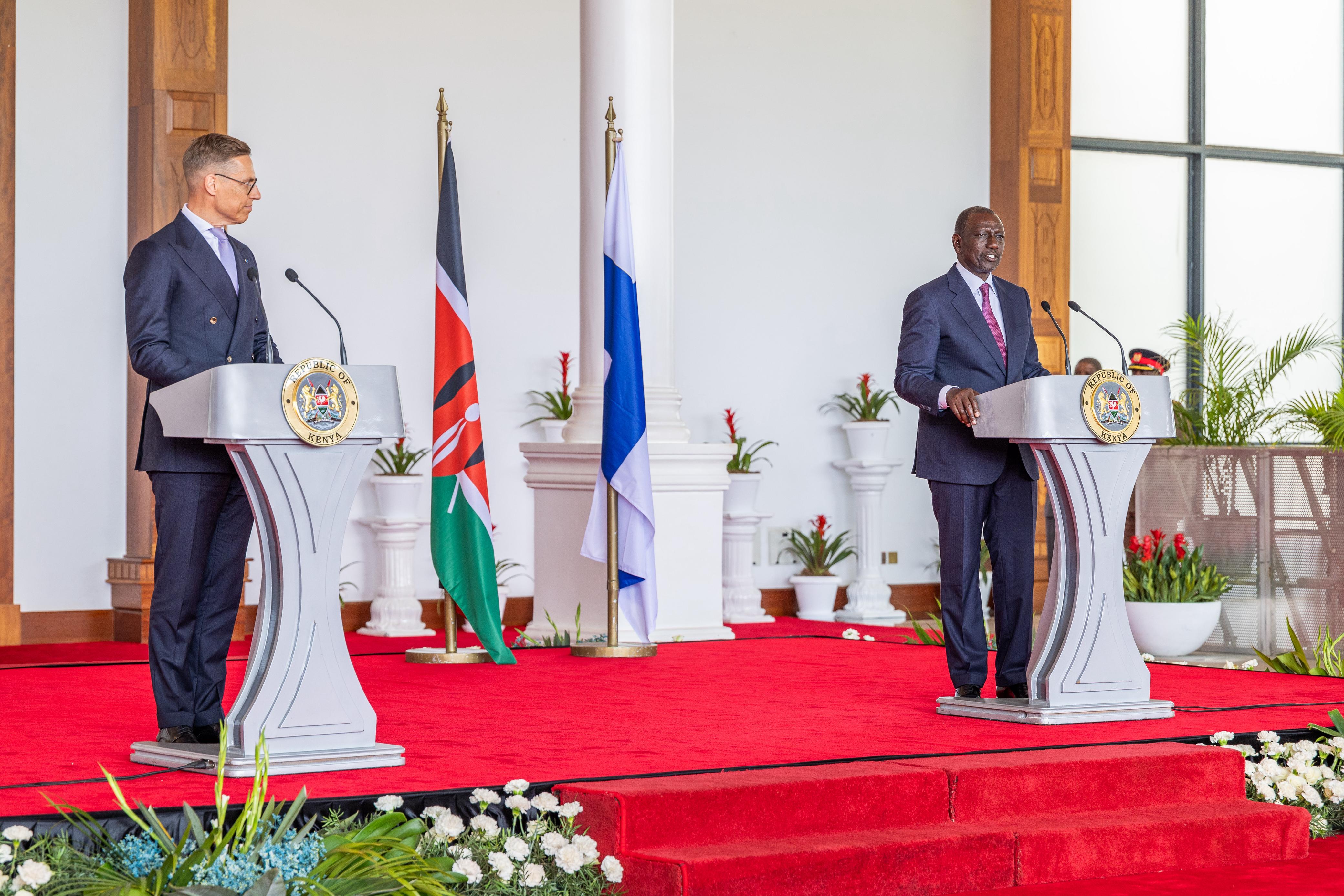
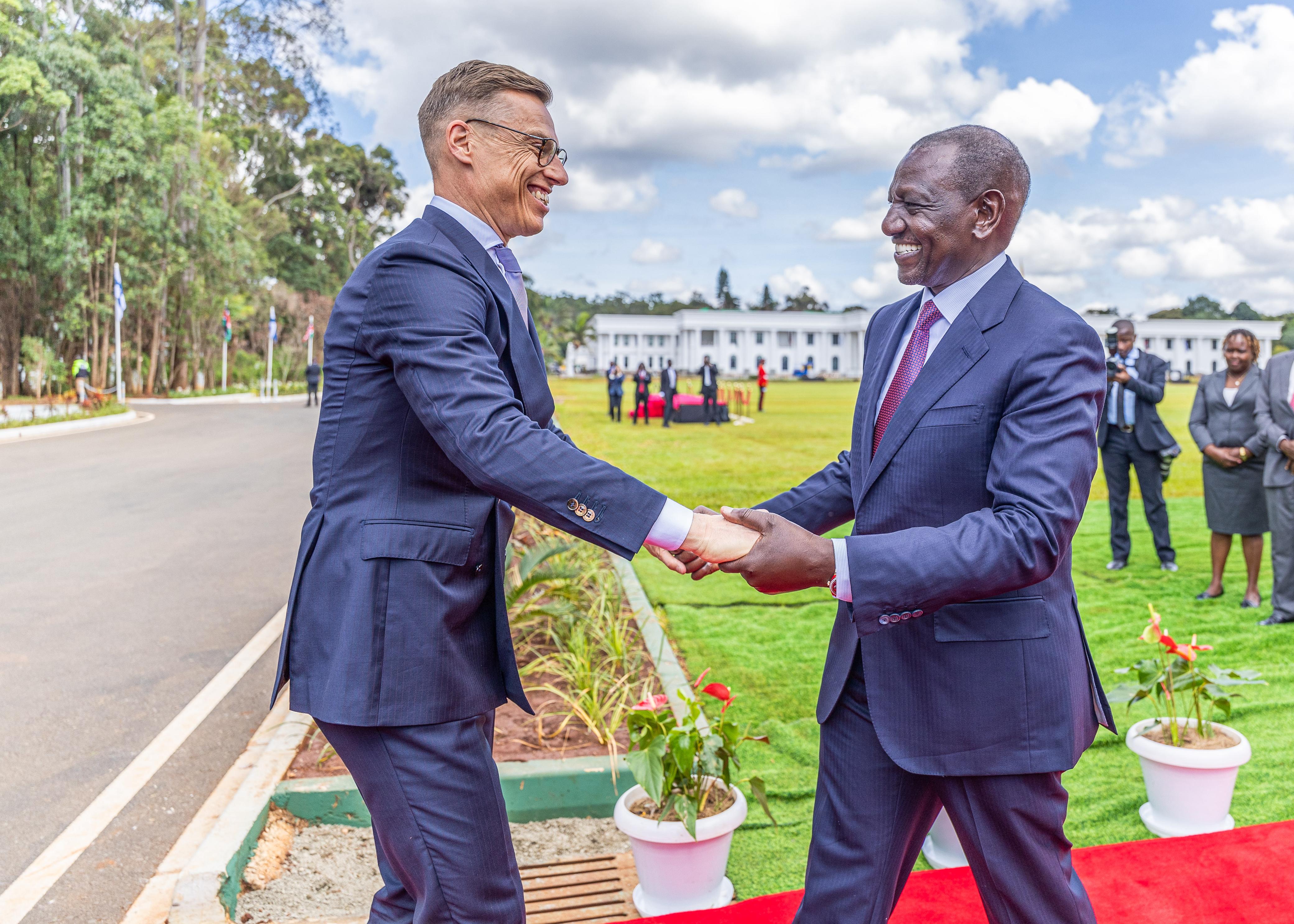
 Finnish President Alexander Stubb is received by President William Ruto at State House on May 12, 2025/PCS
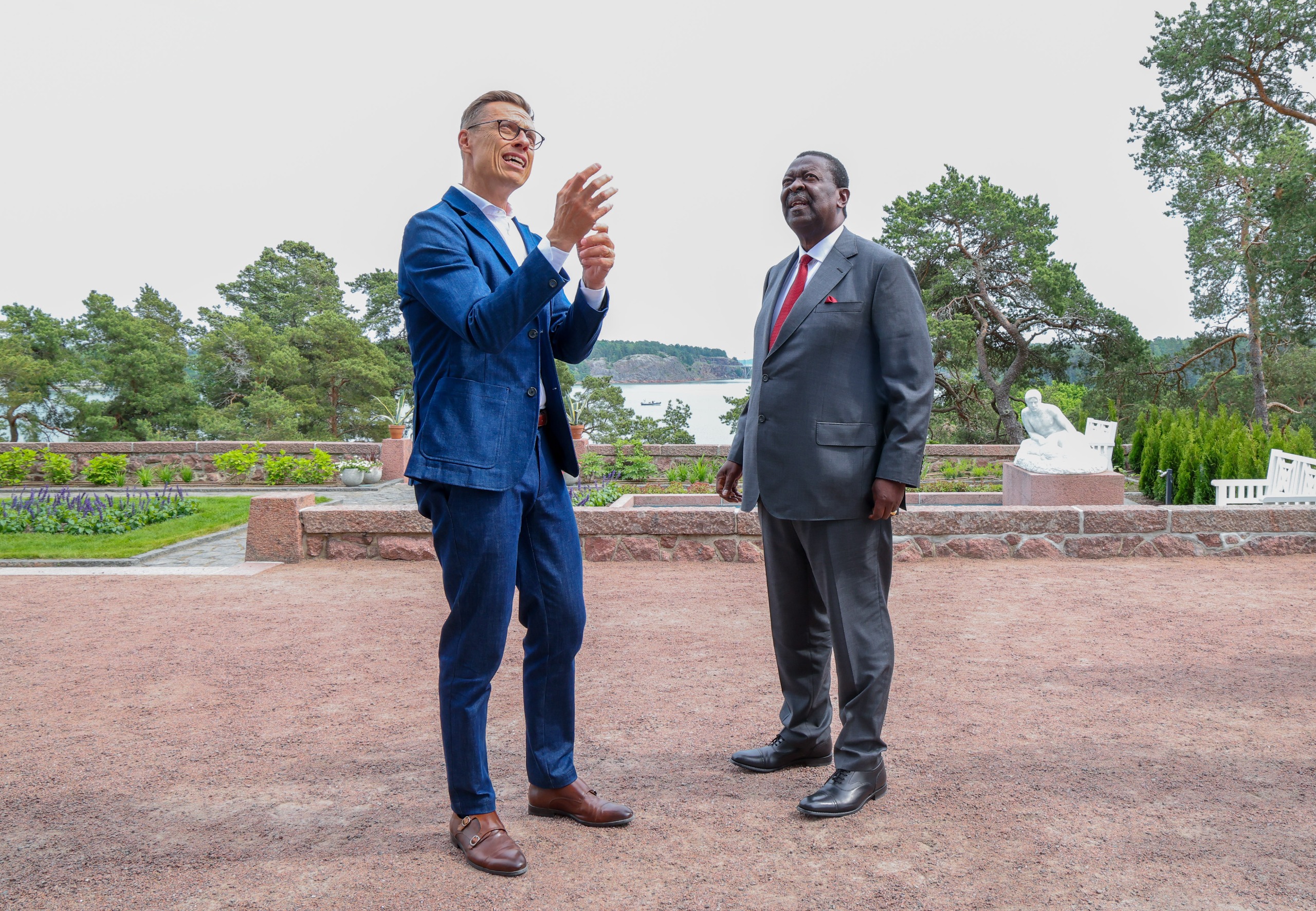
President William Ruto is set to undertake a state visit to Finland this month in yet another diplomatic engagement expected to consolidate a fast-evolving ties between Nairobi and Helsinki.
Finland President Alexander Stubb told the Star
in Helsinki that the reciprocal visit, coming just a year after his visit to
Nairobi, is testament to the strengthening of diplomatic ties.
“That [Nairobi state visit] was a good beginning,” Stubb
said.
“President Ruto will be here on a state visit in June. So
we will take stock of where we are [on the status of the signed agreements and
discussions in Nairobi]. It's quite unusual, actually, to have state visits in
one year, in one country. So I think the relationship is very good.”
He added that the visits signal a global outreach, and
particularly to the Global South. Additionally, he said, his starting point is
that the Global South is going to decide whether the world tilts towards
multipolarity or multilateralism.
“Therefore, I want to forge good relations with key
countries in the Global South, and if you look at the African continent,
without making a pecking order, I have been to Egypt, Kenya and South Africa.
We continue working together,” he said.
“So I look forward to hosting President Ruto here in in the
beginning of June.”
Stubb noted that Kenya and Finland the ties are anchored on
political dialogue and sustainable development, while the two capitals share
positions on reforming the global order.
Between May 12 and 14 last year, President Stubb conducted a
historic state visit to Kenya, marking the first-ever visit by a sitting
Finnish head of state.
During the visit, the President was accompanied by a large
business delegation that met their Kenyan counterparts at the Kenya-Finland
Business Forum.
Stubb said his country was committed to fostering
“trustworthy and transparent partnerships”, adding that “Finland is a partner
you can trust”.
Coincidentally, the visit coincided with the commemoration
of 60 years of diplomatic relations.
During that particular visit, the two countries signed a
series of agreements covering political consultations, peace mediation,
renewable energy cooperation, sustainable development and education.
Both sides also committed to closer coordination on
regional and global geopolitical challenges, including instability in the
region.
The engagement with Kenya is part of Finland’s broader
strategic diplomatic offensive that seeks to strengthen partnerships beyond
traditional Western alliances and engage more directly with African states as
co-creators of global governance solutions.
Central to this approach is a shared emphasis on reforming
multilateral institutions such as the United Nations and international
financial systems.
Stubb reiterated his long-standing position that existing
global governance structures reflect a post-Second World War order that no
longer corresponds to contemporary geopolitical realities.
The structures include including the UN Security Council,
the World Bank, the International Monetary Fund and the World Trade
Organisation.
“These institutions were created 80 years ago in a
different world,” he said. “Their power structures remain skewed towards the
West, and they need reform to reflect today’s global distribution of power,
especially to give more voice to the Global South,” he said.
Ruto has similarly positioned himself as an advocate for
reform of the international financial architecture, particularly on issues of
debt sustainability, climate financing and development funding for emerging
economies.
He hosted the Africa-France Summit, which aimed to push the
agenda at the upcoming G7 meeting in Évian-les-Bains, France on June 15-17.
It thus means that Ruto’s attendance of the summit will be
preceded by the Helsinki state visit.
The Helsinki-Nairobi partnership also reflects a growing
convergence on climate and energy cooperation.
Finland has positioned itself as a leader in clean
technology, renewable energy systems and circular economy innovation, while
Kenya continues to expand its geothermal, wind and solar energy capacity as
part of its green transition agenda.
During Stubb’s visit to Nairobi, both governments
emphasised collaboration in sustainable development, education exchange
programmes and institutional capacity building, with a focus on youth
innovation and skills development.
Another key pillar of cooperation is peace mediation and
conflict resolution. Finland has long promoted mediation diplomacy as part of
its foreign policy identity, a tradition linked to former President Martti
Ahtisaari’s legacy in international peace processes.
Stubb has sought to extend this approach by promoting
multilateral reform initiatives and encouraging dialogue-based solutions to
global conflicts.
Kenya, for its part, has increasingly positioned itself as
a regional diplomatic hub in East and Horn of Africa and the Great Lakes
region. It has played a role in mediation efforts in Sudan, Somalia and the
DRC, while also hosting international peace and security dialogues.
The upcoming state visit is expected to provide a platform
for reviewing implementation of the agreements signed during Stubb’s Nairobi
trip, while also exploring new areas of cooperation in trade, digital
innovation, climate financing and multilateral diplomacy.
It also comes at a time of heightened global geopolitical fragmentation, with conflicts in Ukraine, the Middle East and parts of Africa reshaping global security dynamics and exerting pressure on energy markets, food systems and inflation.

![[PHOTOS] The new Ngong –Naivasha Road viaduct](https://cdn.radioafrica.digital/image/2026/06/64d4f771-4432-4aee-ba3c-2f304c4436ec.jpg)







![[PHOTOS] 'Mr Speaker Sir' Gen Z protester in court](https://cdn.radioafrica.digital/image/2026/06/b3e62d8e-25c3-4780-90f9-4eb48b1ce8a7.jpg)