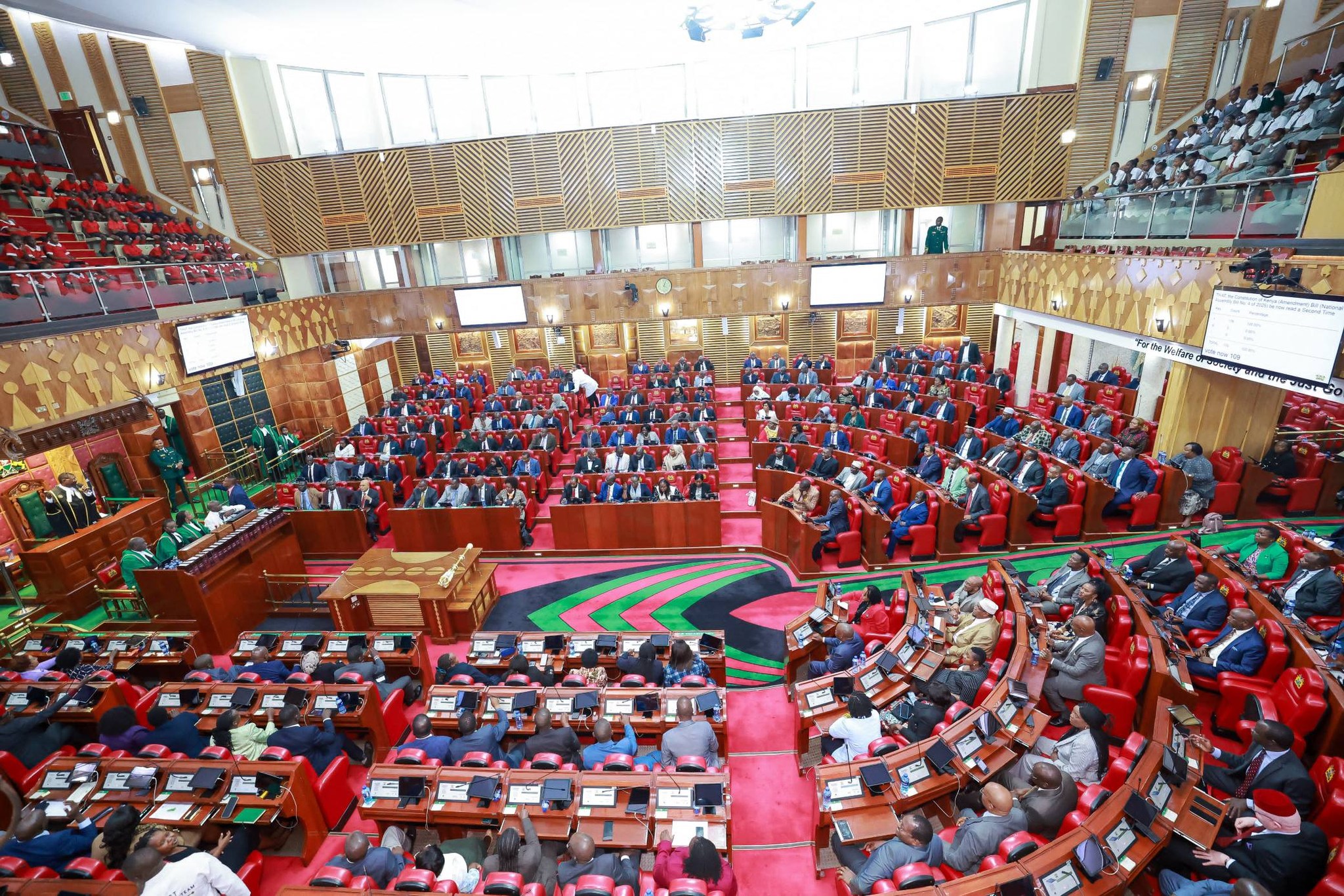
 A proceeding in the National Assembly of Kenya on June 2, 2026.
/HANDOUT
A proceeding in the National Assembly of Kenya on June 2, 2026.
/HANDOUTThe National Assembly has passed the Quality Healthcare and Patient Safety Bill, 2025, paving the way for sweeping reforms aimed at improving healthcare standards, strengthening patient protection and enhancing accountability across Kenya’s health sector.
The Bill, which was approved with amendments, seeks to establish a comprehensive legal framework for quality healthcare delivery through accreditation systems, enforceable standards and stronger patient rights.
Lawmakers said the proposed law is intended to align Kenya’s healthcare system with global best practices while addressing longstanding concerns over service delivery, regulation and patient safety.
According to the memorandum accompanying the Bill, its principal objective is to promote the improvement of healthcare quality in Kenya by establishing standards, accreditation mechanisms and measures to protect and promote patient rights.
“The principal object of this Bill is to establish a comprehensive legal framework to promote the improvement of the quality of healthcare in Kenya by establishing standards, accreditation mechanisms and ensuring the protection and promotion of patient rights,” the memorandum stated.
The Bill further states that it seeks to institutionalise quality healthcare standards, accreditation mechanisms and patient rights in order to improve health outcomes, enhance accountability within health systems and align existing frameworks with international best practices.
Under the proposed law, patients would be guaranteed a broad range of rights when seeking healthcare services, complementing those already provided for under the Health Act.
Among the rights outlined in the Bill are the right to safe and quality care, timely and effective treatment, access to safe health facilities, care by qualified health professionals, dignity and equity in treatment, access to information, participation in decision-making and the right to be heard.
The legislation also seeks to establish a dedicated authority that would serve as the primary regulator of health facilities on matters relating to quality healthcare.
Part III of the Bill provides for the establishment of the authority, including its functions, powers, governance structure and staffing. It also outlines the qualifications and responsibilities of its board members and chief executive officer.
A key component of the proposed law is the creation of a structured system for registration, licensing and accreditation of health facilities. The Bill sets out timelines and requirements for the issuance of registration, licensing and accreditation certificates, while also providing circumstances under which such certificates may be suspended or revoked.
Health facilities operating without the required registration or licences would face legal consequences under the proposed framework.
The legislation further introduces mechanisms for monitoring quality improvement within health facilities, including quality scoring, rating systems, performance assessments and compliance monitoring by the regulatory authority.
The National Assembly said the Bill seeks to institutionalise quality assurance measures across all health facilities and strengthen oversight to improve health outcomes and protect patients from substandard care.
Parliament noted that, if enacted, the law would help strengthen patient safety, improve the quality of care, reduce cases of medical negligence and enhance public confidence in the healthcare system.
The Bill also seeks to clarify the respective roles of the national and county governments in healthcare regulation and service delivery, an area that has often generated disputes since the advent of devolution.
The legislation now proceeds to the next stage of the law-making process before it can become law.

![[PHOTOS] The new Ngong –Naivasha Road viaduct](https://cdn.radioafrica.digital/image/2026/06/64d4f771-4432-4aee-ba3c-2f304c4436ec.jpg)









![[PHOTOS] 'Mr Speaker Sir' Gen Z protester in court](https://cdn.radioafrica.digital/image/2026/06/b3e62d8e-25c3-4780-90f9-4eb48b1ce8a7.jpg)