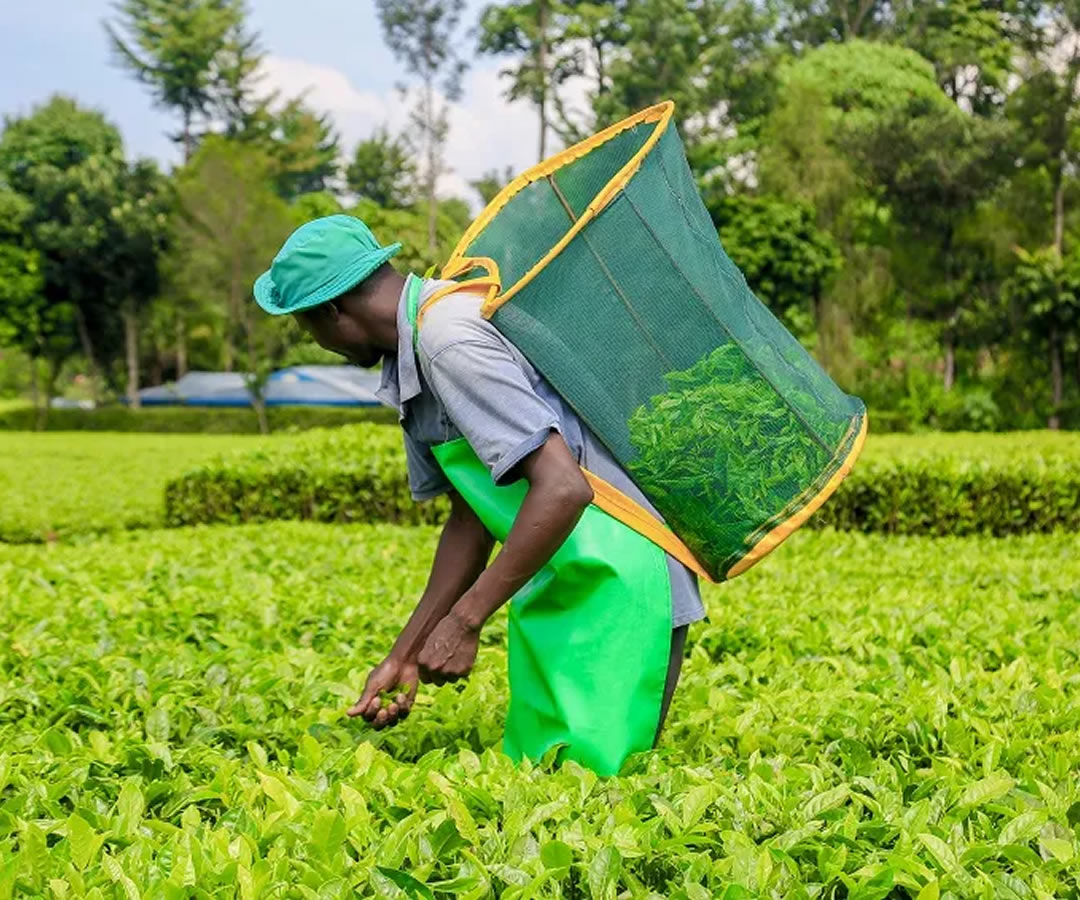
 A worker plucks tea at a farm/COURTESY
The government has moved to address concerns surrounding the proposed tea levy, insisting that farmers will not bear the cost and that all funds collected will be reinvested directly into the tea sector.
Under the proposed framework, tea exports will attract a levy equivalent to 0.8 per cent of the auction value or customs value for direct sales, while imported bulk tea will attract a levy of 100 per cent of the auction value or customs value.
Farmers, factories, domestic traders, aggregators and value-added teas will be exempt from the levy.
According to the proposed regulations, half of the funds collected will be channelled towards supporting farmer incomes and tea price stabilisation. 20 per cent will fund research and development through the Tea Research Institute, while 15 per cent will support regulatory functions undertaken by the Tea Board of Kenya.
The remaining 15 per cent will be allocated to the maintenance and development of county infrastructure in tea-growing areas.
The Tea Board of Kenya has launched a public awareness campaign to counter misconceptions surrounding the levy, particularly claims that it will reduce farmers' earnings.
According to the board, the levy will be paid by exporters and not by tea farmers.
It argues that the establishment of a price stabilisation fund, which will receive 50 per cent of the collections, is intended to cushion farmers from market fluctuations and enhance their incomes.
Another concern raised by stakeholders is that exporters may pass the levy cost to farmers by lowering auction prices.
However, the board says enhanced regulatory oversight under the Tea Act, 2020, and the competitive auction system will help prevent exploitative practices.
Officials have also dismissed claims that the funds will be diverted to unrelated government activities.
They note that the Tea Fund established under Section 54 of the Tea Act, 2020, is a ring-fenced fund with legally prescribed allocations for farmer support, research, regulation and infrastructure development.
The board further defended the reintroduction of the levy, noting that while a 2016 task force recommended its removal, the concerns at the time related to governance and accountability rather than the levy concept itself.
Since then, the Tea Act, 2020, has introduced new safeguards, including digital monitoring systems and multi-stakeholder oversight mechanisms aimed at preventing misuse of funds.
The Board also rejected assertions that the tea industry is already overtaxed, arguing that, unlike other taxes remitted to the National Treasury, all proceeds from the tea levy will remain within the sector.
The board says impact assessments indicate that the expected benefits, including increased reinvestment, market expansion and improved farmer returns, outweigh the cost of the levy.
On concerns about tea imports, the board clarified that the proposed 100 per cent import levy targets bulk-made tea imports and is designed to protect local production. Retail-ready value-added teas packaged in units below 10 kilogrammes, tea extracts and tea aromas will remain exempt.
The board also defended the consultation process, saying 11 stakeholder forums were conducted across 20 counties with participation from tea farmers, tea factory representatives, the Kenya Tea Development Agency (KTDA), the Kenya Tea Growers Association (KTGA), the Independent Tea Producers Association of Kenya (ITPAK) and other industry players.
According to the board, views collected during the consultations were reviewed and incorporated into the final regulations.

![[PHOTOS] The new Ngong –Naivasha Road viaduct](https://cdn.radioafrica.digital/image/2026/06/64d4f771-4432-4aee-ba3c-2f304c4436ec.jpg)








![[PHOTOS] 'Mr Speaker Sir' Gen Z protester in court](https://cdn.radioafrica.digital/image/2026/06/b3e62d8e-25c3-4780-90f9-4eb48b1ce8a7.jpg)