Fuel prices
could come down sooner than expected owing to easing pressures in the
international market, a development that will offer much-needed relief for motorists, producers, and
households.
On Friday, the Energy
and Petroleum ministry said it was looking at a possible drop in prices at
the pump as global market pressures that have driven the cost of fuel higher
begin to ease.
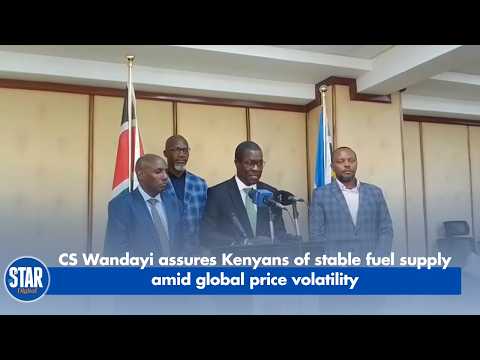
Energy CS Opiyo
Wandayi told journalists that “changing demand and supply patterns across
global markets are showing early signs of a possible drop in fuel prices.”
Wandayi, whose
docket has been under intense public scrutiny due to rising fuel prices, said
that while the global energy market remains volatile, the trend is encouraging
and could soon translate into lower fuel costs.
“While the
situation remains fluid and unpredictable, the direction is encouraging. In the
fullness of time, as global conditions stabilise, Kenyans can expect the
benefits progressively.”
On Saturday, the
price of crude posted its biggest one-month decline in six years, delivering
some relief to consumers at the pump and some optimism to investors hoping for
an end to high prices.
News of a
possible ceasefire between the US and Iran, subject to President Donald Trump's
approval, saw the global Brent oil
benchmark prices fall nearly 20 per cent in May, the biggest monthly drop since 2020.
It drove the
price of a barrel of Brent crude down to a low of $93.4 (Sh12,076) from an
earlier high of $98 9 (Sh12,671), before rebounding to about $94 (Sh12,154).
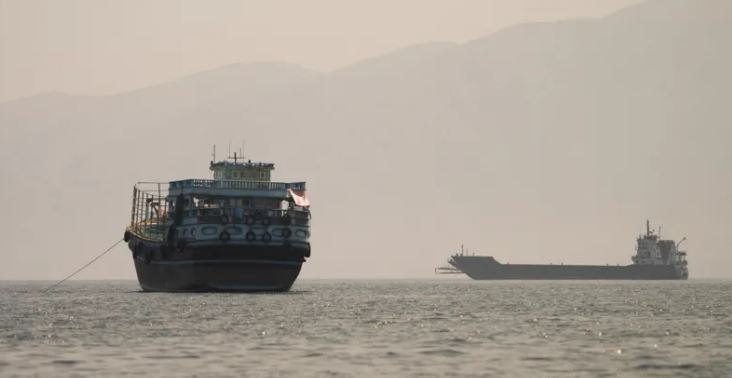
Global fuel
prices surged to multi-year and, in some regions, all-time highs as the war in
Iran, which started in early 2026, severely restricted oil traffic through the
Strait of Hormuz.
The conflict led
to the restriction or closure of nearly all traffic through this vital
chokepoint, which accounts for roughly 20-25 per cent of the world's seaborne
oil shipments.
The supply glitch
caused panic in the global economy, with various institutions led by the
International Monetary Fund (IMF) warning about a global recession tied to the
war in Iran.
In its World
Economic Outlook, the IMF warned that a prolonged conflict could slash global
economic growth to below two per cent, a threshold historically indicating a
global recession.
Locally, Kenya
Private Sector Alliance (Kepsa) and the Kenya Association of Manufacturers (KAM)
warned that over two million people risk sliding into poverty as the cost of
living rises due to high fuel prices.
In Kenya, a
surge in fuel prices sparked deadly protests that saw at least four people shot
dead, goods worth millions of shillings destroyed and road transport disrupted.
The protests came just a day
after the Energy and Petroleum Regulatory Authority (EPRA) pushed up retail
prices of a litre of super petrol by Sh16.65 and diesel by Sh46.29 for the May 14
to June 14 cycle.
This is despite various
government interventions, including slashing Value Added Tax (VAT) on fuel by
half and cushioning consumers through the Petroleum Development Levy (PDL) Fund.
The protests saw
the government slash the price of a litre of diesel by Sh10 and raise kerosene
prices to avert fuel adulteration.
Two weeks ago,
President William Ruto promised to cut diesel prices further by Sh10 in the
upcoming monthly price revision following high-level consultations with public
transport stakeholders.
The head of state said that the intervention
is intended to lower transport
costs and cushion Kenyans against the impact of a global fuel crisis linked to
instability in the Middle East.
Ruto defended his administration’s response to the fuel crisis,
attributing the price hikes to disruptions in global oil supply chains caused
by escalating tensions involving Iran and insecurity along the Strait of
Hormuz.
He said the government has injected Sh13.74
billion through the Petroleum Development Fund over the last two fuel pricing
cycles and further reduced VAT on petroleum products from 16 per cent to eight
per cent, sacrificing an estimated Sh14.43 billion in revenue.
Without the subsidies and tax adjustments, he said, diesel prices would
currently stand at Sh277.75 per litre instead of the prevailing Sh232.86.
Various players in the transport and production sectors have welcomed
news of a possible fall in fuel prices, terming it timely.
Several Public Service Vehicle (PSV) operators
across the country called on the government to walk the talk, saying that they
have recorded huge losses in the past months.
“Wandayi’s
statement has inspired hope amongst our members who are recording huge losses.
We just hope that the cut will be significant enough to help reverse the
current situation,’’ Tom Kibe, an official of Likana Sacco, told the Star.
His sentiments were echoed by Jerome Wakoli, chairperson of the Boda Boda Association, Westlands branch.
“Our members are
suffering. I hope Wandayi is not playing politics with this sensitive matter.
We expect fuel prices to drop progressively by at least Sh20 per cycle. We will
not accept the usual Sh4 and loaded statements,’’ he said.
“The pain is real. I used to make at least Sh4,000 per day, but that has
sunk to just Sh1,500 and sometimes zero due to high fuel prices. I have
since cut my operations to three days a week to avert more losses,’’
Benjamin Mureithi, a taxi operator, told the Star.
“I hope that a litre of super petrol will drop below Sh200 in the
upcoming price revision cycle,’’ he said.
The Institute of
Certified Public Accountants of Kenya (ICPAK) is hoping for relief, with chairperson Elizabeth Kalunda saying that fuel is not merely a commodity consumed at the
pump.
“It is a
strategic enabler of productivity, trade, mobility, food security,
manufacturing, and public service deliverables and when its price rises sharply,
every sector of the economy and every household feels the strain,’’ she said.
Accountants are
recommending a Strategic Petroleum Reserve Act to mandate a minimum 90-day
domestic reserve, funded through a transparent, auditable levy.
“A
price-smoothing mechanism of the kind operating in Chile, Malaysia, and India
should prevent global volatility from being transmitted immediately and in full
to consumers.”
The Kenya
Association of Manufacturers, on the other hand, wants the government to review taxes, which
make up about 46 per cent of pump prices, warning that elevated transport and
production costs will trigger inflation across essential sectors.
Peris Wamae, a
fruit and vegetable vendor in Ngara, called on the government to review
policies around fuel and power prices, saying that a price cut is needed urgently.
Even so, opposition
leaders have criticised Wandayi, calling his assurances "hollow".
Led by Wiper leader Kalonzo Musyoka, they have demanded both lower fuel prices and Wandayi's
resignation, pointing out that current pump prices still pose a massive burden
on struggling households.
Kalonzo claimed the current fuel crisis in the country is artificial and is meant to
benefit top leaders in President William Ruto’s government.
Last week,
National Treasury CS John Mbadi accused opposition figures and
critics of exploiting the recent surge in pump prices to incite public
protests, describing the demonstrations as unnecessary and misplaced.
Addressing the Bunge
La Mwananchi forum at Nairobi’s Jevanjee Gardens, Mbadi highlighted measures
taken by the government to cushion households from high fuel prices stemming
from the war crisis in the Middle East.
He defended the
G-to-G arrangement, saying it has helped to stabilise the Kenyan shilling, hence
keeping fuel prices lower.
"If you
don't have a G-to-G arrangement where payment is deferred even by three months,
there will be strain on our shilling because the demand for the dollar will be
high,” Mbadi warned.
"Many
politicians have localised this thing as if it were a Kenyan problem alone. I
want to tell you that the problem of fuel is not a Kenyan problem. This is a
global problem. No fuel is coming from the Middle East to many
parts of the world, and that is why the supply chain has been disrupted."
He said that
although the crisis has put a strain on the country’s overall economy, things
will get better as the government reviews various policies while hoping that
the crisis in the Middle East de-escalates.
Kenya's
inflation rate rose to 6.7 per cent in May, up from 5.6 per cent
in April.
The Kenya
National Bureau of Statistics (KNBS) reported that this increase was primarily
driven by higher prices for transport (16.5 per cent), food and non-alcoholic
beverages (9.4 per cent), and fuel.
Economists are
not surprised by the high inflation recorded in May, saying that it is a global
phenomenon.
“This is not
unique to Kenya. Rising energy and fuel costs drive inflation through several
interconnected channels. Although the government needs to re-examine fuel taxes,
it has done a commendable job of ensuring supply. Several countries have been
forced to ration,’’ Dan Mweresa, an economist at a local consulting firm, said.






![[PHOTOS] The new Ngong –Naivasha Road viaduct](https://cdn.radioafrica.digital/image/2026/06/64d4f771-4432-4aee-ba3c-2f304c4436ec.jpg)







![[PHOTOS] 'Mr Speaker Sir' Gen Z protester in court](https://cdn.radioafrica.digital/image/2026/06/b3e62d8e-25c3-4780-90f9-4eb48b1ce8a7.jpg)