If you visit a hospital and the nurse or doctor attending to
you seems withdrawn, exhausted or indifferent, there may be more going on than
a busy shift.
A new study has found that nearly half of healthcare workers
in Kenya are battling symptoms of depression, raising concerns about the
wellbeing of the people responsible for caring for millions of patients.
The study, conducted among 514 healthcare workers in five
Nairobi hospitals over a 12-month period, found that nearly half (43.1 per
cent) met the criteria for major depressive symptoms at least once during
follow-up.
Researchers also found that 16 in every 100 medics
experienced moderately severe depressive symptoms, while five in every 100 had
severe depressive symptoms.
Severe depressive symptoms are not simply stress or a bad
mood. They involve persistent feelings of sadness, hopelessness and exhaustion
that can interfere with a person’s ability to work, think clearly, sleep
normally and carry out daily activities.
The findings suggest healthcare workers in Kenya are
struggling with mental health challenges at rates higher than the general
population.
The study, titled Depressive Symptoms and Associated Factors
Among Kenyan Health Care Workers, was published in the JAMA Psychiatry journal.
The authors said; “Consistent with previous studies, risk
factors for depression were higher neuroticism, not being in a committed
relationship, having a difficult early family environment, experiencing
stressful life events and experiencing workplace discrimination. Unlike
findings from US studies, work hours and medical errors were not associated
with depression.”
The findings paint a picture of health workers operating
under intense pressure. Younger workers and those with fewer years of
experience were found to be particularly vulnerable.
The report notes that healthcare workers continue to work in
environments marked by staff shortages, heavy workloads and emotionally
demanding responsibilities.
“Healthcare workers in Kenya are facing growing mental
health challenges, with important implications for workforce wellbeing and
health system resilience,” the report says.
Prof Zul Merali, a co-principal investigator of the study, said
the findings reveal the heavy burden carried by many healthcare workers.
“This study highlights the reality of what healthcare
workers are carrying every day. The findings give us a clear chance to take
action and improve the systems that support our healthcare workers,” he said.
The Ministry of Health said the findings should help guide
future policies.
“We recognise that supporting healthcare workers’ mental
health is key to better care and stronger health systems,” said Mary Karongo,
deputy director of counselling in the ministry’s Division of Mental Health.
“The ministry is committed to integrating mental health into
workforce and occupational health strategies.”
The authors said workplace discrimination was among the
strongest workplace-related factors associated with depressive symptoms.
Nearly half of the participants reported experiencing
discrimination at work, while almost two-thirds reported stressful life events.
Researchers said these conditions can significantly affect
mental wellbeing and may ultimately influence the quality of care delivered to
patients.
The report warns that support systems remain weak in many
health facilities.
“Few institutions have structured wellbeing programmes,
routine mental health screening or confidential psychosocial support services
for staff,” the report states.
Beyond documenting the problem, the researchers also
explored possible solutions.
Healthcare workers participating in the study expressed a
strong willingness to use digital tools such as mobile phone applications and
wearable devices to monitor their mental wellbeing.
Researchers found many participants were comfortable using
technology to track sleep patterns, mood, physical activity and other
indicators linked to mental health.
The report says these tools could help with “early
identification of psychological distress”, “routine workforce wellbeing
monitoring” and “timely referral and support”.
Researchers argue that addressing mental health among
healthcare workers is not only important for the workers themselves but also
for the wider health system.
“Growing evidence from Kenya highlights the significant
mental health burden facing healthcare workers and the need for stronger
institutional support systems,” the report says.
It adds; “Addressing healthcare worker mental health is not
only important for workforce wellbeing, but also for quality of care, workforce
retention and health system resilience.”
The researchers recommended routine mental health screening,
counselling services, stronger workplace protections against discrimination,
peer-support programmes and dedicated funding for workforce wellbeing
initiatives.
The study was conducted through the UZIMA Data Science
project and involved researchers from Kenya and the United States.
It followed healthcare workers from April 2023 and tracked
changes in their mental health over one year.

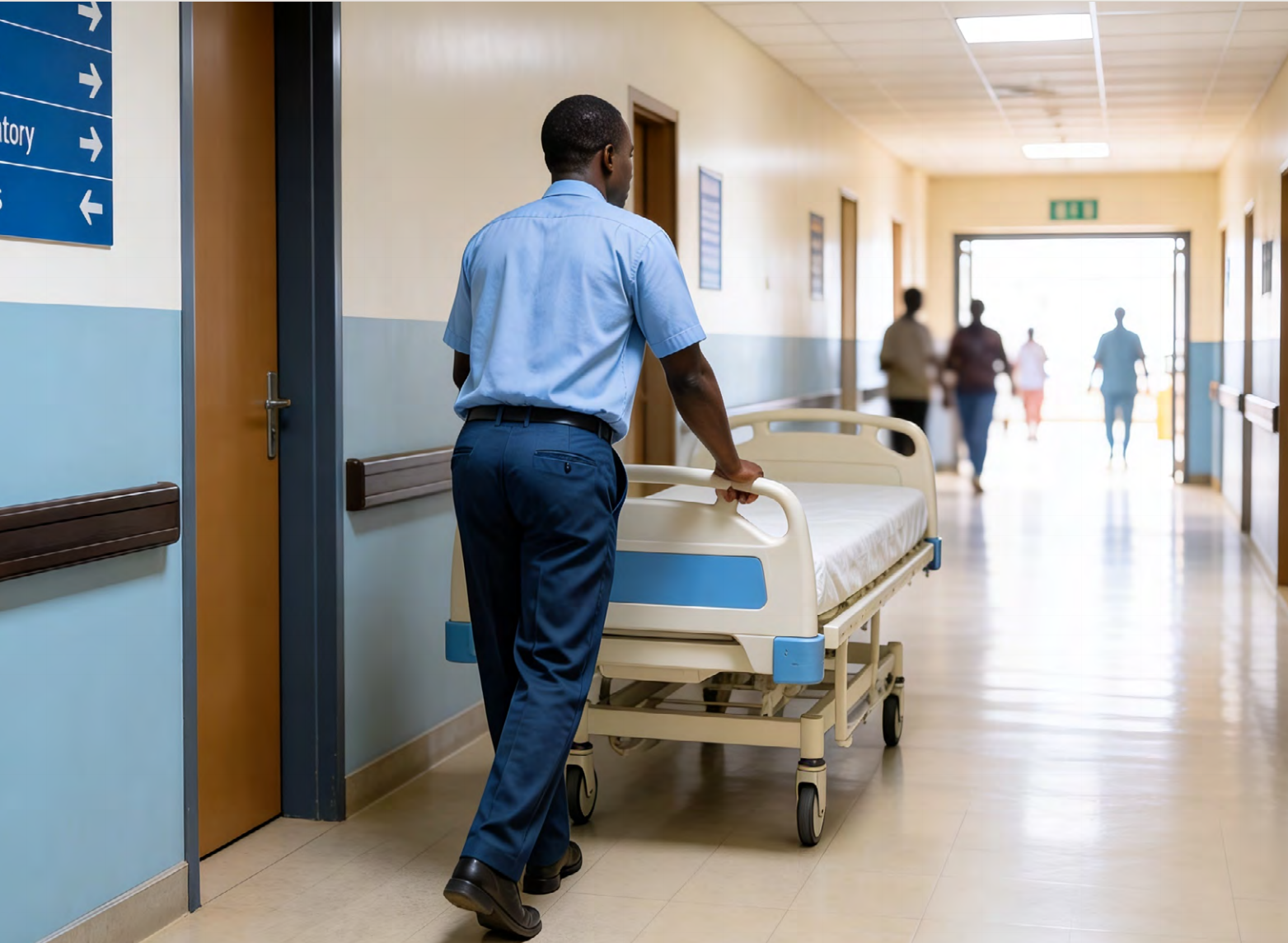 The findings suggest healthcare workers in Kenya are struggling with mental health challenges at rates higher than the general population.



![[PHOTOS] The new Ngong –Naivasha Road viaduct](https://cdn.radioafrica.digital/image/2026/06/64d4f771-4432-4aee-ba3c-2f304c4436ec.jpg)








![[PHOTOS] 'Mr Speaker Sir' Gen Z protester in court](https://cdn.radioafrica.digital/image/2026/06/b3e62d8e-25c3-4780-90f9-4eb48b1ce8a7.jpg)