The Global Terrorism Threat Assessment 2026 has also raised concerns over the future of international support for counter-terrorism operations in the Horn of Africa, even as the insurgent group makes gains in Somalia.
The report by the Center for Strategic and International Studies (CSIS), which identifies al-Shabaab as Africa's most dangerous terrorist organisation, says the group is stronger than it has been in years.
CSIS is a prominent, bipartisan American think tank based in Washington D.C and focuses on international relations, defence, and geostrategy.
“Terrorism in Africa may be approaching a tipping point. Al-Shabaab and JNIM [Jama’at Nusrat al-Islam wal-Muslimin in West Africa] are closer to achieving key regional goals than they have been in more than a decade," the report says
"The conquest of either Mogadishu or Bamako by an al-Qaeda affiliate could change the international jihadist landscape in unpredictable ways, potentially increasing the intent and capability of Africa’s jihadist groups to plot or inspire external operations against the US."
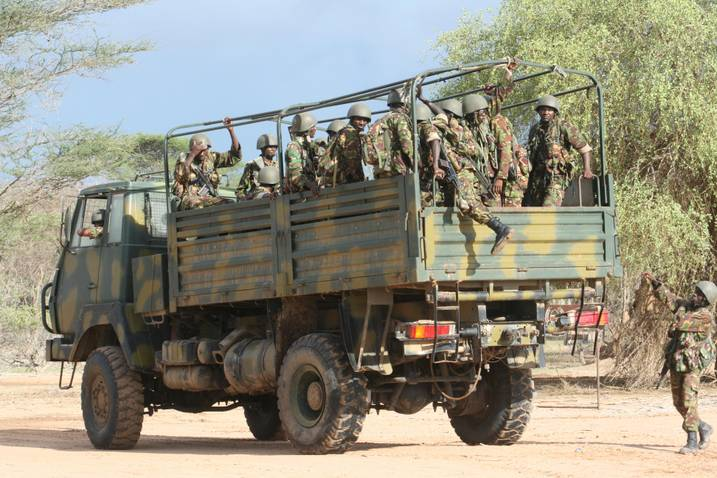
The new revelations could jolt African heads of state as various military forces, including Kenyan soldiers, remain active in Somalia under the African Union Support and Stabilisation Mission in Somalia (AUSSOM).
Uganda is the biggest troop contributor to the mission with 4,500 soldiers, followed by Ethiopia (2,500). Kenya has about 1,400 soldiers in Somalia.
The report says that throughout 2025, al-Shabaab demonstrated increased ability and intent to seize territory from the Somali National Army and local forces, bitterly contest counteroffensives by international troops, and conduct complex attacks in Mogadishu.
Beyond its activities in Somalia, it has also extended operations into Kenya and Ethiopia.
“US government assessments from early and mid-2025 imply that al-Shabaab is focused on its local goal of establishing an al-Shabaab-run government in Somalia and parts of Kenya and Ethiopia,” it adds.
According to the report, the Somali militant group has reversed many of the gains made by government forces since 2022, expanded its territorial influence, and increased its ability to launch complex attacks against military and government targets.
The findings are a clear pointer that instability in Somalia could once again spill across the border into Kenya, which has for more than a decade been one of the frontline states in the fight against the al-Qaeda-linked militants.
“Al-Shabaab might become interested in using long-range systems to threaten shipping off the coast of Somalia or strike targets in countries backing the Somali government, including Ethiopia, Kenya, and Uganda.”
More significantly, the report paints a troubling picture of Somalia's security trajectory.
By the end of 2025, it says, Al-Shabaab had become stronger than at any time since at least 2022, reclaiming territory and increasing pressure on Somali government forces. The group has also deepened ties with Yemen's Houthi movement and expanded access to resources and weapons.
The report warns that if Somalia's security situation continues to deteriorate, Kenya could face renewed pressure ranging from cross-border attacks and refugee flows to increased security spending and intensified recruitment efforts targeting vulnerable communities.
The report comes as questions emerge over the future of international support for Somalia's stabilisation efforts.
The US has rejected a proposal to finance the African Union Support and Stabilisation Mission in Somalia through United Nations assessed contributions under Security Council Resolution 2719.
Washington has argued that Somalia should not become the first test case for the new financing framework, citing concerns about accountability and oversight.
It has also raised concerns about burden sharing in the intervention, calling for greater contributions from European partners.
The standoff has cast uncertainty over long-term funding for AUSSOM, which replaced the African Union Transition Mission in Somalia and is expected to support Somali security forces against al-Shabaab.
Along Kenya’s northeastern frontier, the security picture has gradually shifted.
Large-scale al-Shabaab attacks inside Kenya have reduced compared to previous years, offering communities a cautious sense of relief.
Major incidents that once disrupted towns and highways are now less frequent, and security operations have strengthened patrols and early warning systems.
However, peace remains fragile.
Across the border in Somalia, al-Shabaab elements continue to test Kenya’s defences through smaller cross-border raids, ambushes, and sporadic attacks on remote posts and transport routes.
In counties such as Mandera, Wajir, Garissa, and Lamu, residents still adjust daily routines around alerts and security advisories. Markets reopen after brief disruptions, schools continue with vigilance, and security forces maintain a visible presence.







![[PHOTOS] The new Ngong –Naivasha Road viaduct](https://cdn.radioafrica.digital/image/2026/06/64d4f771-4432-4aee-ba3c-2f304c4436ec.jpg)








![[PHOTOS] 'Mr Speaker Sir' Gen Z protester in court](https://cdn.radioafrica.digital/image/2026/06/b3e62d8e-25c3-4780-90f9-4eb48b1ce8a7.jpg)