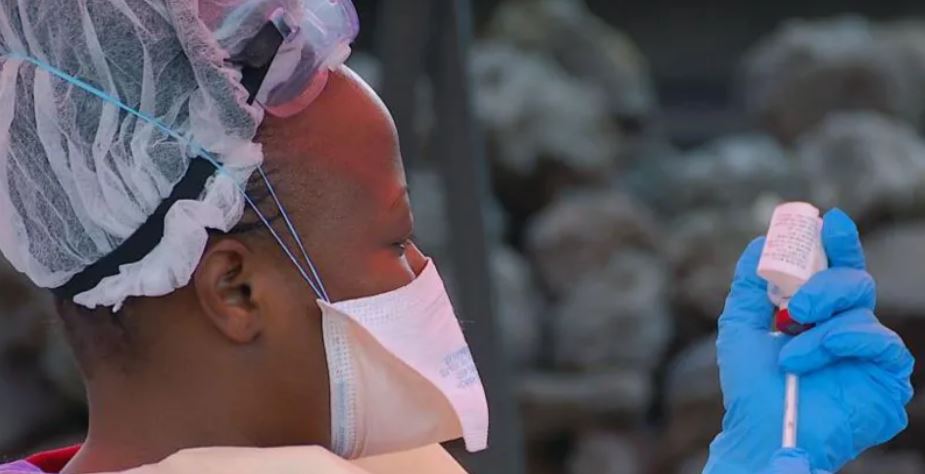
 More than 2,000 people died in an Ebola outbreak in eastern DR Congo in 2019
The Kenya Association of Physicians has joined the bandwagon of stakeholders opposed to the idea of setting up an Ebola quarantine facility in Kenya for American citizens.
KAP president Erick Njenga said such a facility introduces an alarming biosecurity threat to the republic.
According to Njenga, the specific Ebola strain in question carries significant risk, as it currently has no known vaccine or treatment.
“Diagnostic capability for the strain is also limited, with no validated testing tool. Regardless of the very best containment strategies, the risk of exposure to the local community remains a real risk, which we cannot afford to take,” Njenga said in a statement on Sunday.
The Donald Trump administration wants to establish a 50-bed quarantine unit in Laikipia county to house US citizens who are potentially exposed to Ebola in the Democratic Republic of Congo.
The plan has, however, drawn widespread criticism.
Kenya is yet to report any case of Ebola in the country, amidst heightened surveillance.
Kenyan stakeholders opposed to the idea say the move may endanger public health.
The Katiba Institute, the Law Society of Kenya, the Kenya Medical Practitioners and Dentists Union, among others, have all opposed the plan, saying Kenya is a sovereign nation and not a geopolitical isolation ward.
They said they will not allow the President William Ruto administration to give up public safety for foreign aid.
Washington has said it will commit USD13.5 million (approximately Sh1.75 billion) to Nairobi for Ebola preparedness efforts.
KAP is concerned by the complete lack of transparency surrounding this initiative and the total exclusion of key stakeholders, including infectious disease specialists and physicians, from the decision-making process.
“We must question the rationale behind this agreement. The United States government has explicitly stated it will not allow any Ebola cases within its own borders, despite possessing superior containment infrastructure and specialised treatment centres designed to manage such outbreaks.
“If the risk is deemed too severe for America, it beggars belief that the Kenyan government seems willing to expose its citizens to it under the cover of global responsibility,” the KAP president said.
He called on the government to halt the whole process immediately, prioritise national health security, and engage local medical experts.
Already, the High Court in Kenya has stopped the government from establishing and operationalising any Ebola-related facility in Kenya under arrangements involving the US or any other foreign government or agency.
This is after Katiba Institute filed a petition against it.
“A conservatory order is hereby issued restraining the Respondents from establishing, operationalising, facilitating, approving or permitting the establishment and/or operation of any Ebola exposure, quarantine, isolation or treatment facility in Kenya pursuant to any arrangement with the United States of America or any foreign government or agency pending the inter-parties hearing of this application,” Justice Patricia Mande ruled.
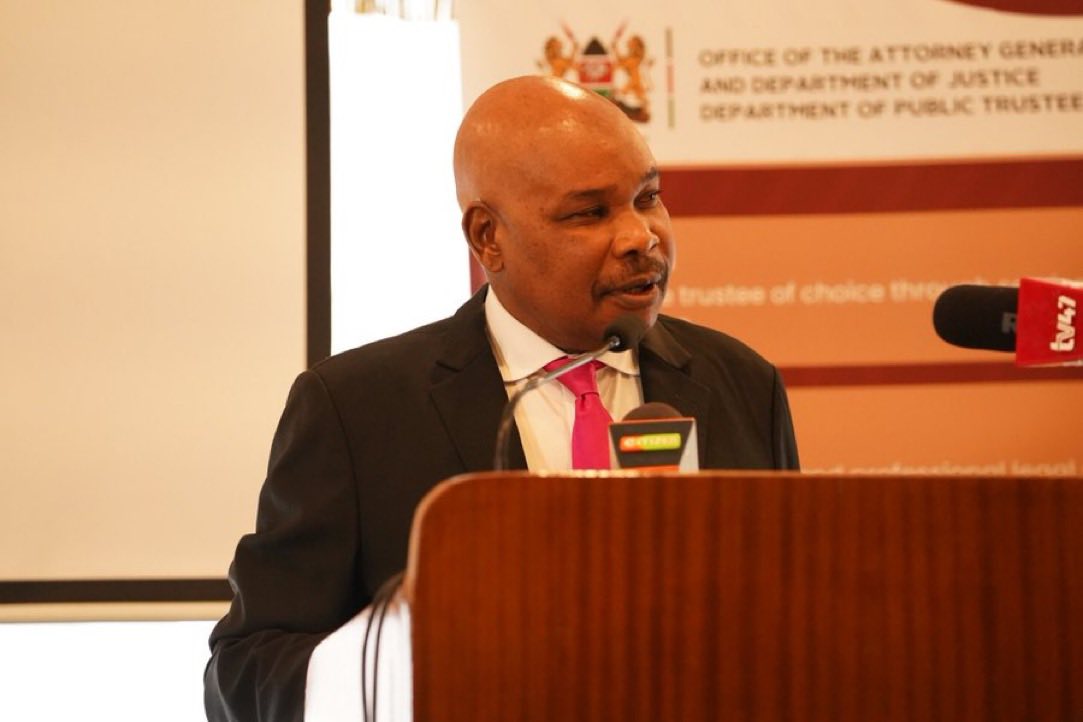
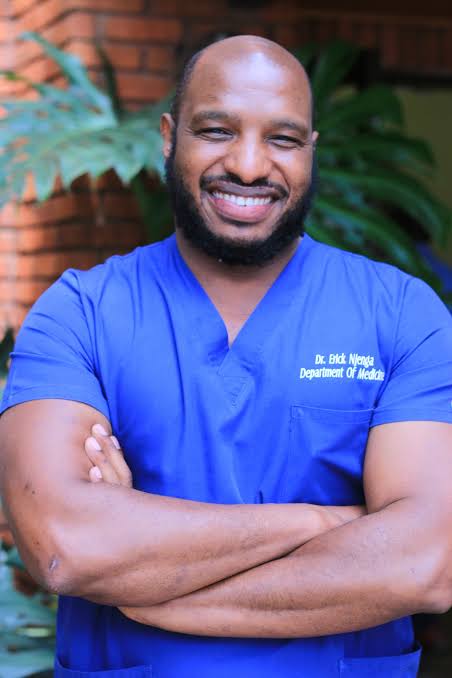 Kenya Association of Physicians president Erick
Njenga / BRIAN OTIENO
Kenya Association of Physicians president Erick
Njenga / BRIAN OTIENOHowever, some Kenyans
feel a quarantine facility is essential, arguing that Ebola will eventually get
to Kenya no matter the stringent protection mechanisms put in place.
“If you look at this issue of Ebola objectively,
you will realise that Kenya needs a quarantine centre more than the US,” George
Keter, a Kenyan on X, said.
“But if you apply (ex-DP Rigathi) Gachagua's
reasoning and put Mt Kenya's tribal lenses, you might think that (President) Ruto
is evil and wants to finish Kenyans.
“The fact is, Ebola, like any other contagious
disease, will be here with us sooner or later, whether a quarantine facility is
there or not,” Keter said.
He argued that the DRC is just a country away from
Kenya, and Kenya is more prone to Ebola than the US.
“Having a quarantine facility here in Kenya will
help contain the spread of the pandemic once it hits us,” he argued.
Cyprian Nyamwamu, another Kenyan on X, however, argued that the process by which the agreement was made is the problem,
indicating there was no transparency.
He said the Ebola risk is a Kenyan problem because
DRC and Uganda are neighbouring countries and many Kenyans are travelling to and
from these countries.
“Kenyans want our government using our taxes to
prepare and deal with the Ebola virus as a sovereign State in upholding Kenya's
national interest, not this ‘America First’,” he said.
Kenyan doctors pointed out that domestic hospitals lack
PPE, drugs, ICU beds, and staff.
“People asked why Kenya would take on an American quarantine mission while “domestic health infrastructure was already teetering,” Nyamwamu said.
![[PHOTOS] The new Ngong –Naivasha Road viaduct](https://cdn.radioafrica.digital/image/2026/06/64d4f771-4432-4aee-ba3c-2f304c4436ec.jpg)






![[PHOTOS] 'Mr Speaker Sir' Gen Z protester in court](https://cdn.radioafrica.digital/image/2026/06/b3e62d8e-25c3-4780-90f9-4eb48b1ce8a7.jpg)