The lack of a structure that accommodates all in the opposition, individual egos and lack of progressive messaging are among the major factors undermining the camp’s unity.
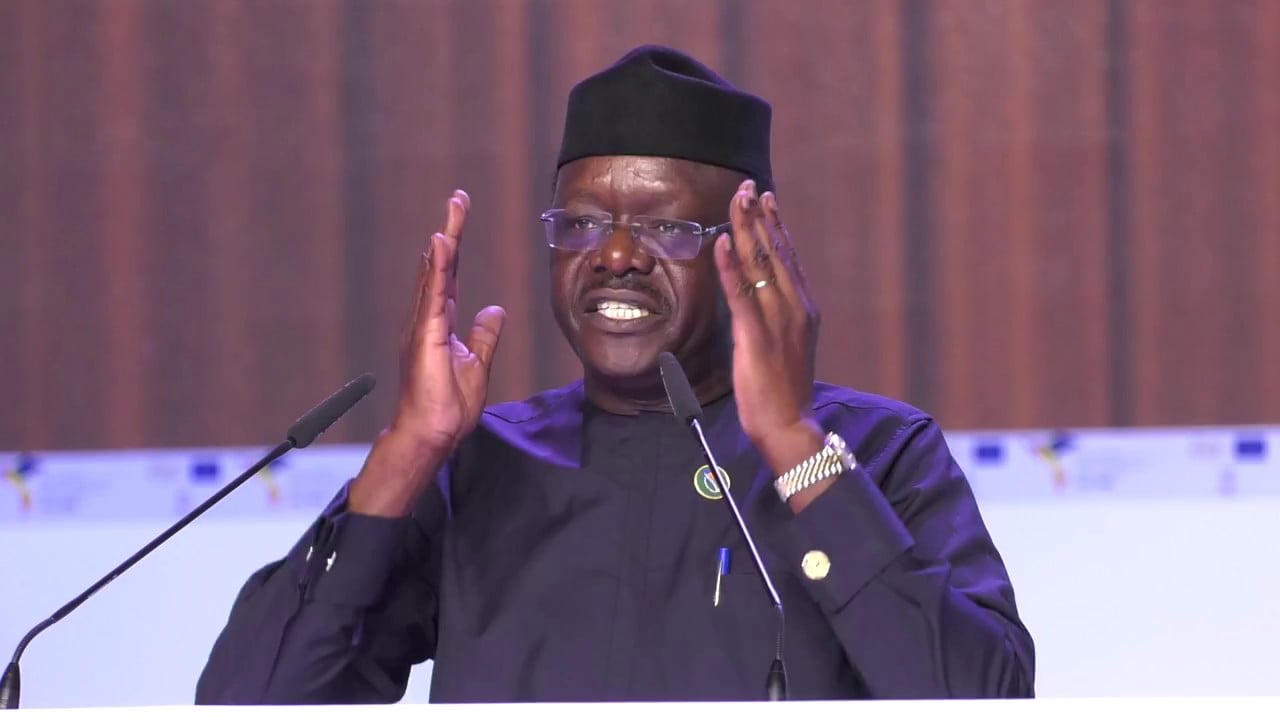
United Opposition’s spokesman Mukhisa Kituyi on Wednesday said internal rivalries, weak coalition
structures and competing ambitions are threatening to fracture the anti-William
Ruto alliance ahead of the 2027 general election.
Speaking to Citizen TV, Kituyi
acknowledged growing public anxiety over persistent divisions within the United
Opposition, warning that failure to institutionalise unity could erode public
confidence in the coalition.
“There’s growing public pressure that nobody should walk
away from the table,” Kituyi said. “There is insufficient development of the
mechanics of keeping everybody at the table.”
Kituyi, who was also named the opposition’s head of
secretariat in September, added that going forward, the principals must remain
true to their public pronouncements.
Kituyi particularly noted that personal ambition and
political ego were emerging as major threats to unity.
“Going forward, the public declaration of commitment to
being in one team and everyone saying they should not be the one responsible
for the failure to keep the hope that Kenyans have is going to discipline
people to purposefully sacrifice their ego and be ready to be part of a
leadership in which they see themselves not as better than others,” he said.
Notably, Kituyi has himself been missing from the high-level
meetings, and has barely issued communication of behalf of the camp since his
announcement as the spokesperson last year.
His is also the strongest acknowledgement yet from within
the coalition ranks that internal mistrust and competition remain unresolved,
despite increasing public declarations that opposition leaders remain united.
It follows remarks and complains particularly from
Jubilee deputy party leader Jeremiah Kioni that all is not well in the
opposition.
Kioni told Radio Generation that the lack of written
document specifying guiding and organising principles, what they stand for and
the coalition partners remain a challenge.
“And when you are trying to form a coalition while not in
power, you can imagine the sort of things that will be thrown your way by those
in power,” Kioni said.
He added that lack of clear leadership structure and the overlapping
Azimio membership are complicating matters for the camp.
“United Opposition, even if it is not said and he may not
admit it, but you can clearly say Rigathi Gachagua is its leader because where
he is, is where the opposition is.
“Then we have Azimio which was in the process of handing
over. Uhuru, who would want to exit an active role there, had asked Kalonzo to
reorganise the unit (Azimio) as the senior politician. It is recognised by law,
with a leadership structure and thus available for 2027,” he said.
Kioni has also openly criticised the coalition’s approach,
warning that leaders are prioritising their individual political bases rather
than building a unified national front.
Kituyi’s comments also pointed to a broader strategic
concern on campaign messaging within the opposition and the risk of becoming
defined solely by hostility toward Ruto rather than by a coherent national
agenda.
“The opposition must position itself as a solution-driven
force for Kenyans rather than engaging in political back-and-forth with the President,”
he said.
Political analysts say that may reflect growing recognition
within the coalition that anti-government anger alone may not be sufficient to
sustain public support through to 2027. This is especially in an increasingly
volatile political environment shaped by economic frustrations and youth-driven
activism.
Kituyi warned opposition leaders against
responding to political attacks with ethnic mobilisation, warning that such
confrontations could deepen divisions and undermine the coalition’s national
appeal.
“Let’s not fall into Ruto’s trap by answering ethnic bigotry
with ethnic bigotry. We should be a reassuring force,” he added.
His warning comes at a time when ethnic rhetoric has
increasingly resurfaced in national politics, particularly following recent remarks
by UDA secretary general Hassan Omar.
This has presented political fodder for anti-Ruto axis to sustain
criticism on the Kenya Kwanza administration.
Kituyi, however, appeared keen to position the coalition
instead as a stabilising national alternative capable of reassuring voters
across regions and generations.
The former United Nations Conference on Trade and
Development boss urged the opposition principals to avoid back-and-forth
with Ruto and instead focus on unity.
He warned that opposition leaders risk losing credibility if they remain locked in
confrontational politics with Ruto, instead of presenting themselves as a
stabilising and hopeful alternative




![[PHOTOS] The new Ngong –Naivasha Road viaduct](https://cdn.radioafrica.digital/image/2026/06/64d4f771-4432-4aee-ba3c-2f304c4436ec.jpg)








![[PHOTOS] 'Mr Speaker Sir' Gen Z protester in court](https://cdn.radioafrica.digital/image/2026/06/b3e62d8e-25c3-4780-90f9-4eb48b1ce8a7.jpg)