Every scar has a story. “Letter to My Younger Self” invites you into the reflective hearts of people who've walked winding roads—offering gentle truths, bold lessons, and encouragement for anyone still figuring it out. These weekly letters are full of grace and grit, showing how setbacks shape wisdom and how the past still holds power to teach. From nurturing curiosity to embracing mentorship, each piece is a tribute to growth through lived experience.
Wawira Gathoni (Not her real name) pens this week’s heartfelt Letter to My Younger Self. Here is part one of the series:
Dear Younger Self
You were ten years old when Nairobi changed your life.
At that age, children do not fully understand migration. They only understand disruption.
One day life feels familiar, and the next, everything feels different.
You had grown up in shags where life moved slowly and people belonged to each other. Everybody knew your parents. Community was not something people talked about philosophically; it simply existed. Farming parties brought people together. Children ran freely between homes. Nobody needed appointments to visit. There was a rhythm to village life that made childhood feel safe.
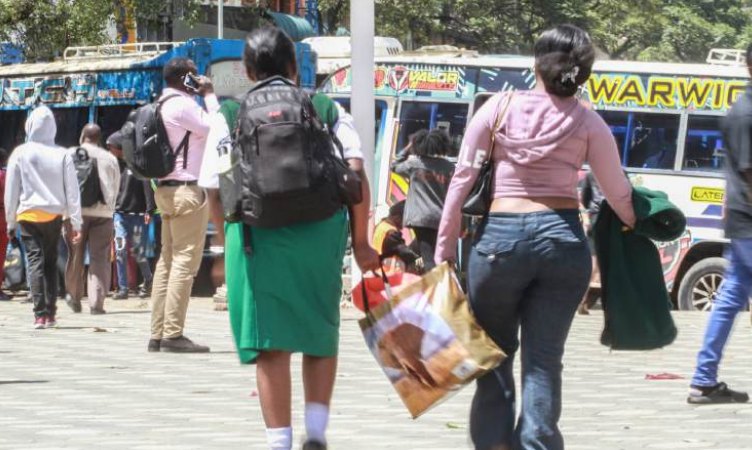
Then suddenly, Nairobi. A city where everybody seemed to be rushing somewhere.
I still think about how brave you were.
Because moving cities at ten years old is not a small thing. It is the kind of transition that quietly reshapes a child’s understanding of the world. New schools. New language dynamics. New expectations. New social rules. Even silence felt different in Nairobi.
And yet somehow, you adapted.
You learned Kiswahili properly because now you had to. You learned how to move through spaces where people did not automatically know your story. You learned that children in cities carried themselves differently. They seemed more exposed, more aware, more competitive.
Most importantly, you began understanding something that would stay with you for life:
Environment matters. Where a child grows up shapes what they believe is possible.
Back in shags, you were smart, but intelligence did not yet feel like something that could transform your future. Nairobi changed that. The schools were better. The expectations were higher. The exposure was wider. Suddenly, education no longer felt like something you simply did because adults told you to.
It began to feel like a pathway.
For the first time, you started meeting children who spoke confidently about their futures.
Doctor. Lawyer. Journalist. Pilot. There was something powerful about hearing children dream out loud.
And slowly, quietly, you started dreaming too.
Primary school became more than academics. It became your first real lesson in adaptation and resilience. You worked hard naturally, but you also began noticing how uneven opportunity could be. Some children arrived in school already exposed to things you had never encountered. Some spoke better English. Some carried confidence you had not yet developed.
But instead of shrinking, you observed.
That ability to observe people and environments carefully would later become one of your greatest strengths.
Then KCPE happened. I think that was the first time you truly understood that you were not just “doing well.” You were actually intelligent.
That realization matters more than people think.
Many African girls grow up performing excellence quietly without ever fully internalising their brilliance. They are taught discipline before confidence. Achievement before self-worth. Humility before self-belief.
So even as you excelled, part of you still minimized yourself.
You did not yet know that gifted children also need emotional nurturing. Nobody explains to bright young girls that intelligence alone does not protect you from self-doubt, heartbreak, rejection, or loneliness.
And maybe that is why I wish you had celebrated yourself more. I wish you had understood earlier that acknowledging your intelligence is not arrogance.
It is truth.
Still, Nairobi stretched your world in necessary ways.
It exposed you to inequality very early. It taught you how quickly opportunity changes depending on where a child is born. It taught you that some children arrive at the starting line already ahead.
But Nairobi also gave you possibility. Sometimes I wonder who you would have become if you had never left shags.
Would you still have found this version of yourself? Would your ambitions have become this big? Would you still have discovered your voice?
I do not know. What I know is this:
That move planted seeds.
The girl who arrived in Nairobi at ten years old would later grow into a woman deeply interested in systems, inequality, education, and opportunity because she experienced firsthand how environments shape children differently.
You did not have the language for it then. But you were already learning. And maybe that is the beautiful thing about childhood.
Sometimes we think life begins when we become adults.
But the truth is, the adults we become are often being shaped quietly in childhood moments we barely notice while they are happening.
And Nairobi was one of those moments. It changed your life. For the better.
Even if it took years for you to fully understand why.
Everyone has a story worth sharing. If you’ve ever wished you could talk to your younger self—with wisdom, forgiveness, or clarity—we invite you to write to us. Your real, heartfelt letter might just be the encouragement someone else needs today. You may remain anonymous if preferred, but your truth matters. We don’t pay contributors, but we believe in the power of shared experience. Join us in building a collection of life’s hard-earned lessons and gentle reminders.
Be part of this movement. Send your Letter to My Younger Self to: [email protected]
Watch out for part three of her series next week.

![[PHOTOS] The new Ngong –Naivasha Road viaduct](https://cdn.radioafrica.digital/image/2026/06/64d4f771-4432-4aee-ba3c-2f304c4436ec.jpg)









![[PHOTOS] 'Mr Speaker Sir' Gen Z protester in court](https://cdn.radioafrica.digital/image/2026/06/b3e62d8e-25c3-4780-90f9-4eb48b1ce8a7.jpg)