



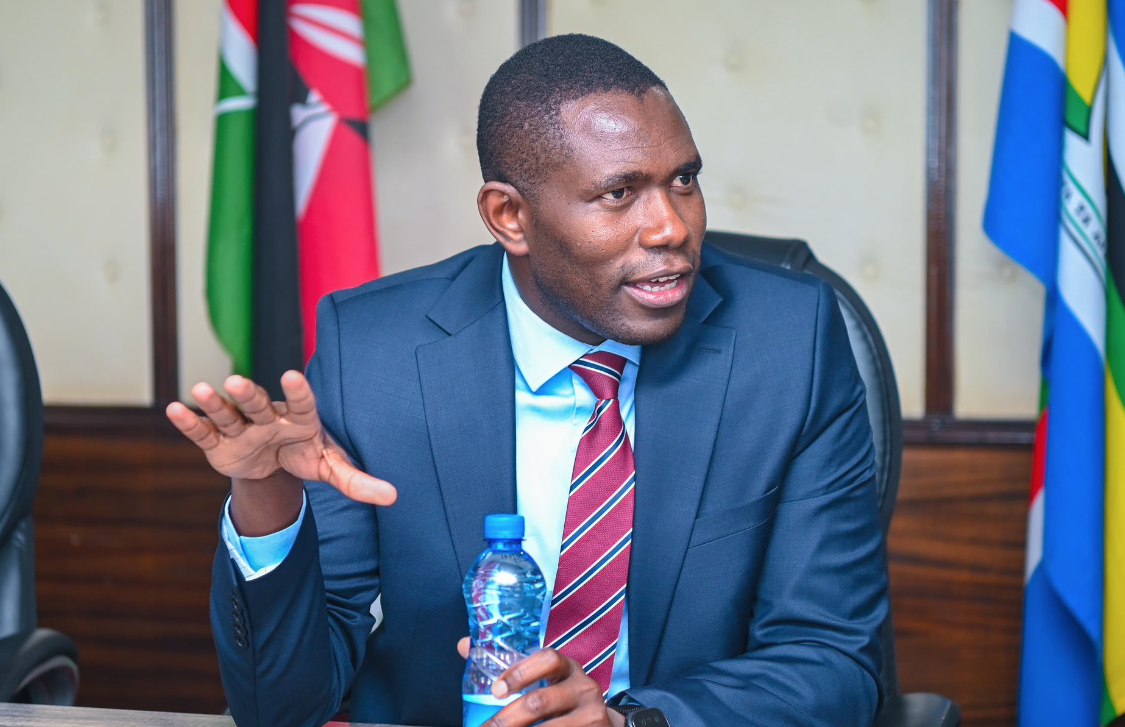
 Medical Services Principal Secretary Dr Ouma Oluga/FILE
The Ministry of Health has announced that at least 2,200 health care workers have been trained in outbreak response and case management as Kenya strengthens its preparedness to respond to Ebola and other infectious disease outbreak.
Medical Services Principal Secretary Ouma Oluga said the training forms part of a broader national strategy aimed at ensuring rapid detection, isolation, and treatment of highly infectious diseases, should they emerge within the country or across the region.
Speaking on Kenya’s preparedness framework, Oluga said the government has been investing in both human capacity and health infrastructure to ensure the country remains ready to respond to public health emergencies.
He noted that the trained personnel now form a critical backbone in the national emergency response system, particularly in handling diseases that require strong infection control measures such as Ebola.
According to the PS, Kenya’s response system is anchored on strong surveillance, well-trained frontline workers, and expanded isolation capacity across key health facilities.
He added that these measures are designed to ensure early identification of suspected cases and swift containment to prevent further transmission.
“We have strengthened our healthcare workforce and ensured that thousands of professionals are equipped to respond effectively to infectious disease outbreaks,” Oluga indicated, emphasising that preparedness is not only about facilities but also about human resource readiness.
"So far 2,200 health care workers have been trained."
Oluga further stated that Kenya has continued to position itself as a regional leader in outbreak response, citing the country’s historical involvement in international health emergencies.
He pointed out that Kenyan experts have previously been deployed to support Ebola response efforts in West Africa, including Sierra Leone between 2014 and 2016, where global teams worked to contain one of the most severe outbreaks in recent history.
He added that Kenya’s health experts have also participated in response missions in countries such as the Democratic Republic of Congo and Rwanda, strengthening regional collaboration in managing infectious disease threats.
Beyond workforce training, the PS highlighted Kenya’s laboratory capacity as a key pillar in its preparedness strategy.
He noted that the Kenya Medical Research Institute (KEMRI) plays a central role in disease surveillance and diagnostics, describing it as one of the most advanced infectious disease laboratories globally.
"KEMRI is the fourth most prepared laboratory in the world when it comes to infectious diseases,” Oluga said.
He further emphasised that Kenya’s laboratories and health systems continue to serve as referral hubs in the region, supporting timely testing and accurate diagnosis of infectious diseases.
The PS reassured the public that the country remains well-positioned to manage potential outbreaks, including Ebola, through coordinated efforts between national and county governments, health institutions, and international partners.
As concerns over infectious disease outbreaks continue to rise globally, the Ministry of Health maintains that Kenya’s multi-layered preparedness approach—anchored on trained personnel, surveillance systems, isolation facilities, and advanced laboratories—places the country in a strong position to respond effectively to any emerging threat.

![[PHOTOS] The new Ngong –Naivasha Road viaduct](https://cdn.radioafrica.digital/image/2026/06/64d4f771-4432-4aee-ba3c-2f304c4436ec.jpg)










![[PHOTOS] 'Mr Speaker Sir' Gen Z protester in court](https://cdn.radioafrica.digital/image/2026/06/b3e62d8e-25c3-4780-90f9-4eb48b1ce8a7.jpg)
