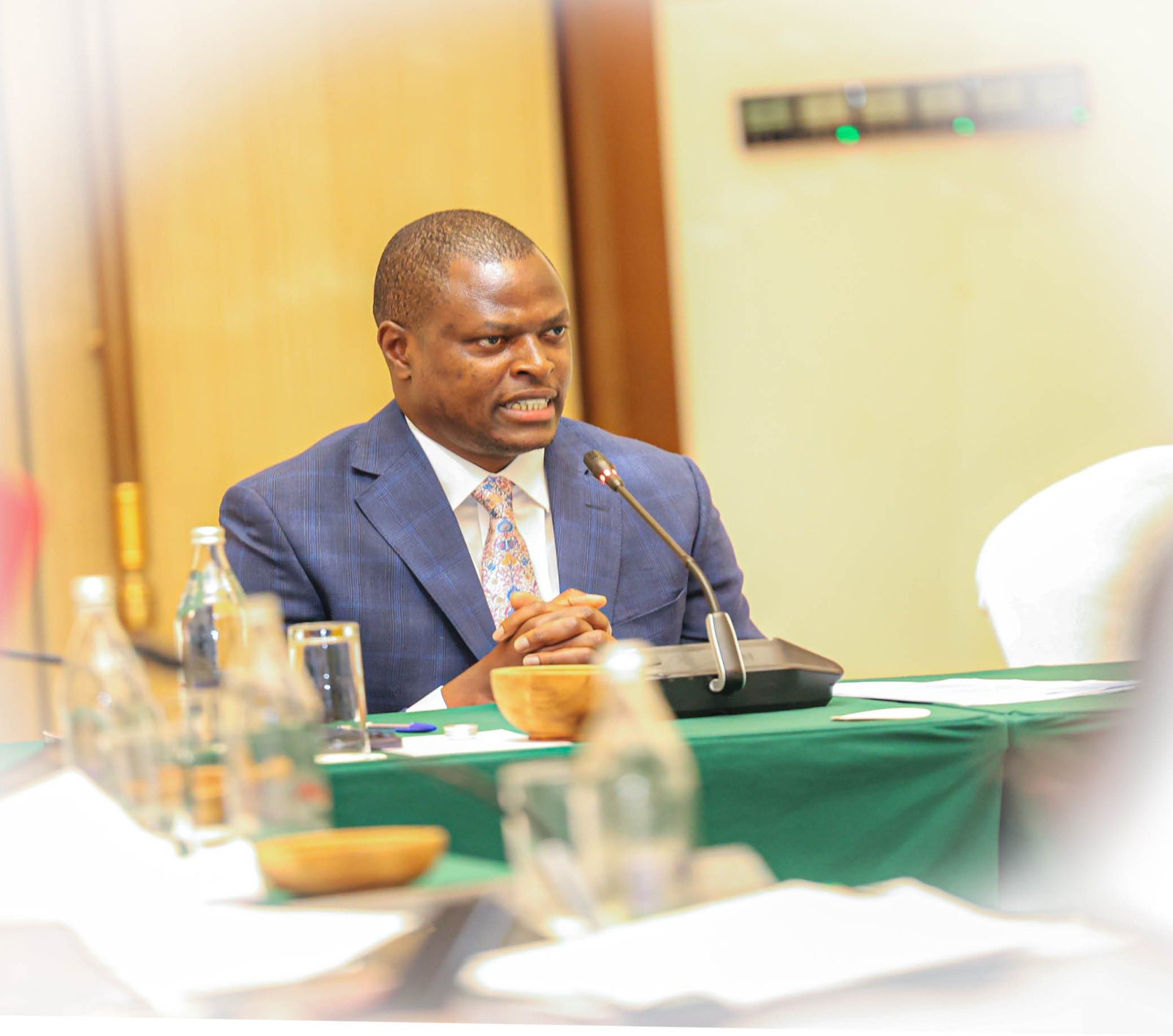
 Kiharu MP Ndindi Nyoro before the Budget Committee to present fuel price mitigation proposals, May 27, 2026.
A tense session of the National Assembly Budget and Appropriations Committee on Wednesday laid bare deep divisions among lawmakers over proposals aimed at easing the burden of rising fuel prices on consumers.
This was as former Budget Committee chairman Ndindi Nyoro defended proposals that could see petrol prices fall to Sh187 per litre and diesel to Sh189.
Appearing before the committee chaired by Alego Usonga MP Samuel Atandi, the Kiharu MP argued that Parliament must urgently intervene to cushion Kenyans from what he described as a temporary global supply shock with long-term economic damage if left unchecked.
Nyoro told MPs he had formally written to the Speaker and Clerk of the National Assembly proposing measures to manage the crisis, including possible amendments through the Finance Bill or budget-making process.
“One way was for a private member’s bill or to hitch it on the Finance and Budget committee processes. The wisdom of Parliament to go through the committee is welcome,” he said, adding that he would also appear before the Finance Committee on Friday.
The lawmaker said the latest fuel price surge, with petrol projected to hit Sh214 and diesel Sh242 under prevailing market trends, demanded immediate government action despite the fiscal strain involved.
“I was caught in between what the country should do. One, spend money now to correct the spiralling prices or be free and let the market do its work,” he said. “The latter had devastating effects, which may take too long to recover.”
He argued that previous global disruptions, including the Covid-19 pandemic and the Russia-Ukraine conflict, had shown that supply shocks were usually temporary and governments needed to step in to protect economies.
“Letting things flow will make us pay a higher price in the economy in future,” he added.
Nyoro proposed a raft of tax and levy cuts, including reducing VAT on fuel from 16 per cent to zero, lowering the Road Maintenance Levy Fund (RMLF) charge from Sh25 to Sh18, and injecting Sh3.5 billion from the Petroleum Development Levy stabilisation fund.
According to his calculations, the measures would lower pump prices substantially.
“Around Sh74 of super is taxes and levies, Sh67 for diesel, and then there are margins of Sh17 for oil marketing companies,” he said.
The former Budget Committee chair estimated the interventions would require Sh9.8 billion monthly, translating to nearly Sh60 billion annually, although he argued the final figure could fall to about Sh48 billion due to reduced demand during periods of high prices.
To finance the proposals, MP Nyoro called for expenditure cuts across government, Parliament and the Judiciary instead of deeper borrowing.
“The expenditure I am proposing are those that don’t harm service delivery,” he said. “Cut travel budgets for Parliament, Judiciary and Executive. Secondly, target areas with abnormal increments, like those which got 25 per cent.”
However, his proposals immediately drew intense scrutiny from MPs, particularly over why he was now advocating zero-rated VAT after presiding over fuel taxation policies during his tenure as Budget Committee chairman.
Committee member John Chikati questioned the apparent policy shift.
“When you were chair of the budget, VAT was 16 per cent, and now you want it zero-rated. Why didn’t you propose it when you were the chair?” he asked.
Adan Keynan, the Eldas MP, pressed Nyoro on whether he had considered translating the proposals into legislation, arguing that fuel pricing policies required structured legal interventions.
“Budget formation is constitutional and political and driven by public views,” Mr Keynan said. “Why is it that we always have a change of policy?”
Endebess MP Robert Pukose questioned whether the proposals had been benchmarked internationally and defended the road maintenance levy, saying part of it had already been securitised to support infrastructure financing.
“This crisis is not just affecting Kenya. Would you tell us where else you have benchmarked the proposals and they are working?” he asked.
Nyoro responded that his proposals were based on local realities rather than foreign examples.
The exchange escalated further when Pukose insisted he was dissatisfied with the response, arguing that global fuel disruptions required comparative evidence from other jurisdictions.
Nyoro maintained that his proposals were “quantifiable and involve money,” insisting he did not find it necessary to borrow ideas externally.
The committee also clashed over claims that part of the fuel levy had been securitised to finance road projects.
Nyoro disputed the existence of such arrangements during his tenure, saying he had not seen documentation supporting the claims.
“I have written to the clerk to reduce excise duty by Sh7 as a fallback,” he said.
Kisumu Woman Representative Ruth Odinga urged the committee to focus more on the Petroleum Development Levy and the government-to-government oil import arrangement, saying the import model could be inflating fuel prices more than VAT.
“The G-to-G appears to be making us have higher prices than when we had open tendering systems,” she said.
Baringo Woman Representative Florence Jematiah said the committee should also examine rising maritime insurance costs linked to geopolitical instability.
“One of the reasons petrol is high is the insurance put in,” she said.
The session later shifted to electricity prices after Khwisero MP Christopher Aseka questioned why Nyoro was not proposing levy reductions in the power sector, suggesting his investments in electricity firms could present a conflict of interest.
Nyoro dismissed the accusation, saying he was merely a minority shareholder and had no influence over pricing decisions.
“Our electricity is expensive because of production, yet politically connected investors get more. IPPs get most of the money,” he said, referring to Independent Power Producers.
Despite the confrontations, several MPs commended Nyoro for presenting detailed proposals at a time when Kenyans are grappling with rising fuel and electricity costs, with the committee expected to continue reviewing possible interventions ahead of the next budget cycle.
![[PHOTOS] The new Ngong –Naivasha Road viaduct](https://cdn.radioafrica.digital/image/2026/06/64d4f771-4432-4aee-ba3c-2f304c4436ec.jpg)





![[PHOTOS] 'Mr Speaker Sir' Gen Z protester in court](https://cdn.radioafrica.digital/image/2026/06/b3e62d8e-25c3-4780-90f9-4eb48b1ce8a7.jpg)