The Finance Bill, 2026, will be read for the first time in the National Assembly on Tuesday, May 26, after Members of Parliament resume sittings from a short recess.
Already, the revenue-raising measures proposed in the Bill have generated heated public debate, with some stakeholders questioning how the government plans to raise the projected Sh3.63 trillion revenue target for the 2026-27 financial year.
Questions have also emerged over a projected wider budget deficit of 5.3 per cent of GDP, up from 4.7 per cent in 2025-26, meaning the government plans to spend more in the next fiscal year than it expects to collect.
To plug the revenue gap, the government will either have to raise more taxes or borrow more, despite limited borrowing space, with the country's total debt burden having surpassed the Sh12 trillion mark.
Amid the ongoing public debate and ahead of Parliament's approval or rejection of the proposed tax measures, National Treasury Cabinet Secretary John Mbadi has defended the Bill.
Mbadi said the government is aware of the harsh economic conditions facing Kenyans and has deliberately avoided introducing punitive taxes that would further burden struggling households.
According to him, the Bill focuses on simplifying tax administration and widening the tax base to ensure more Kenyans contribute to revenue collection, thereby easing pressure on those already paying taxes.
Much of the commentary, he said, contains a mix of proposals in the current Bill and past tax measures that do not accurately reflect the content and intent of the Finance Bill, 2026.
"We are alive to the fact that measures of raising more taxes are limited because Kenyans have complained loudly before about high taxation. We are also aware of limited options in borrowing money to finance our budget," Mbadi said during a press briefing on May 25.
Here are some of the key proposals in the Finance Bill, 2026 and what they could mean for taxpayers, businesses and consumers.
PAYE
Kenyans had largely expected a restructuring of tax bands to ease the Pay As You Earn (PAYE) burden on salaried workers, but that proposal does not appear in the Bill.
Mbadi explained that the planned PAYE reductions were omitted to avoid a projected Sh35 billion budget shortfall in the 2026-27 financial year.
He said the Kenya Revenue Authority's failure to meet its revenue targets in the current fiscal year made it impossible to implement the PAYE cuts while maintaining budget balance.
It had been expected that individuals earning below Sh30,000 would be exempt from PAYE, while rates for those earning up to Sh50,000 would be reduced.
Critics argue that salaried Kenyans will continue to shoulder a high tax burden under a system whose tax bands have not kept pace with inflation.
25 per cent excise duty on cell phones
The Bill proposes a 25 per cent excise duty on cellular and wireless telephones to replace multiple complex import levies with a single tax.
However, the 25 per cent tax would be applied upon activation rather than at the point of purchase.
The tax would push the cost of a basic smartphone currently retailing at Sh10,000 to Sh12,500, excluding dealer mark-ups.
While many argue that the measure will inflate end-user costs and reverse recent gains in smartphone affordability, Mbadi has defended it as a tax simplification measure that will ultimately benefit buyers.
Currently, imported phones attract 25 per cent customs duty, 10 per cent excise duty, 16 per cent VAT, a 2.5 per cent import declaration fee and a two per cent Railway Development Levy immediately upon arrival at the port of entry.
Cumulatively, the 55.5 per cent tax burden pushes the cost of a Sh10,000 phone to Sh15,550, lending some weight to Mbadi's argument.
Corporate tax
Mbadi has also proposed reducing corporate tax for non-resident companies from the current 37.5 per cent to 30 per cent.
The move is expected to make Kenya more investor-friendly by attracting foreign direct investment (FDI) into capital-intensive sectors such as real estate, increasing international capital inflows and boosting employment opportunities as more foreign firms establish regional operations in the country.
Residential rental income tax
The Bill increases residential rental income tax from 7.5 per cent to 10 per cent, directly reducing landlords' net rental income.
Possible implications include a heavier tax burden on gross rental income and potential rent increases as landlords seek to recover the additional cost.
Without a strict enforcement framework, critics warn the proposal could encourage non-compliance rather than boost revenue collection.
Even with effective enforcement, landlords may still pass the additional tax burden to tenants through higher rents, further reducing disposable income among already struggling households, especially in the absence of PAYE relief.
Customs tax on mitumba
The Bill proposes the introduction of a new Section 12H into the Income Tax Act, which deems profit on used clothes at five per cent of customs value and requires the tax to be paid upfront before goods are released by KRA.
A trader importing a bale worth Sh1 million would therefore be required to pay Sh50,000 regardless of whether the business ultimately makes a profit or incurs a loss.
Undistributed company income deemed as dividends for tax purposes
Mbadi has further proposed amendments to Section 24 of the Income Tax Act to empower KRA to deem at least 60 per cent of a company's undistributed income as dividends and tax it accordingly.
Economists view this as a retrogressive measure that could send the wrong signal to the same investors the country hopes to attract through lower corporate tax rates for non-resident firms.
They argue that the proposal fails to account for legitimate business decisions to reinvest profits, retain earnings as working capital or finance future expansion.
VAT exemptions on money transfers removed
On digital financial services, the Bill removes existing VAT exemptions on money transfers and payment processing services, making them more expensive.
The removal of the exemption means the services will be reclassified as taxable, requiring operators to add 16 per cent VAT and resulting in a direct increase in costs.
Given that more than 90 per cent of Kenyans rely heavily on digital money transfers, some analysts argue the proposal could undermine the government's objective of broadening the tax base by making key financial inclusion tools less affordable and potentially discouraging usage among low-income users.
Currently, money transfers and digital payment processing services are exempt from VAT, although the fees charged by operators remain subject to specific excise duties.
Tax filing timelines
The Bill proposes moving the deadline for filing tax returns for individual income earners to April 30, two months earlier than the current June 30 deadline.
It also compresses the deadline for filing nil returns to January 31, reducing the time available for audit completion, cash-flow planning and compliance preparation.
Business groups and tax practitioners argue that the compressed timelines could increase compliance costs for small businesses and individual traders by shortening the period available for record reconciliation and tax preparation.
Other key proposals include extending the tax amnesty programme to cover liabilities up to December 31, 2025, a move that could encourage greater compliance.
Mbadi has also proposed VAT exemptions on electric buses, bicycles, dialysers, animal-feed raw materials and PPP infrastructure projects.
In addition, gratuity and trust payouts would be exempted from taxation to ensure beneficiaries are not taxed on income that has already been taxed.

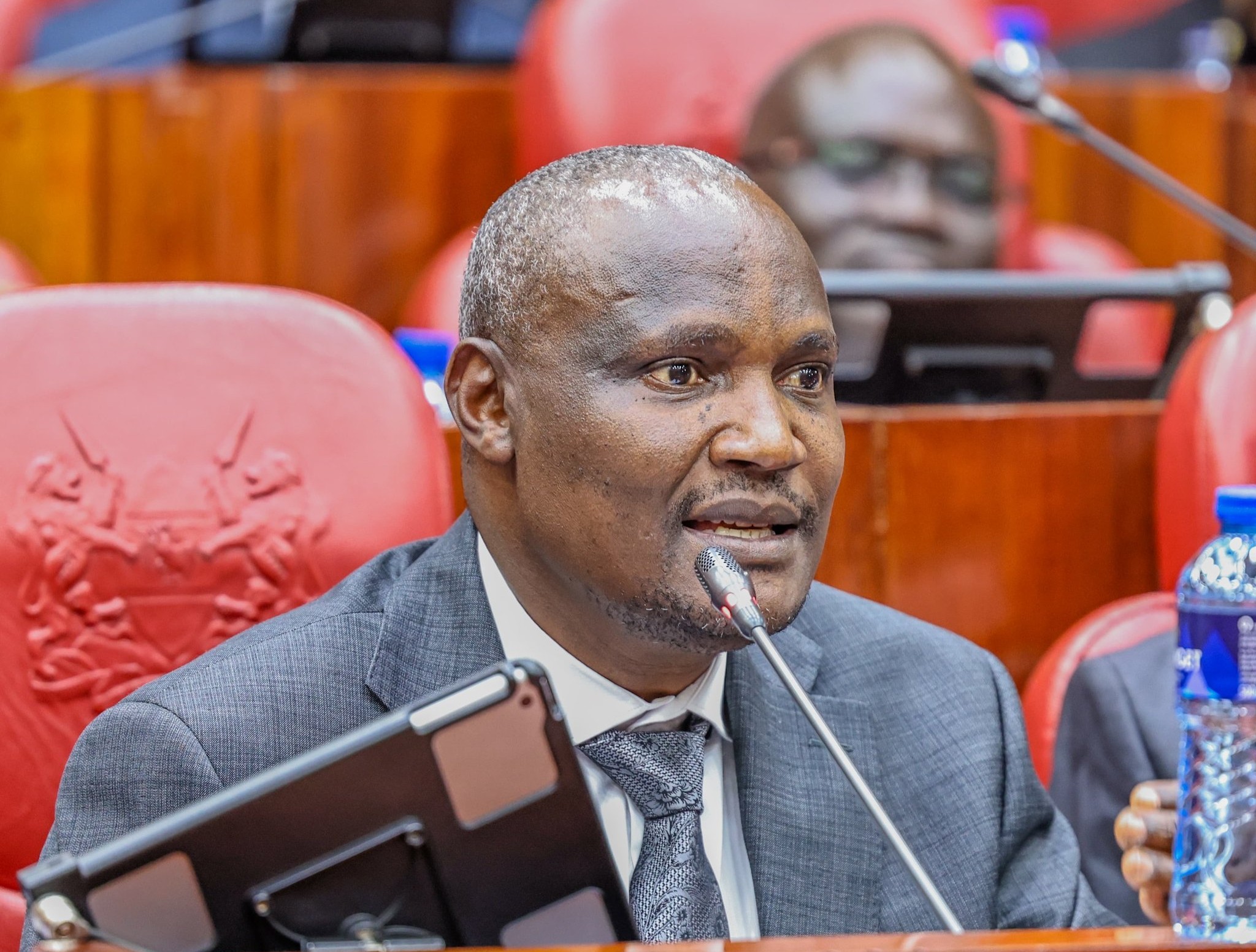 National Treasury CS John Mbadi appearing before the National Assembly on May 25, 2026. /JOHN MBADI/X



![[PHOTOS] The new Ngong –Naivasha Road viaduct](https://cdn.radioafrica.digital/image/2026/06/64d4f771-4432-4aee-ba3c-2f304c4436ec.jpg)










![[PHOTOS] 'Mr Speaker Sir' Gen Z protester in court](https://cdn.radioafrica.digital/image/2026/06/b3e62d8e-25c3-4780-90f9-4eb48b1ce8a7.jpg)