Kenya's Finance
Bill 2026 is shaping up as one of the most delicate balancing acts yet for
President William Ruto’s administration, a proposal that attempts to widen the
tax base without triggering the public outrage that greeted previous proposals.
Unlike the
controversial Finance Bills of 2023 and 2024, this year’s proposals appear more
cautious, with the National Treasury avoiding sweeping increases in direct taxes on
households even as the 2026-27 budget expands to Sh4.79 trillion.
Instead, the
government is targeting what it sees as untapped revenue streams in the digital
economy, imports, offshore investments and informal trade.
The proposed tax
law is emerging as a mixed bag, carrying relief measures for salaried workers
and businesses on one hand, while introducing controversial proposals that
could raise the cost of living and deepen concerns about aggressive tax
enforcement.
At the centre of
the debate is Treasury’s attempt to collect more revenue while the economy
remains under pressure from high living costs, heavy public debt and subdued
private sector growth.
Kenya's annual
inflation rate reached 5.6 per cent in April, marking an increase from 4.4 per
cent in March and a two-year high.
This acceleration
reflects rising costs for food, petroleum products, and transport.
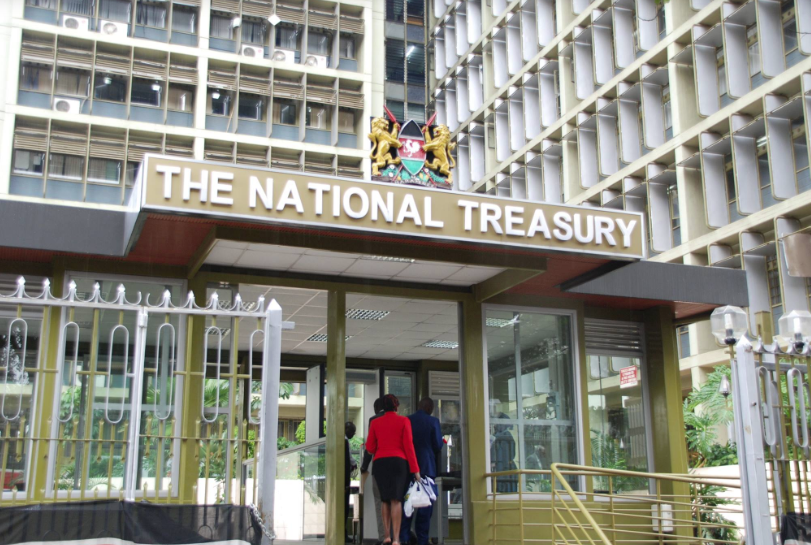
The National
Treasury expects Kenya Revenue Authority to collect nearly Sh3
trillion in taxes in the financial year starting July 1 as the government seeks
to narrow the fiscal deficit and reduce dependence on borrowing.
Tax relief for
salaried workers is emerging as the biggest topic for 2026 Finance Bill.
In February, the
exchequer boss, John Mbadi, promised a tax relief on Pay As You Earn (PAYE),
sparking excitement among employees.
Although he
indicated the measure was to be part of the Finance Bill, 2026, a move that could
have benefited low-income earners and expanded income tax bands to boost
disposable incomes, the item was omitted from the drafted Finance Bill.
He has cited a projected Sh35 billion revenue
shortfall as the reason for holding back on the cuts.
Employees who
spoke to the Star want the government to keep the promise, saying that heavy
taxes on salaries have put them on a survival mode.
Lucy Gathara, a
receptionist at a tiles manufacturing firm in Embakasi, said taxes take up
to Sh10,000 of her Sh32,000 gross salary.
"Mine is the
perfect example of hand-to-mouth. I haven't saved a shilling from my salary
since 2024. It pains," she said.
Her colleague, Mary
Warui, said she has already tabled her views to the Parliamentary Committee
collecting public views on the Bill.
"I just want
the National Treasury to keep its word on tax relief on PAYE. That is my
biggest wish. I earn a gross salary of Sh27,800. I'm left with nothing after
paying rent and school fees for my two children."
Last week,
professional bodies and lobby groups, including the Institute of Certified
Public Accountants of Kenya and the Kenya Bankers Association,
urged Parliament to reduce the top PAYE rate from 35 per cent
to 30 per cent.
They also want tax
bands widened to cushion employees already weighed down by deductions such as
the Housing Levy, SHIF and increased NSSF contributions.
They argue that
Kenya’s current PAYE structure pushes workers into higher tax brackets too
quickly, leaving formal sector employees carrying a disproportionate share of
the tax burden.
A tax expert,
Steve Mwaura, said widening tax bands could restore purchasing power and
stimulate consumer spending at a time when households are struggling with
reduced disposable income.
Tax advisory firms, including PwC Kenya and Deloitte Kenya, have also backed measures that simplify
taxation and improve predictability for businesses, saying stability is
critical for investment and long-term planning.
As they root for
tax relief on salaries, several stakeholders have praised the tax amnesty
programme targeting penalties and interest on historical tax liabilities.
The Bill proposes
waiving penalties and interest for taxpayers who clear their principal taxes by
December 2026.
Tax experts say
this could encourage businesses and individuals locked out of compliance due to
huge accumulated penalties to return to the tax system.
The Finance Bill
2026 also attempts to modernise Kenya’s tax framework by expanding taxation in
the digital economy.
The proposed
amendments broaden the definition of royalties and management fees to cover
software services, digital payment systems, platform services and card
transaction infrastructure.
This means
multinational technology firms, payment processors and digital service
providers operating in Kenya could face higher withholding tax obligations.
Initially, the
government argued that the digital economy had expanded rapidly and should
contribute more fairly to government revenue.
Even so, the
National Treasury has denied claims that the Bill introduces a five per cent
withholding tax on digital content monetisation, saying no such provision
exists in the Finance Bill 2026.
The clarification
is likely to reassure content creators, influencers and digital entrepreneurs
who had feared a fresh tax hit.
Both members of the public and tax experts are afraid that those firms will pass the bill to
consumers, a move likely to hurt the youthful population relying on the sector.
Kenya’s digital
economy is expanding rapidly, with the wider Sub-Saharan Africa digital space
valued at approximately $35 billion (Sh4.5 trillion).
The country's digital ecosystem is anchored by mobile
money, digital commerce, and content creation. It is projected to contribute
over $4 billion annually.
There are also
proposals targeting the gig economy and virtual asset transactions.
Virtual asset
service providers would be required to submit annual user information returns,
signalling a major shift towards regulation of cryptocurrency and digital asset
transactions.
Independent
analysts on social media say the move reflects global trends where governments
are tightening oversight on crypto-related activities to combat tax evasion and
illicit financial flows.
However, critics
warn that excessive taxation of digital transactions risks slowing innovation
and increasing operating costs for fintech firms and startups that have
positioned Kenya as a regional technology hub.
The proposed
taxation of dividends and offshore transactions has also sparked intense debate
among investors.
The Bill seeks to
expand capital gains taxation to offshore share transfers linked to Kenyan
assets, a move Treasury says is aimed at sealing loopholes where companies
avoid paying taxes through foreign-based transactions.
On Thursday,
Treasury mandarins argued that the proposal could improve fairness by ensuring
foreign investors pay taxes on gains derived from Kenyan assets.
However, legal
experts at Bowmans have warned that some provisions could create uncertainty
and expose businesses to possible double taxation, potentially hurting Kenya’s
attractiveness to investors.
The law firm has
particularly raised concerns over tighter compliance timelines and broader tax
enforcement powers being handed to KRA.
Among the most
contentious proposals is the shortening of tax filing deadlines from six months
to four months after the end of the financial year.
Businesses argue
that the shorter timelines could increase compliance pressure, especially for
firms dealing with complex audits and reconciliations.
The proposed tax
framework on mitumba imports has also sparked a huge debate amongst Kenyans.
Treasury wants
importers of second-hand clothes and shoes to pay tax based on a presumed
profit margin at the point of importation.
Government
officials insist the measure was developed after consultations with traders and
is intended to simplify compliance while addressing under-declaration.
According to the
exchequer, the framework would shift taxation to clearly defined entry points,
making revenue collection easier and reducing disputes with traders.
Even so, several
sector players and the public are worried that the move will ultimately raise
the cost of mitumba products that millions of low-income Kenyans rely on for
affordable clothing.
Traders have also
warned that higher taxes on second-hand imports could disrupt small businesses
and informal traders already struggling with reduced purchasing power.
The proposed
taxation of mobile phones has triggered even stronger reactions, even as the D-
Day for the submission of public views on the proposed tax amendment law draws
closer.
Under the Bill,
smartphones and communication devices could attract a 25 per cent excise duty,
with taxation shifting to the point of activation rather than importation.
The government
says the approach would improve enforcement and ensure all devices in use are
captured within the tax system.
However, digital
rights advocates and technology players warn that higher taxes on phones could
undermine Kenya’s digital inclusion agenda.
Kenya has spent
years positioning itself as Africa’s Silicon Savannah, with mobile phones
serving as the backbone of financial inclusion, e-commerce and online learning.
Internet expert,
Jerry Mutunga says making smartphones more expensive could slow internet
penetration, particularly among low-income users and young people who depend on
affordable devices for work and education.
There is also a concern over proposals affecting digital financial transactions.
The Bill broadens
the scope of taxable digital payment services, potentially increasing costs for
mobile money, card transactions and payment processing systems.
Banks, fintech
firms and payment processors fear the changes could raise transaction costs in
an economy heavily dependent on mobile money.
Kenya’s financial
sector has for years, been praised globally for driving financial inclusion
through digital payments.
Last week, the
Kenya Bankers Association (KBA) argued that excessive taxation of digital
transactions risks reversing gains achieved through platforms such as M-Pesa
and other mobile banking services.
At the same time,
Treasury is under pressure to demonstrate that the tax burden is being
distributed more fairly.
For years,
salaried workers and compliant businesses have complained that they shoulder
the largest share of taxes while huge segments of the informal economy remain
outside the tax net.
The Finance Bill
2026 appears designed to respond to those concerns by expanding taxation into
sectors previously considered difficult to monitor, including digital services,
offshore investments and informal trade.
Independent
analysts say this represents a strategic shift away from blanket tax hikes
towards targeted expansion of the tax base.
Still, fears
remain over the growing powers proposed for KRA.
Various groups
have raised concerns about proposals allowing the tax authority to rely more
heavily on digital transaction records, ETIMS data and third-party information
to generate tax assessments.
While a few are of
opinion that the measures could improve efficiency and reduce tax evasion.
But critics warn
they could create a “surveillance-style” tax system where taxpayers are forced
to prove their innocence against automated assessments.
Treasury has, however, said it has dropped controversial proposals amid public outcry, while moving to calm public anxiety through a series of clarifications aimed at countering what it says are misconceptions surrounding the tax measures.
Among the notable proposals abandoned are the controversial “mitumba tax”, a planned increase in residential rental income tax, and changes touching on regional trade, excise duty and international trade agreements.
In fresh clarifications issued by the government, Treasury insisted that some issues dominating public debate — including alleged taxes on bread, motor vehicle circulation and digital content monetisation—are not contained in the current Finance Bill.
The biggest relief for landlords and property investors came after Treasury withdrew a proposal seeking to raise the monthly residential rental income tax rate from 7.5 per cent to 10 per cent. The proposal had attracted concern from landlords already grappling with a challenging real estate market and rising operational costs.
Treasury also shelved plans to introduce a new income tax provision targeting income from the importation of second-hand clothes, footwear and other worn articles, widely referred to as the “mitumba tax”. The used clothing industry supports thousands of traders and low-income consumers, making the proposal politically sensitive.
Other dropped proposals include a planned amendment on the treatment of imports from East African Community partner states, changes affecting the National Intelligence Service under the Excise Duty Act, and amendments touching on international agreements relating to import duty on steel billets and wire rods.
Even as Treasury retreated on some fronts, the government moved aggressively to address confusion over digital taxation and consumer concerns.
One of the most debated issues has been the proposal affecting mobile phones and digital devices, which many consumers feared would significantly increase handset prices.
Treasury has defended the proposal, arguing that it is not introducing a new tax burden but replacing several existing levies — including VAT-related charges, Import Declaration Fee and Railway Development Levy — with a consolidated excise framework that could ultimately lower prices.
The government further sought to allay fears over privacy concerns linked to device activation rules, stating the framework is intended to improve tax compliance rather than surveillance, with implementation safeguards expected under regulations by the Communications Authority of Kenya.
On digital finance, Treasury denied claims that the Bill introduces a five per cent withholding tax on digital content monetisation, saying no such provision exists in the Finance Bill 2026. The clarification is likely to reassure content creators, influencers and digital entrepreneurs who had feared a fresh tax hit.
Similarly, the government said there is no proposal to impose VAT on bread or reintroduce a motor vehicle circulation tax, both of which had generated public concern after resurfacing in online discussions tied to earlier finance bills.
Treasury also pushed back against claims that the Bill grants tax authorities access to personal mobile money transaction data, saying existing data protection laws remain intact and no new access rights are being introduced.
On virtual assets and cryptocurrency, the government maintained that the Bill does not create a new tax on digital assets but instead establishes reporting and disclosure requirements intended to improve transparency and align the sector with existing financial reporting standards.
However, the published Bill also introduces fresh proposals, including changes affecting imported ceramic products and a merger of amendments to the Road Maintenance Levy Fund Act into the Finance Bill.
One new proposal seeks to reduce the Road Maintenance Levy allocation from Sh3 to Sh1.50, a move likely to attract scrutiny from infrastructure and transport stakeholders.
The Treasury’s latest clarifications signal a balancing act between broadening the tax base and avoiding the backlash that characterised previous finance bills, as lawmakers prepare for debate on measures that could shape Kenya’s fiscal direction and business environment in the coming year.







![[PHOTOS] The new Ngong –Naivasha Road viaduct](https://cdn.radioafrica.digital/image/2026/06/64d4f771-4432-4aee-ba3c-2f304c4436ec.jpg)










![[PHOTOS] 'Mr Speaker Sir' Gen Z protester in court](https://cdn.radioafrica.digital/image/2026/06/b3e62d8e-25c3-4780-90f9-4eb48b1ce8a7.jpg)