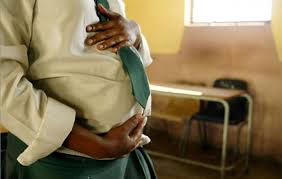
Members of Parliament have opened an inquiry into the growing cases of teenage pregnancy in the country.
This is after new figures revealed that more than 232,000 girls became pregnant in 2025, prompting lawmakers to demand urgent government intervention.
Nominated Senator Consolata Wakwabubi raised the alarm in the Senate, warning that the growing number of teenage pregnancies threatens education, healthcare systems and the country’s long-term economic stability.
According to statistics presented in the House, Busia recorded more than 65,000 cases, making it the most affected county in the country.
Nairobi followed with 14,291 cases, Kakamega with 11,630, Nakuru with 10,934 and Bungoma with 10,444.
Speaking while seeking intervention from the Senate’s Labour and Social Welfare Committee, Wakwabubi termed the situation a national crisis that requires immediate and coordinated action from both national and county governments.
“Kenya recorded over 232,000 teenage pregnancies in 2025. Busia County has recorded over 65,000 cases, making it one of the most severely affected regions,” she said.
The senator warned the crisis goes beyond public health concerns, saying it is now threatening the country’s future labour force and economic productivity.
“This crisis threatens education, entrenches poverty and strains healthcare systems. Beyond a public health emergency, it poses a labour and economic challenge that will affect national productivity and stability for decades,” Wakwabubi said.
She said teenage pregnancies continue to derail the education of thousands of girls, locking many into cycles of poverty and limiting their opportunities in life.
“It undermines girls’ education, limits their future participation in the workforce and perpetuates cycles of vulnerability,” she added.
The senator wants the committee to investigate the socio-economic, cultural and systemic drivers fuelling the rise in teenage pregnancies and outline measures being taken to reverse the trend.
Among the issues raised is the effectiveness of school re-entry policies meant to allow teenage mothers to continue with their education without facing discrimination or stigma.
Wakwabubi questioned whether existing adolescent health programmes and child protection frameworks are adequately funded and effectively implemented.
“The committee should examine the gaps identified in enforcement and resource allocation, particularly in ensuring teenage mothers continue their education without stigma or discrimination,” she said.
She further urged the committee to gather views from
stakeholders, including teachers, healthcare providers, parents, local leaders
and affected teenagers, on the scale and impact of the crisis.
The lawmaker said teenage pregnancies are increasingly
contributing to school dropouts, reduced labour force participation and
declining productivity, especially among young women.
The latest revelations are likely to reignite debate over access
to reproductive health services, sexuality education and protection of minors
from sexual exploitation.
Kenya has in recent years struggled with rising cases of
adolescent pregnancies, particularly in rural and informal urban settlements
where poverty, early marriages, drug abuse and limited access to reproductive
health information remain prevalent.
Children’s rights activists have previously warned that teenage
mothers often face social stigma and economic hardships that make it difficult
for them to resume schooling or secure stable livelihoods.
The Senate committee is now expected to table a comprehensive
response outlining interventions and policy reforms aimed at addressing the
growing crisis and safeguarding the future of vulnerable girls across the
country.



![[PHOTOS] The new Ngong –Naivasha Road viaduct](https://cdn.radioafrica.digital/image/2026/06/64d4f771-4432-4aee-ba3c-2f304c4436ec.jpg)









![[PHOTOS] 'Mr Speaker Sir' Gen Z protester in court](https://cdn.radioafrica.digital/image/2026/06/b3e62d8e-25c3-4780-90f9-4eb48b1ce8a7.jpg)