A friend observed this week that if the Covid pandemic
period had happened during this Ruto regime, we may have lost a lot more lives,
caused by disjointed government action and poor follow-up mechanism.
A lot of
this possibly has to do with the different styles of President Uhuru Kenyatta
and President Ruto.
While Ruto appears to micro-manage every ministry and
issues unending roadside policy decrees, Uhuru appeared to let his CSs do their
jobs.
Because of that, there is consensus that Uhuru’s Health Cabinet Secretary, Mutahi Kagwe
performed admirably in containing the spread of the virus, offering regular
updates and leading an anxious nation through one of the worst crises of the
century.
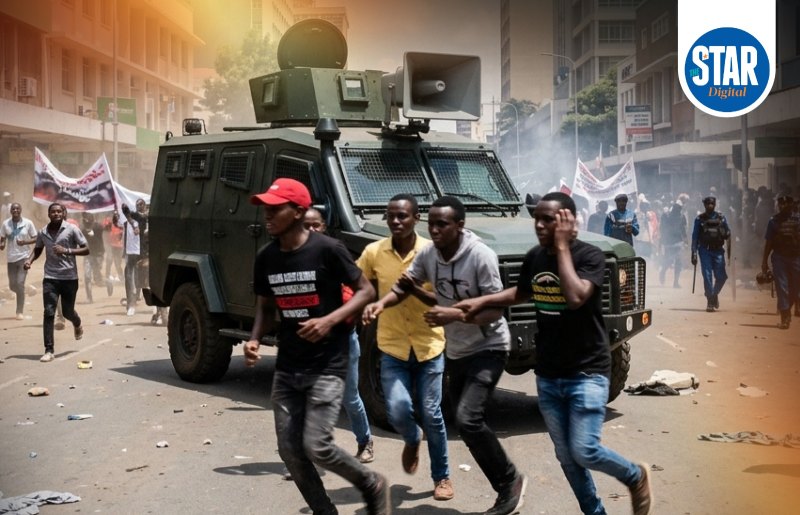
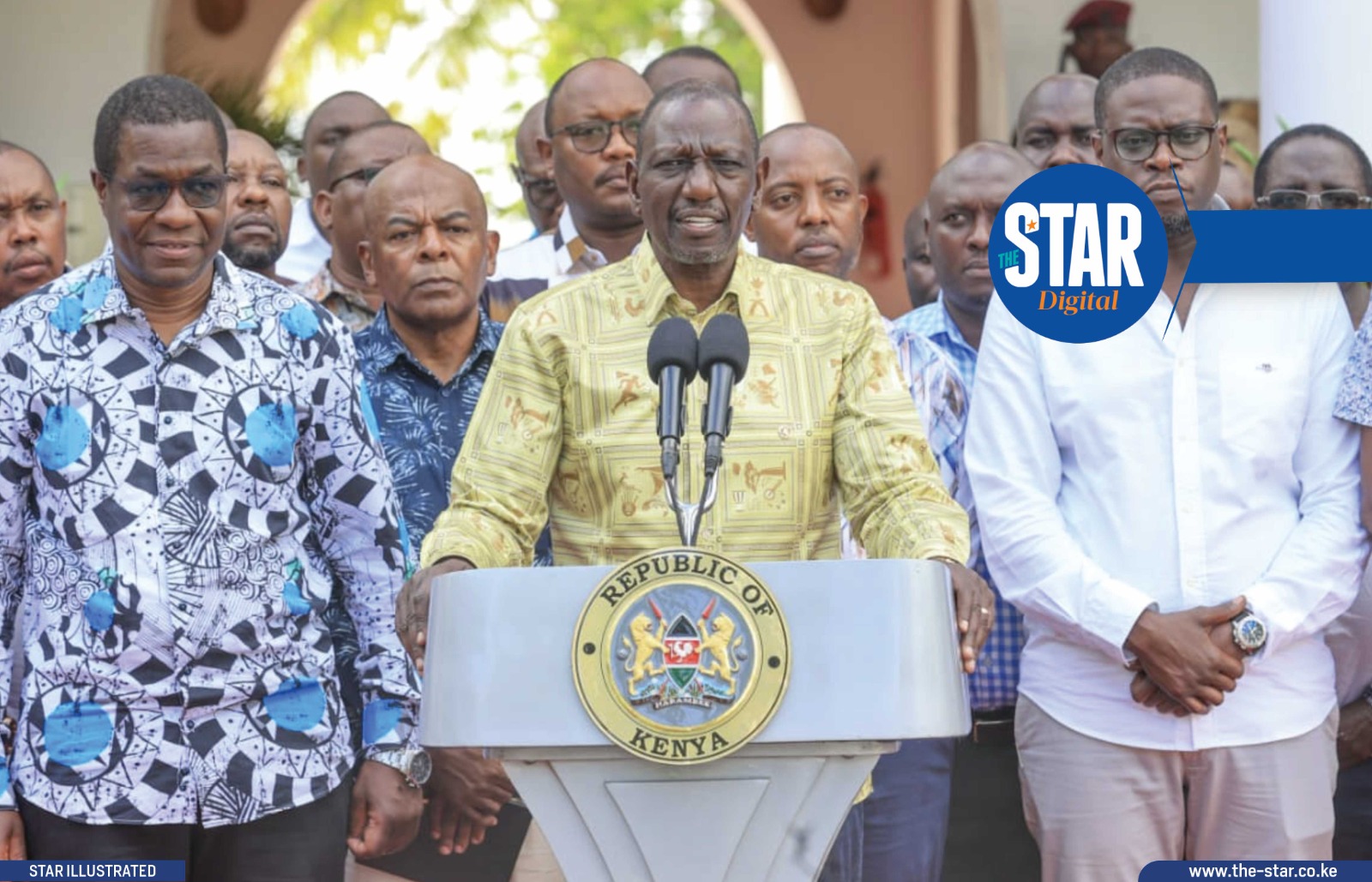
In the Ruto era, there is near certainty that whenever a CS
appears before the press, a major gaffe is coming. And the nation was
treated to such theatrics and embarrassments when CSs Davis Chirchir (Transport) and Opiyo Wandayi (Energy), flanked by transport sector
stakeholders, graced a press conference on Monday night, after a long day of a
national shutdown, following a paralysing strike by transport service
operators.
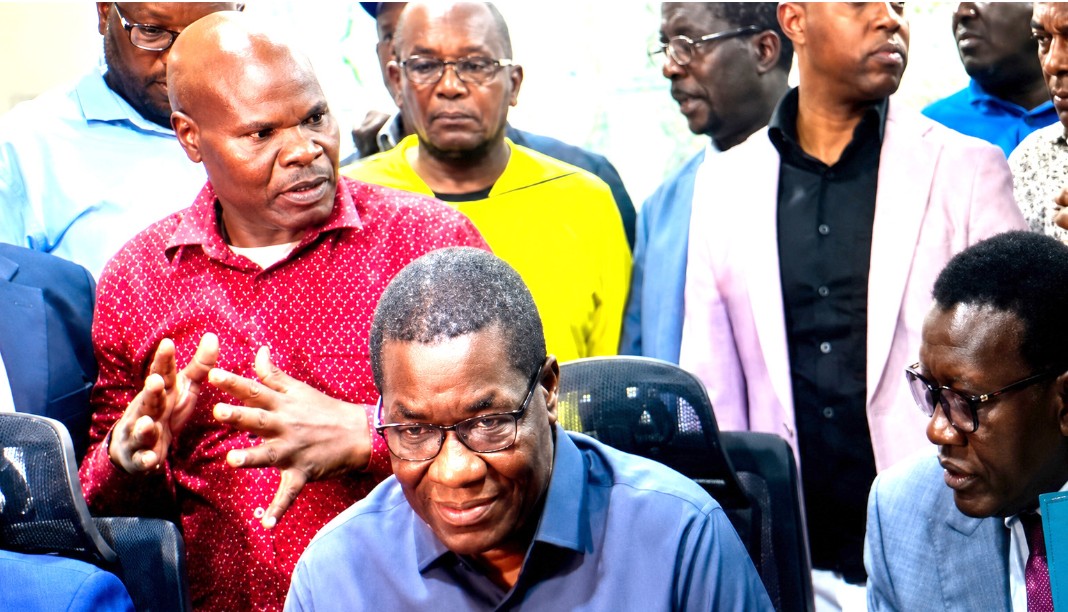
At the presser, Wandayi seemed unsure of what had been
agreed in the daylong negotiations, forcing the transport sector officials to
interrupt the press conference to tell their version of the story, whereupon
the two CSs stormed out, leaving the sector officials in the government
boardroom at Transcom House.
It was an embarrassing scene to watch. And even
before that, Chirchir was
caught on live mic asking his Energy colleague if he would take questions, to
which Wandayi flatly declined.
The public transport operators had issued their strike
notice days earlier. In their own words, the government neither reached out to
them nor made any efforts to remedy the situation ahead of the Monday strike.
Yet, the earliest official response, when the strike was already underway and
biting, was from Treasury CS John Mbadi, who was reported to have said that the
government would convene after the return of President Ruto from a state visit
to Azerbaijan, to address the fuel crisis.
You would think that would be enough gaffes in one day, but
you still have to contend with Interior CS Kipchumba Murkomen, who weighed in
with his own presser.
After his official statement, on Monday night, the CS
invited Kenyans to ask themselves why the transport sector strike had happened
under President Ruto, but sector officials had been very understanding under
President Kenyatta,
often indulging the latter despite price increases during his rule.
For the uninitiated, this was Murkomen’s way of perpetuating
a narrative that has become commonplace in government circles; that
Kikuyu-dominated sectors of the economy are sabotaging Ruto’s economic agenda.
For a security sector chief, it is quite improper for him to be running the kind of tribal
narratives that are only fit for village gossip, but this anti-Kikuyu agenda
seems to be gaining traction within government circles as the 2027 election gets closer. It is also peddled, in no small measure, by the broad-based faction of
ODM.
But something else Murkomen said was more disturbing. He
indicated that by his assessment, 99 per cent of the country had operated normally on Monday and only
a tiny one per cent had
experienced minimal disruptions.
I don’t know how Ruto can keep in a CS who
blatantly trivialises a national crisis to that level, because truth be told,
the transport strike had affected nearly every corner of the nation, achieving
a near-shutdown that other demos in the past hadn’t.
Be that as it may, it is important to point out that the
Ruto regime, in many respects, is its own worst enemy. When faced with national
challenges, the instinct of most government officials is to blatantly lie or
trivialise the situation, if not responding with arrogance and contempt.
The
situation is compounded by the fact that some of the CSs, especially those whose ministries
now find themselves in the eye of the storm, like Wandayi and Mbadi, are too
busy at public rallies engaging in succession politics.
Mbadi is especially becoming notorious for public anger
tantrums at political rallies. In recent times, he has ended up in unnecessary
exchanges with members of the Odinga family, at a time when his main focus
should be the economic turbulence facing the country over the rising fuel
prices and the impending Finance Bill 2026, which is expected to also generate
a significant amount of drama in the coming weeks.
Essentially, therefore, Ruto is keeping people in Cabinet who not only lack
focus, but in the words of East
Africa Legislative MP Winnie Odinga, are unable to speak to citizens in
a manner that shows respect and appreciation of the struggles of the masses.
To
be dismissive of the concerns of citizens, or to paint them merely as tribal
anger, is exactly how the regime will bury its head as it tags along a monster
to the next general election.
I am especially concerned that senior CSs like Murkomen and Mbadi have
willingly and enthusiastically become purveyors of tribal conspiracy theories.
I took a quick glance at IG Kanja, standing right behind Murkomen at their
Monday night presser, as the CS loudly sold to the media that theory that there
was a reason the matatu industry had been silent during Uhuru’s reign.
I am not
sure how regime officials expect civil servants from the Kikuyu community to
feel when such damaging tribal narratives are spun into government policy
statements in their own presence.
Indeed, the sort of statements issued by Murkomen must lead
one to ask how much progress will be made in negotiations with the transport
sector officials over the one-week grace period, if the CS has publicly
suggested that the strike is part of an ethnic conspiracy by the Mount Kenya
community to sabotage the reign of President Ruto.
Where are the clean hands
with which regime officials will go into negotiations to resolve the crisis, if
in their eyes, there is actually no crisis but mere attempts to bring down the
government?
Fish rots from the head, and the President is largely to blame for
the disjointed and chaotic communication within his government. His own modus
operandi, spending long hours on sunroofs promising grand projects “in the next
three to six months”, has given rise to huge expectations in the population,
without the requisite resources to back all these roadside decrees. You have to
pity his CSs and PSs, who have to work backwards to try to bridge the gap
between reality and empty politics in the President’s words.
CS Mbadi himself attested to the fact that there are very
limited options in raising revenue, if some of the cost items in the prices of
petroleum products were knocked out to reduce prices.
This may be
understandable, but it does not align with Ruto’s unhinged promise-festivals, where
billions in revenue-sapping projects are promised wherever he goes. Perhaps
this is the point where Cabinet
members themselves must look the head of state in the eye and tell him that they are at pains to put
a realistic face to the Singapore journey he is promoting out in public.
Regardless of where the blame lies, the whole government is
suffering a communication gap that makes nonsense of its image as a luxurious
spender. It doesn’t require any particular genius to figure out what should be
done.
Just extend some grace to a heavily taxed population, speak to it with
empathy and no matter how painful, tell it the truth. Citizens do not fancy
watching TV to see leaders lying openly and fumbling with state matters.
At the
very least, send people on TV who can speak to the citizens in a language that
restores hope. The chaotic communication within the Ruto regime is too
unfortunate.




![[PHOTOS] The new Ngong –Naivasha Road viaduct](https://cdn.radioafrica.digital/image/2026/06/64d4f771-4432-4aee-ba3c-2f304c4436ec.jpg)




![[PHOTOS] 'Mr Speaker Sir' Gen Z protester in court](https://cdn.radioafrica.digital/image/2026/06/b3e62d8e-25c3-4780-90f9-4eb48b1ce8a7.jpg)