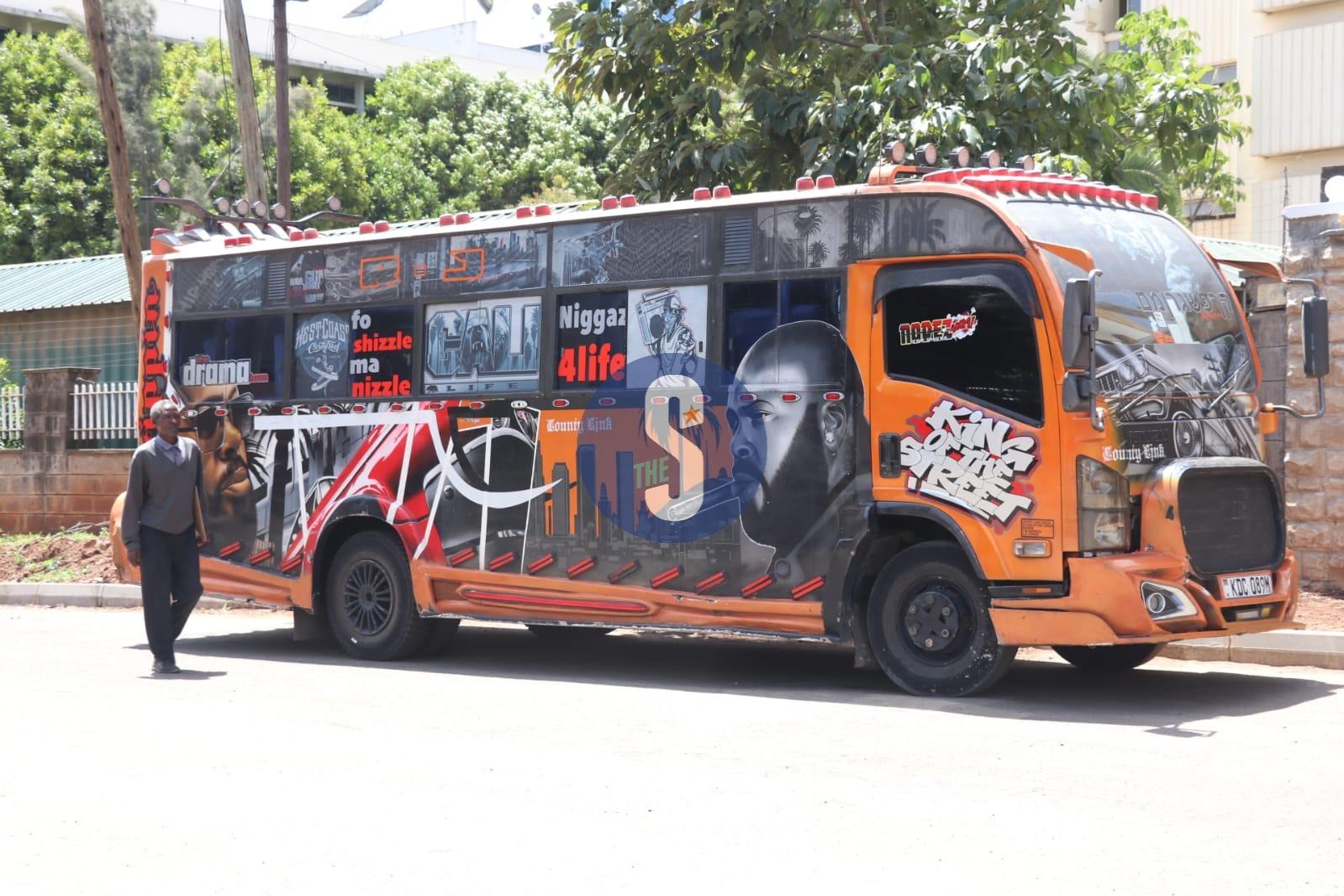
 Matatu with graffiti /FILE
President William Ruto has directed the National Transport and Safety Authority (NTSA) to allow matatus to continue operating with graffiti and artistic branding.
Ruto instructed the government “facilitate a relieving environment” for matatu operators to continue using artwork and graffiti on their vehicles, provided it is done in a manner that upholds safety and respect for other road users.
“I have also directed the NTSA to facilitate a relieving environment for matatus to continue utilising artwork and graffiti on their vehicles in a manner that upholds safety and respect for other road users,” he said.
The directive comes amid complaints from players in the matatu industry who had been ordered to strip vehicles of graffiti and decorative artwork.
“The industry is telling me that they have been told they must remove all graffiti from their matatus, and I’m asking myself why,” Ruto said.
Last month High Court upheld the legality of a National Transport and Safety Authority (NTSA) directive requiring the removal of graffiti, artistic designs, and tinted windows from public service vehicles (PSVs).
The ruling dealt a major setback for operators championing Kenya’s Nganya culture.
In a judgment delivered by Justice Bahati Mwamuye on Wednesday, the court dismissed a petition challenging the enforcement notice issued in May last year.
It instead ruled that it was constitutional, lawful and properly grounded in public safety considerations.
The petition had been filed by Michael Makubo, who sought to invalidate regulations and the NTSA enforcement notice that targeted decorated matatus.
He argued that the directive was unconstitutional, discriminatory and issued without adequate public participation.
Makubo also claimed that the move threatened the widely recognised Nganya culture, a form of urban expression characterised by elaborate graffiti, customised lighting, tinted windows, and enhanced sound systems in matatus.
However, the court found no merit in the claims.
“The petitioner has failed to establish any violation of his constitutional rights or the rights of the class he purports to represent,” Justice Mwamuye stated in his determination.
The court held that the impugned regulations were lawfully enacted following public participation and parliamentary scrutiny.
![[PHOTOS] The new Ngong –Naivasha Road viaduct](https://cdn.radioafrica.digital/image/2026/06/64d4f771-4432-4aee-ba3c-2f304c4436ec.jpg)


![[PHOTOS] 'Mr Speaker Sir' Gen Z protester in court](https://cdn.radioafrica.digital/image/2026/06/b3e62d8e-25c3-4780-90f9-4eb48b1ce8a7.jpg)