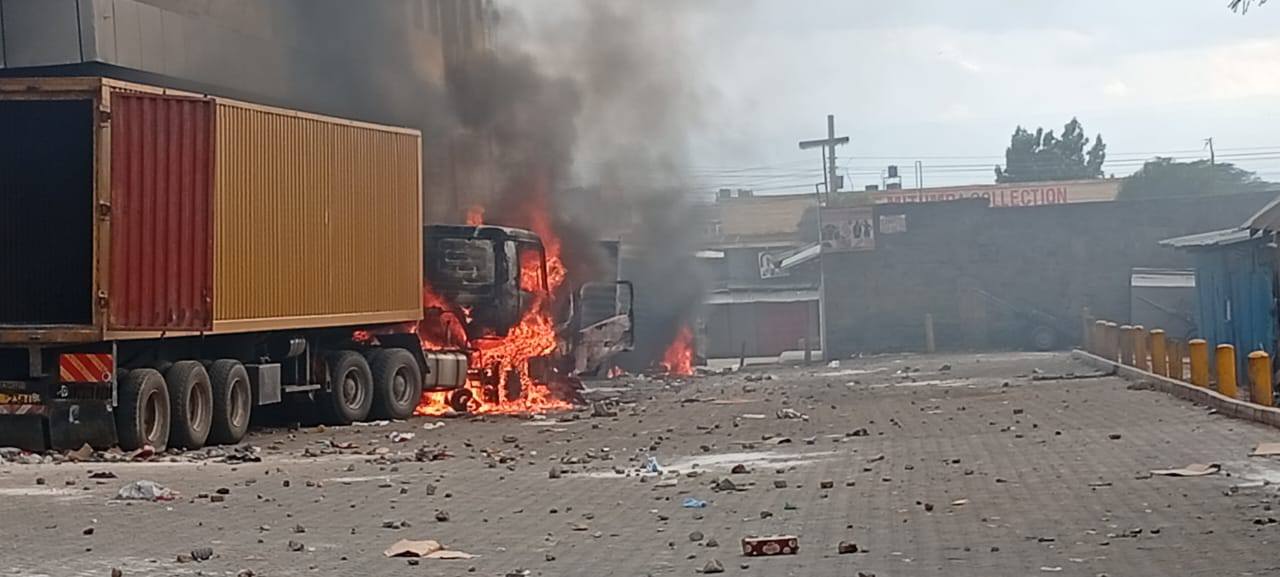
 An MP's Sh20m truck was torched in Naivasha during fuel protests. /SCREENGRAB
What started as public outrage over record fuel prices has now ignited a wider national debate over the rise of violent “goonism” masquerading as activism during protests.
From Nairobi to Kitengela, Roysambu and Naivasha, the recent anti-fuel-hike demonstrations exposed two sharply different faces of Kenya’s protest culture — frustrated citizens demanding economic relief and violent groups accused of hijacking demonstrations to unleash chaos.
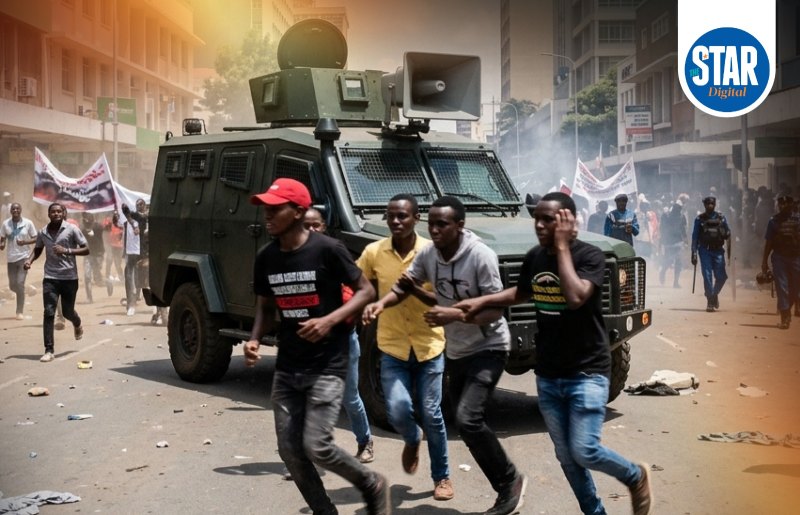
As some protesters marched against the soaring cost of living, others barricaded roads, torched tyres, attacked motorists and looted businesses in scenes that left several towns tense and heavily policed.
The unrest even spilled into hospitals.
The Kenya Medical Practitioners, Pharmacists and Dentists Union condemned an incident at Naivasha County Referral Hospital where a rowdy crowd reportedly stormed the facility, disrupted medical services and forcefully removed the body of a deceased patient during the protests.
The doctors’ union described the incident as a dangerous escalation of lawlessness and warned against turning public institutions into battlegrounds during demonstrations.
Political analyst Calvin Muga said Kenya must draw a firm line between peaceful demonstrations and outright criminality.
According to Muga, Article 37 of the Constitution protects the right to protest only when demonstrations remain peaceful and unarmed.
“The moment violence begins, it stops being protected protest and becomes something else entirely,” he said.
His remarks come amid growing concern that criminal gangs are increasingly infiltrating protests to cause destruction, intimidate rivals and exploit public anger for political or criminal gain.
During the recent fuel protests, at least four people were killed, dozens injured and hundreds arrested as police engaged demonstrators in running street battles.
Even as violence escalated, attention had also shifted to the role of security agencies in managing demonstrations.
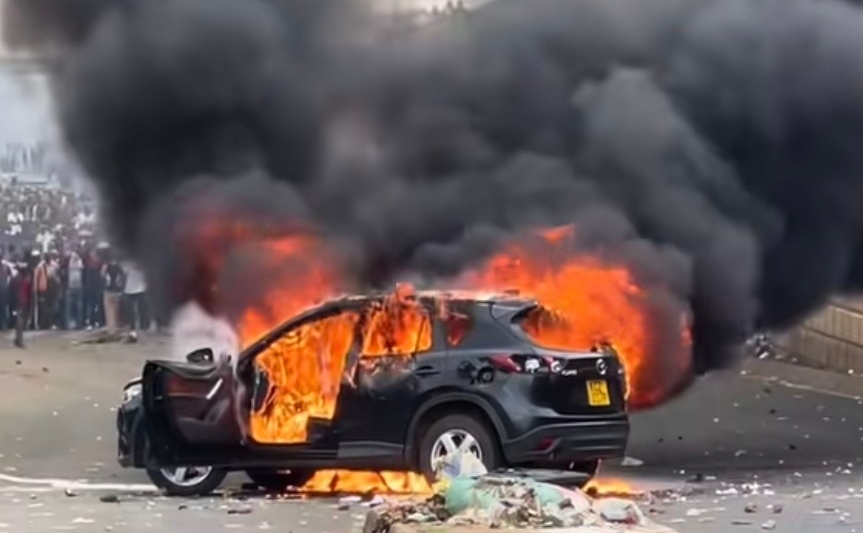 Pastor's Car Torched in Githurai./SCREENGRAB
Human rights defender Hussein Khalid argued that both protesters and ordinary citizens are constitutionally entitled to protection during demonstrations.
“When citizens notify police of planned demonstrations, it becomes the responsibility of the National Police Service to secure both protesters and innocent bystanders,” Khalid said.
Muga maintained that notifying police about protests is not a request for permission but an opportunity for law enforcement agencies to prepare adequately and isolate criminal elements before violence breaks out.
But beyond the street confrontations lies a deeper political undercurrent.
Muga warned that some politicians are increasingly exploiting economic frustrations and public anger to gain political mileage ahead of the 2027 General Election.
From sponsoring counter-demonstrations to mobilising supporters, he said, sections of the political class are weaponising hardship and unrest for visibility and influence.
As fuel prices continue to squeeze households and businesses, Kenya now faces the difficult task of protecting constitutional freedoms without allowing demonstrations to descend into violence, fear and destruction.
Because once goonism replaces activism, the loudest voice in the streets is no longer democracy – but insecurity.
![[PHOTOS] The new Ngong –Naivasha Road viaduct](https://cdn.radioafrica.digital/image/2026/06/64d4f771-4432-4aee-ba3c-2f304c4436ec.jpg)









![[PHOTOS] 'Mr Speaker Sir' Gen Z protester in court](https://cdn.radioafrica.digital/image/2026/06/b3e62d8e-25c3-4780-90f9-4eb48b1ce8a7.jpg)