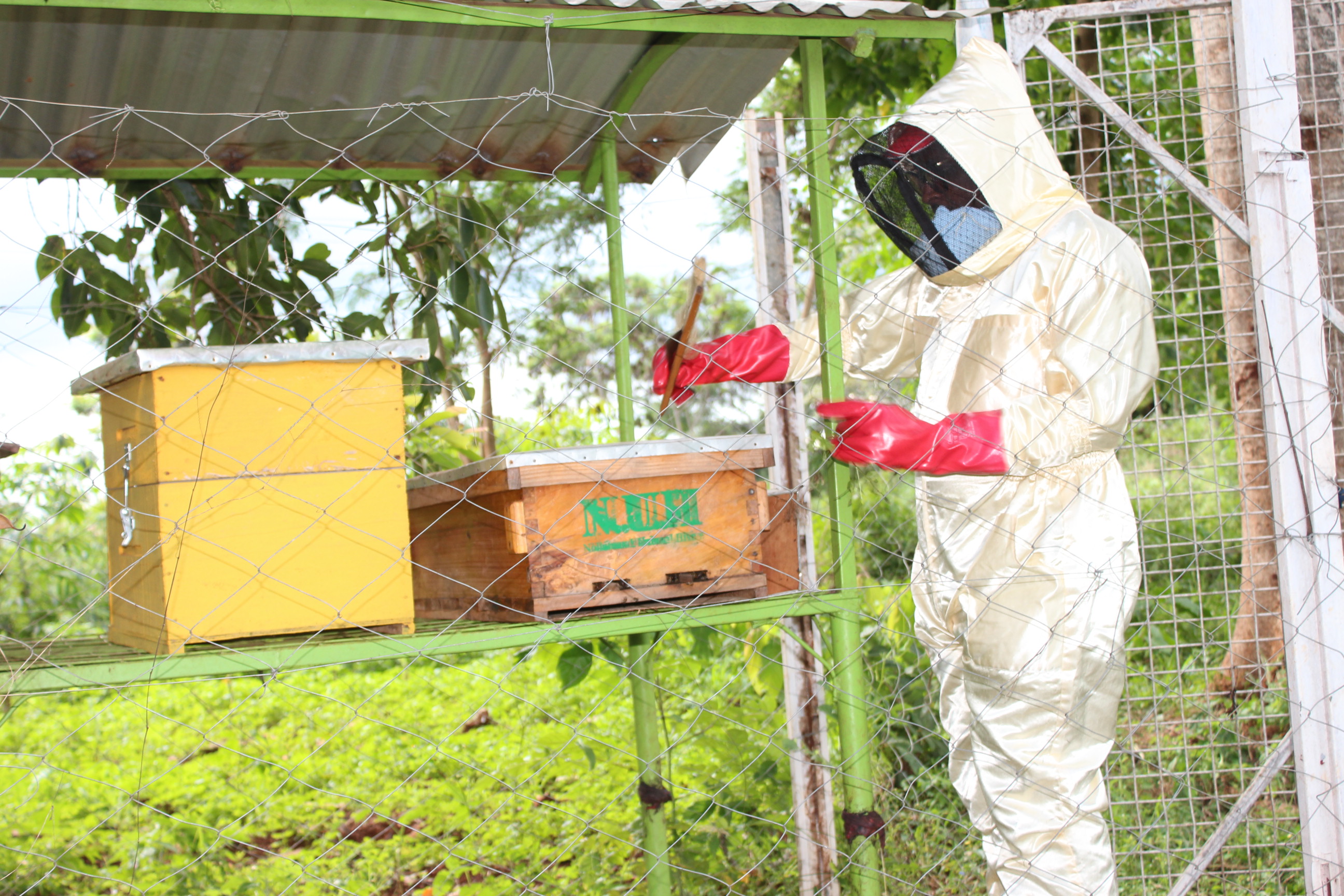

The Kenya Forest Service (KFS) has called on Kenyans to intensify efforts towards protecting bees and other pollinators, warning that their declining population poses a serious threat to biodiversity, food security, forests and livelihoods.
KFS Chief Conservator of Forests Alex Lemarkoko said bees play an indispensable role in sustaining ecosystems through pollination, which supports forest regeneration, agricultural production and biodiversity conservation.
He stated that healthy pollinator populations contribute significantly to climate resilience, water catchment protection and the survival of many indigenous plant species that depend on pollination for regeneration.
“Forests and pollinators maintain a critical ecological relationship, where forests provide safe habitats and forage for bees, while bees support natural regeneration and ecosystem productivity,” he said.
He was speaking during the commemoration of World Bee Day 2026.
The World Bee Day celebrations were held under the theme: “Protecting Bees for Biodiversity, Food Security, and Sustainable Forest Ecosystems.”
The KFS boss, however, expressed concern over increasing threats facing bees and other pollinators, including deforestation, forest degradation, climate change, environmental pollution, habitat destruction, wildfires and the indiscriminate use of harmful pesticides and chemicals.
“The decline in pollinator populations poses a significant risk not only to biodiversity and ecosystem stability, but also to national food systems and rural livelihoods,” said Lemarkoko.
He emphasised the need for urgent and collective action by governments, communities, institutions, researchers and individuals to conserve pollinators and protect natural ecosystems.
To strengthen conservation efforts, KFS announced a strategic partnership with the National Bee Institute hosted at Ngong’ Road Forest.
Through the collaboration, KFS officers will undergo training in beekeeping and bee management to help promote apiculture among Community Forest Associations (CFAs) and forest-adjacent communities.
Lemarkoko said the initiative aims at advancing bee conservation, environmental awareness and community empowerment while creating sustainable livelihoods through beekeeping.
The partnership will also focus on promoting sustainable apiculture-based livelihoods, conserving bee habitats within forest ecosystems, supporting research and knowledge exchange, restoring degraded landscapes using indigenous tree species and strengthening biodiversity conservation and climate change mitigation initiatives.
KFS further reaffirmed its commitment to restoring degraded forest landscapes and water towers, conserving biodiversity and indigenous tree species, promoting sustainable forest management practices, enhancing environmental education and encouraging tree planting initiatives that support pollinator habitats.
Lemarkoko urged Kenyans to plant more indigenous and flowering trees, reduce environmental pollution, embrace sustainable land-use practices and protect habitats that support bees and other pollinators.
“As we mark this year’s World Bee Day, let us renew our collective responsibility to safeguard our forests, ecosystems, and pollinators for present and future generations,” he said.
“Protecting bees is protecting biodiversity. Protecting biodiversity is securing our future.”



![[PHOTOS] The new Ngong –Naivasha Road viaduct](https://cdn.radioafrica.digital/image/2026/06/64d4f771-4432-4aee-ba3c-2f304c4436ec.jpg)










![[PHOTOS] 'Mr Speaker Sir' Gen Z protester in court](https://cdn.radioafrica.digital/image/2026/06/b3e62d8e-25c3-4780-90f9-4eb48b1ce8a7.jpg)