From harvesting
coconuts in Ukunda to shaping agricultural policy across Africa, Professor
Hamadi Boga has built a career firmly rooted in the soil of Kwale County.
In this wide-ranging conversation
with the Star, the Vice President of the Alliance for a Green Revolution
in Africa (Agra) reflects on his upbringing, the mentors who shaped his path,
his time in government, and his views on agriculture, biotechnology, financing and
the future of farming in Kenya and Africa.
He also speaks about
Kwale’s agricultural potential, why maize farming is often misunderstood by
small-scale farmers, the GMO debate and why, in his words, “Kwale is calling.” Excerpt.
Professor, who is Hamadi
Boga?
I am from Kwale county
in the Diani area. I would describe myself as a child of a local family. My
parents were farmers. We grew up in the Ukunda settlement scheme where they
cultivated cashew nuts, coconuts, mangoes, maize, pigeon peas and cowpeas. The
main commercial crops were coconuts, mangoes and cashew nuts.
Those crops paid my
school fees and shaped my life. Even today, my family is still involved in farming.
My mother is still on the ground selling coconuts and mangoes. The cashew nut
industry has declined, but we remain connected to agriculture.
That journey from a
farming family eventually pushed me into science, research, policy and now
continental agricultural development.
Was there a specific
moment when you chose a career in agriculture?
Not really one moment.
It was the environment around me — supportive parents, teachers and mentors. But
my biggest motivator was my father. He was my biggest fan. He celebrated every
achievement, no matter how small. Giving him joy became part of my motivation.
I realised early that
the potential was already inside me; the responsibility was to grow it.
From Ukunda to
Principal Secretary under President Uhuru. How did that happen?
I became a scientist
and lecturer at Jomo Kenyatta University of Agriculture and Technology, where I
taught, supervised students and did research. I am a professor of biology,
which is closely linked to agriculture.
Later, I joined government
as Principal Secretary for crop development and agricultural research under
former President Uhuru Kenyatta.
We worked on aligning
county and national agricultural policies after devolution and developed
reforms in extension services, crop development and agricultural investment,
including promotion of BT cotton.
Is Kenya ready for GMOs?
Legally, yes. Kenya
has a strong biotechnology framework and is ahead of many African countries. The
challenge is public perception. There is misinformation around GMOs, which
creates fear among consumers and investors. Scientifically and legally, the
systems are in place, but acceptance remains the issue.
What is the biggest
problem facing agriculture in Kwale?
Lack of vision. There
is no clear focus on which value chains the county should prioritise. Kwale has
strong potential in mangoes, oranges, tangerines, lemons, chili, coconut and
cashew nuts —high-value crops that can lift people out of poverty.
But farmers are
largely left on their own with weak extension support and little structured
investment.
Is maize farming
profitable on small plots?
People confuse
subsistence farming with commercial farming. On one or two acres, maize is
mainly for food, not profit. For income, farmers should focus on high-value
crops like chili, onions, French beans and horticulture.
What should coastal
farmers focus on?
Cassava is the future
for many coastal and semi-arid areas. It grows well in sandy soils, as do sweet
potatoes. We have not commercialised these crops. Countries like Nigeria and
Ghana have industrial cassava value chains. Kenya can do the same.
What’s your role at Alliance
for a Green Revolution in Africa?
I serve as Vice
President for programme delivery. We work in 12 African countries strengthening
agricultural systems — policy, seeds, financing, markets and trade. Agriculture
is more than farming; it is systems. We also support Kenya’s Agricultural
Sector Transformation and Growth Strategy and work to improve access to finance
for farmers and SMEs.
What is FINAS? Does he
have a role in FINAS?
FINAS stands for
Financing Agriculture Sustainably. It brings together governments, banks and
farmers to address underinvestment in agriculture. Agriculture is seen as
risky, so lending is low. FINAS explores better ways to finance the sector.
Why is trade
important in agriculture?
Agriculture is useless
without markets. Africa imports about $100 billion (Sh12.91 trillion) of food
annually, much of which can be produced locally. We trade more outside Africa
than within it, which is risky during global disruptions.
What is wrong with
Kenya’s agriculture?
Some value chains like
tea and horticulture are strong, but maize and sugar are politicised.
Productivity is low due to weak research and extension. We also grow crops in
the wrong ecological zones.
Your message to
youth?
Agriculture is
business. It creates jobs and wealth, but must be modernised and financed
properly.
Finally, is Kwale
calling?
Kwale is calling. Many
of our problems already have solutions. The challenge is leadership and
prioritisation. With my experience, I believe I can contribute. And if not me,
then who?
Instant analysis
Professor Hamadi Boga
presents agriculture not simply as farming, but also as Africa’s biggest
untapped economic engine. His views expose the structural weaknesses affecting
Kenya’s agricultural sector, low political prioritisation, weak financing, low
research investment and failure to align crops with regional climates.

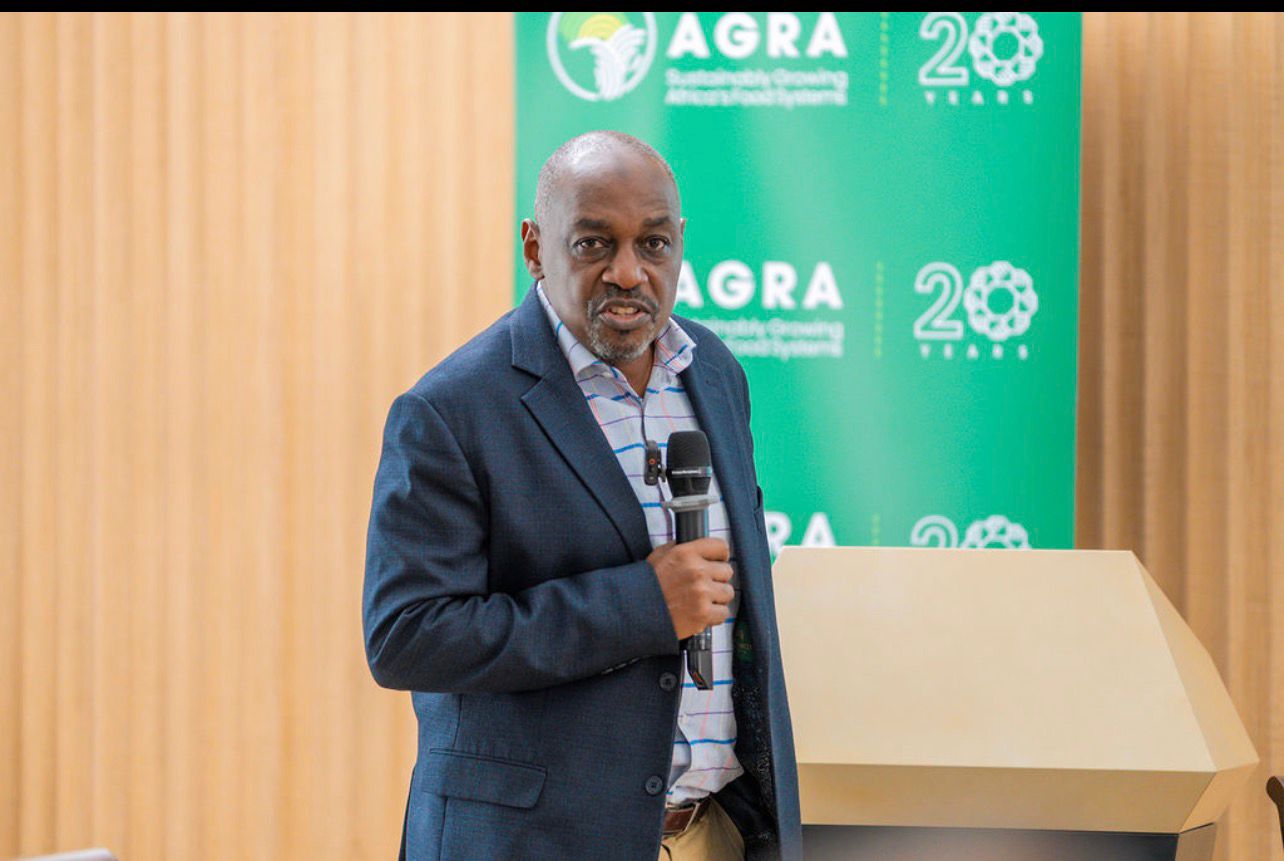 Hamadi Boga/CHARLES MGHENYI



![[PHOTOS] The new Ngong –Naivasha Road viaduct](https://cdn.radioafrica.digital/image/2026/06/64d4f771-4432-4aee-ba3c-2f304c4436ec.jpg)





![[PHOTOS] 'Mr Speaker Sir' Gen Z protester in court](https://cdn.radioafrica.digital/image/2026/06/b3e62d8e-25c3-4780-90f9-4eb48b1ce8a7.jpg)