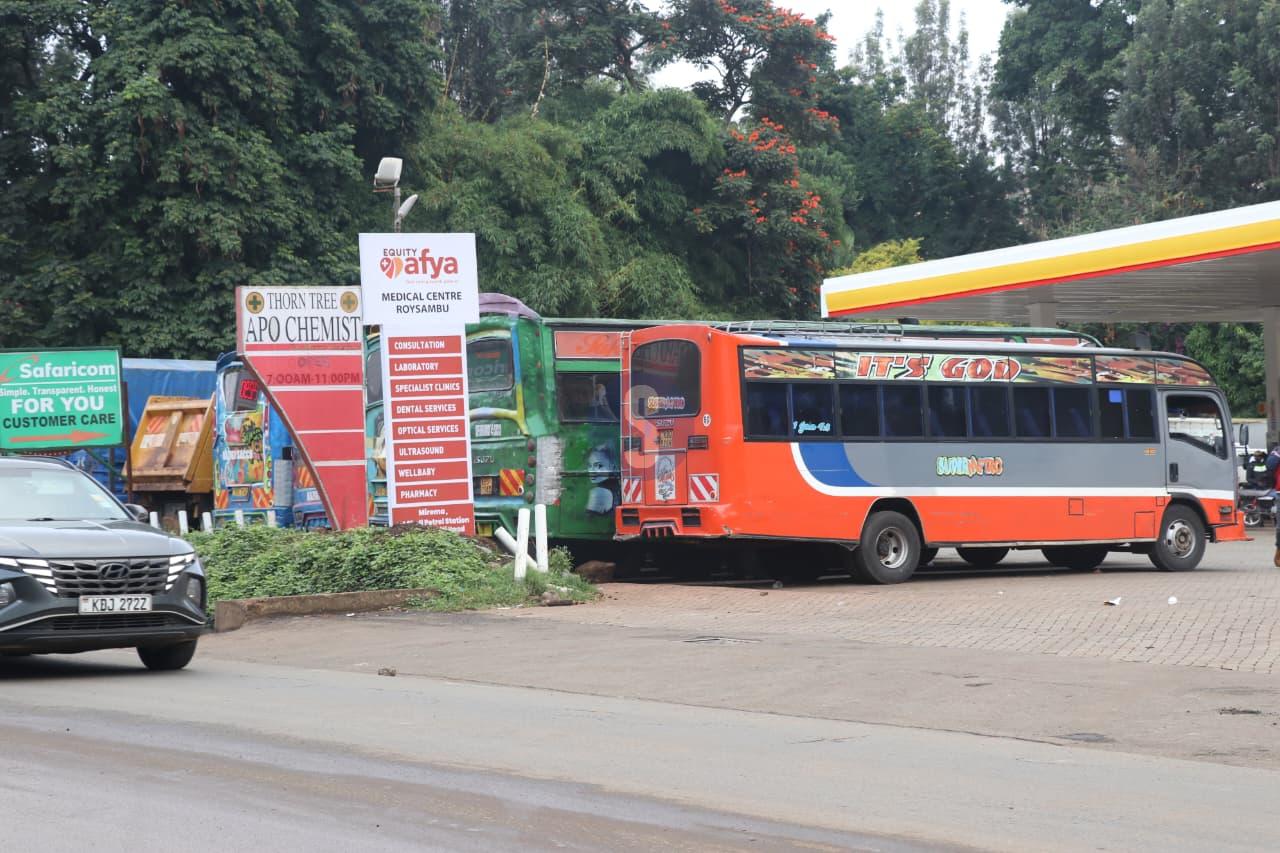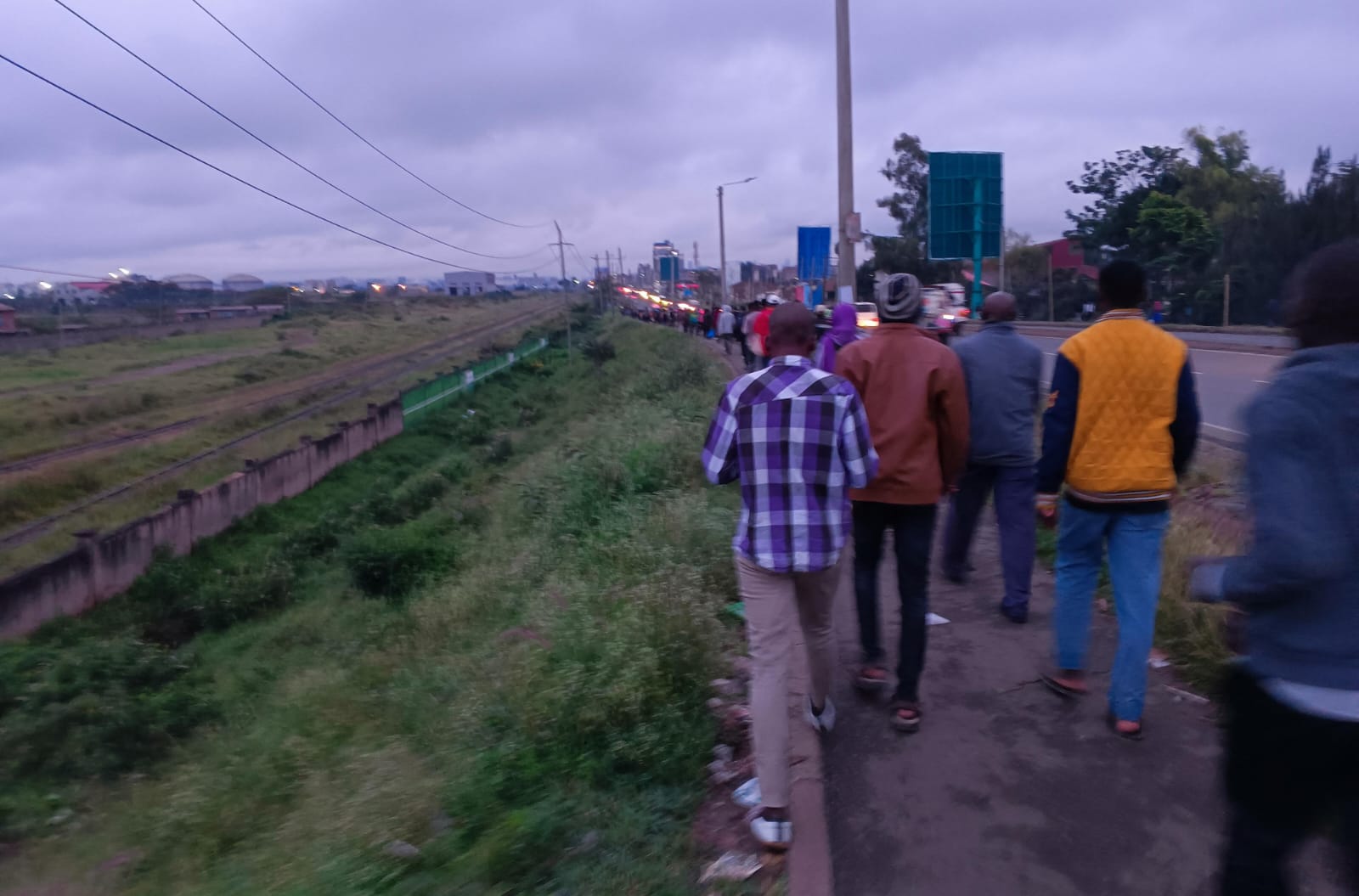


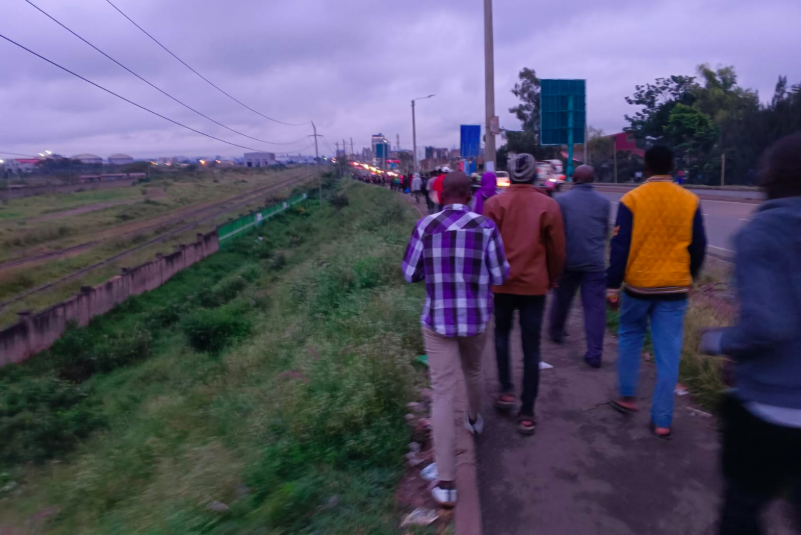
Thousands of Kenyans were forced to walk to work on Monday morning after a matatu strike paralysed transport across several parts of the country, leaving commuters stranded for hours in the cold.
In Nairobi, long lines of frustrated passengers formed at bus stages as early as 5am, with many eventually giving up and trekking to their destinations on foot.
From Lower Kabete to the Central Business District, groups of commuters could be seen walking along major roads, while in some areas youths blocked roads, worsening the morning chaos.
“I have been at the stage since 5am waiting patiently in the cold. If only the Ubers and Bolts could also come then it would be better, but none is coming,” said one commuter in Lower Kabete.
The commuter later abandoned the wait and headed back home, navigating muddy waters inside the estate after failing to secure transport.
“If I were you, do not even waste your time going to the stage. Just go back and sleep,”he said.
Another Nairobi resident said she had been forced to walk for hours after failing to find a matatu.
“I have been waiting here since 4 30am. There were no vehicle, when you check the Uber and the bolts, there is none. I have decided to go back home because its getting cold,” she said.
Another resident who walked from South C to Kawangware said she left home early and walked to her job.
“I have been walking from South C to Kawangware because there is no transport and I still need to get to work. At the end of the day, we have to work and eat,” she said.
The strike caused major disruption across Nairobi and neighbouring towns, with many workers, students and traders left scrambling for alternatives.
Motorists were also caught in heavy traffic as crowds of pedestrians filled roads and highways leading into the city centre.
In several estates, stranded passengers expressed anger over the recurring transport disruptions, saying they were losing working hours and income due to the strike.