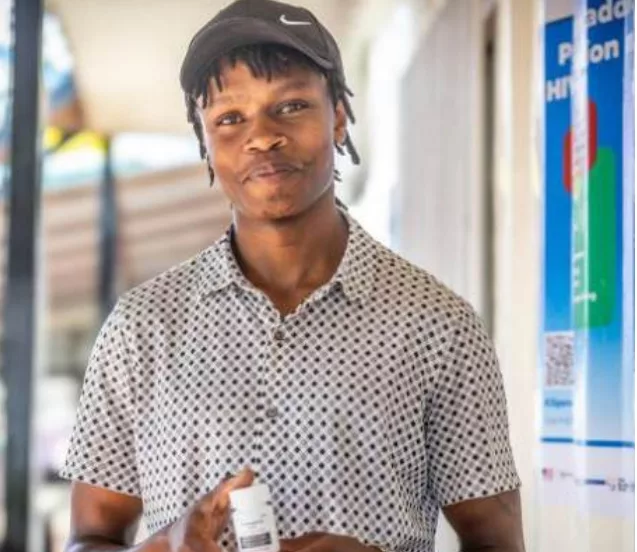
Hours after news broke that Samson Mutua, a 27-year-old
delivery rider from Kawangware, had become the first Kenyan to receive the
anti-HIV injection Lenacapavir in February, he switched off his phone and
disappeared for three days.
The excitement of making history was drowned out by a
torrent of abuse from strangers who believed he planned to sleep around because
he could no longer get HIV.
"People I had never met were insulting me," he
recalled. "They said I had taken the injection because I wanted to sleep
around without consequences. Some even brought my Kamba tribe into it. That was
when I realised there is a very big information gap in this country."
Four months later, Mutua laughs as he calls himself
"Kenya's guinea pig". The nickname no longer bothers him. If
anything, he wears it with pride.
At least 7,900 Kenyans had received the anti-HIV injection
by the end of June, according to the National AIDS and STI Control Programme
(Nascop) and its implementing partner, LVCT Health.
Several Kenyans who received the injection in February spoke
to the Star about their experiences as they prepare for their second injection
next month.
Mutua is now a Community Health Promoter (CHP) who travels
around the country encouraging young people to consider Lenacapavir (Len), the
revolutionary HIV prevention injection given only twice a year.
He says every insult convinces him that Kenya's biggest
challenge is no longer just making the medicine available. It is helping people
understand it.
"I have been a PrEP champion for years, but I never
imagined receiving Lenacapavir would attract this kind of stigma," Mutua
said.
The father of two first made headlines on February 26 when
he received two Lenacapavir injections in his lower abdomen at Riruta Health
Centre in Kawangware, Nairobi, becoming the first Kenyan to receive the
long-acting HIV prevention medicine during the country's national rollout.
The launch, witnessed by Health Cabinet Secretary Aden
Duale, marked a significant shift in HIV prevention.
Unlike daily oral Pre-Exposure Prophylaxis (PrEP),
Lenacapavir protects HIV-negative people from infection with one injection
every six months after the initial loading doses.
Mutua had been on oral PrEP since 2018 after years of
counselling on HIV prevention.
"The pills worked, but there was a pill burden. There
was also stigma because people would see the pill bottle and immediately assume
you were living with HIV," he said.
Ironically, switching to an injection did not eliminate
stigma. Instead, it created a new set of misconceptions.
"During one television interview, the interviewer
wrongly asked me how it felt now that I was HIV-positive. I realised then that
many people simply don't understand what HIV prevention is," Mutua said.
He now uses his own experience to educate young people
across the country about what to expect after receiving the injection.
He says he has not experienced any side effects apart from pain
at the injection site on the first day.
"I always tell them this injection is an added layer of
protection. It does not replace condoms or other methods because HIV is not the
only infection people should worry about."
Jane from Siaya county also said the appeal of Lenacapavir
was simple: freedom from taking daily pills.
She had never used oral HIV prevention pills until one
encounter with her long-distance partner left her worried. When she suggested
they both take an HIV self-test, he refused.
"I immediately went on PEP (post-exposure prophylaxis)
because I didn't know his HIV status," she said. "Taking tablets
every day for 28 days was difficult because I don't normally take
medication."
She enrolled for Lenacapavir almost immediately after it became
available.
She experienced swelling, itching and hardness around the
injection site for several days but said the temporary discomfort was a small
price to pay.
"I'm already looking forward to my second
injection," she said.
For Beata from Kakamega county, Lenacapavir offered further
reassurance.
The transgender woman had previously stopped and restarted
oral PrEP several times because of side effects, including fatigue and ear
pain. She was also worried the injectable medicine might interfere with her
gender-affirming treatment.
"I was nervous because I didn't know whether
Lenacapavir would affect my transition," Rita said. "I became the
first transgender person in Kakamega to receive it."
"The injection site was painful for a few days, but the
pain disappeared. Most importantly, it has not affected my transition in any
way, and that has given me a lot of confidence."
Wairimu from Kiambu told the Star that the only effect she
has experienced since receiving Len is an increased sex drive. Extensive
clinical trials and safety profiles show that Lenacapavir does not affect
libido.
Kenya initially rolled out Lenacapavir in 15 high HIV burden
counties with support from the Global Fund. The medicine is offered free of
charge in selected public health facilities as part of the country's strategy
to eliminate new HIV infections by 2030.
Health officials plan to expand the programme to all 47
counties, positioning the twice-yearly injection alongside existing prevention
methods such as daily oral PrEP and condoms.
Patriciah Jeckonia, Head of Policy and PrEP Technologies at
LVCT Health, said a key concern is that adolescent girls and young women, who
remain among the groups most at risk of HIV infection, are not yet adequately
accessing the injectable prevention option.
Preliminary figures released by the National Syndemic
Diseases Control Council last month indicated that about 13,936 Kenyans
contracted HIV last year, with children and young people accounting for more
than half of all new cases.
Jeckonia said LVCT Health is supporting the rollout of Len
by identifying and addressing implementation gaps through monitoring visits and
technical assistance.
"We came in to fill that gap by developing materials
that resonate with communities, that connect with them emotionally and then
they're able to choose," she said.

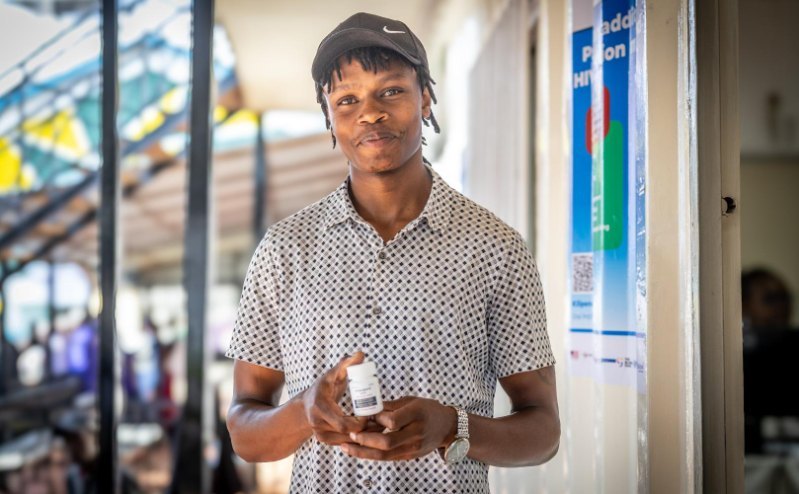 Samson Mutua, 27, was the first Kenyan to receive lenacapavir, a new injection that protects against HIV for six months with just two doses a year. Photo credit: WHO / Genna Print