Somewhere after your 25th birthday, life quietly begins to change. Your weekends are no longer filled with birthday dinners and spontaneous road trips. Instead, your social media feed becomes a gallery of baby showers, pregnancy announcements, gender reveals and first birthdays.
The group chats that once buzzed with holiday plans are now filled with conversations about diapers, daycare and sleep schedules. Before long, you realise you don’t see some of your closest friends as often, not because anyone stopped caring but because life has taken you down different paths.
And then come the questions.
“So, Wanjiku, when are you settling down?”
“You know, Cherono, you are not getting any younger.”
For many women, the pressure to have children doesn’t come from a doctor. It comes from family gatherings, friends, society and, sometimes, from within.
The truth is that fertility is one of the most misunderstood aspects of women’s health. We are often caught between two extremes: being told we have “plenty of time” in our twenties and being warned that once we hit 30, our chances of becoming mothers disappear overnight. Neither is entirely true.
Biologically, a woman’s fertility is generally highest in her twenties. Fertility gradually begins to decline in the late twenties and early thirties, with a more noticeable decline after age 35. But “decline” does not mean infertility. Many women naturally conceive healthy pregnancies well into their thirties, and some even in their forties. Age is only one piece of a much bigger picture that includes overall health, genetics, lifestyle and the reproductive health of both partners.
Yet science is often drowned out by fear. Many women in their late twenties find themselves in a difficult position. They may want children one day but haven’t met the right partner. Others are building careers, pursuing further education or simply don’t feel emotionally or financially ready to become parents. Some are in loving relationships but choose to wait. These are valid life choices, yet they are often met with judgment instead of understanding.
The emotional weight can be heavy. You begin wondering whether you are running out of time. Every wedding invitation feels like another reminder. Every baby announcement can bring genuine happiness for your friends, while quietly awakening anxiety about your own future. These emotions can exist together, and neither makes you a failure.
What often gets overlooked is that reproductive health is about much more than having babies. It means understanding your menstrual cycle, maintaining a healthy lifestyle, managing conditions such as endometriosis or polycystic ovary syndrome (PCOS), seeking medical advice when something doesn’t feel right and making informed decisions about your body.
Instead of living in fear, women should be encouraged to know their reproductive health. If you are concerned about your fertility, speak to a healthcare provider. If you have irregular periods, severe menstrual pain or have been trying to conceive without success, don’t ignore these signs. Early conversations can provide reassurance, identify potential issues and help you plan for the future.
We also need to stop placing the entire burden of fertility on women. Fertility challenges affect both men and women, yet conversations often focus only on a woman’s age, while overlooking male reproductive health. Parenthood, like conception itself, is a shared journey.
There is no universal timeline for adulthood. Some women become mothers at 22 and thrive. Others do so at 38 and thrive just as much. Some choose not to have children at all. None of these paths make a woman more or less complete.
Your worth is not measured by your relationship status, your age or whether your friends have already started families. Life isn’t a race where everyone reaches the same milestones at the same time.
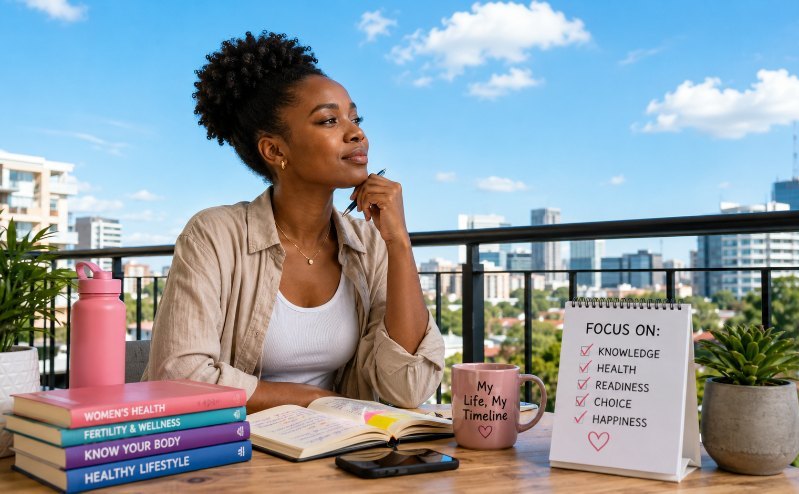
As you navigate your twenties and thirties, choose knowledge over fear. Understand your body. Prioritise your health. Make decisions based on facts rather than pressure. And remember that while biology matters, so do your dreams, your readiness and your right to choose the life that is right for you.