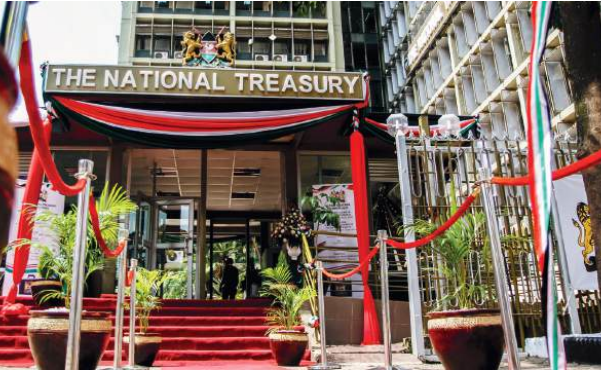
A storm is brewing between Parliament and the National
Treasury over what senators have termed deliberate underfunding of
the legislature, warning that the financial squeeze could cripple legislative and
oversight functions.
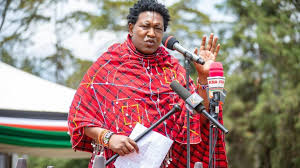
Speaking in the Senate, Ledama Olekina accused
the National Treasury of sidelining Parliament in budget allocations even as
the Executive continues to spend “heavily.”
The Narok senator said the current fiscal approach adopted
by the Treasury threatens the independence of Parliament and undermines its
constitutional mandate.
“It is deeply troubling that while the national government
continues to incur significant expenditures under Article 223 of the
Constitution, Parliament is simultaneously being subjected to severe financial
constraints,” Olekina said.
Parliament is regarded as one of the highly funded institutions
in the country.
In the current financial year, Parliament was allocated
Sh47.99 billion. The figure was revised upwards to Sh48.69 billion in a supplementary
budget 1.
The National Treasury has allocated the August house Sh48.69
billion in the 2026-27 budget estimates.
The constitution mandates the National Assembly to allocate
resources to various state institutions.
Olekina said Parliament is grappling with
mounting pending bills and funding shortages that are affecting critical
operations, including committee sittings, legislative processes, oversight
duties and public engagement programmes.
According to Olekina, delays and failures by the Treasury to
release approved funds have left Parliament operating under a significant
deficit, raising concerns over the sustainability of its activities.
He said promises of financial support through supplementary
budget allocations had failed to materialise, creating uncertainty.
“Essential activities are being jeopardised due to
inadequate and unpredictable funding,” he told the House.
The statement now piles pressure on the Treasury over
growing concerns regarding the use of Article 223, a constitutional provision
that allows the government to authorise spending before parliamentary approval
under special circumstances.
Olekina argued that the continued reliance on the provision
while Parliament itself struggles financially presents a contradiction that
must be urgently addressed.
He urged the Treasury to prioritise settlement of
Parliament’s pending bills, ensure timely disbursement of approved allocations
and provide accountability on expenditures incurred under Article 223.
The senator called for a more predictable fiscal
framework that would support the effective functioning of Parliament as an
independent arm of government.
“Parliament cannot effectively perform its oversight role
while constrained by financial uncertainty,” he said.
The remarks are likely to reignite debate over the
relationship between the Executive and Parliament, particularly on issues of budgetary independence and separation of powers.
Over the years, lawmakers have repeatedly accused the
Treasury of using delayed disbursement of funds as a tactic to weaken
Parliament’s oversight capacity.
The latest concerns emerge at a time when the country is
facing growing fiscal pressure, ballooning public debt and increased demands
for austerity measures across government institutions.
However, senators warned that cutting Parliament’s budget
could have far-reaching consequences on governance and accountability.
In his statement, Olekina said Kenya lost
an opportunity to host the Fourth World Summit of the Committee of the Future
Parliaments in Nairobi this October due to a lack of funding.
He said Parliament was unable to raise the required Sh12.95 million needed to support the global event because of
competing priorities within the Treasury.
The senator termed the development regrettable, saying the
summit would have boosted Kenya’s international profile while generating
revenue for Nairobi through tourism and hospitality.
“This decision is particularly disappointing given the
significant economic and diplomatic benefits such a global summit would have
brought to Nairobi,” he said.
The summit was expected to attract parliamentary delegations
and policymakers from different countries, placing Kenya at the centre of
global discussions on governance and future legislative reforms.



![[PHOTOS] The new Ngong –Naivasha Road viaduct](https://cdn.radioafrica.digital/image/2026/06/64d4f771-4432-4aee-ba3c-2f304c4436ec.jpg)







![[PHOTOS] 'Mr Speaker Sir' Gen Z protester in court](https://cdn.radioafrica.digital/image/2026/06/b3e62d8e-25c3-4780-90f9-4eb48b1ce8a7.jpg)