
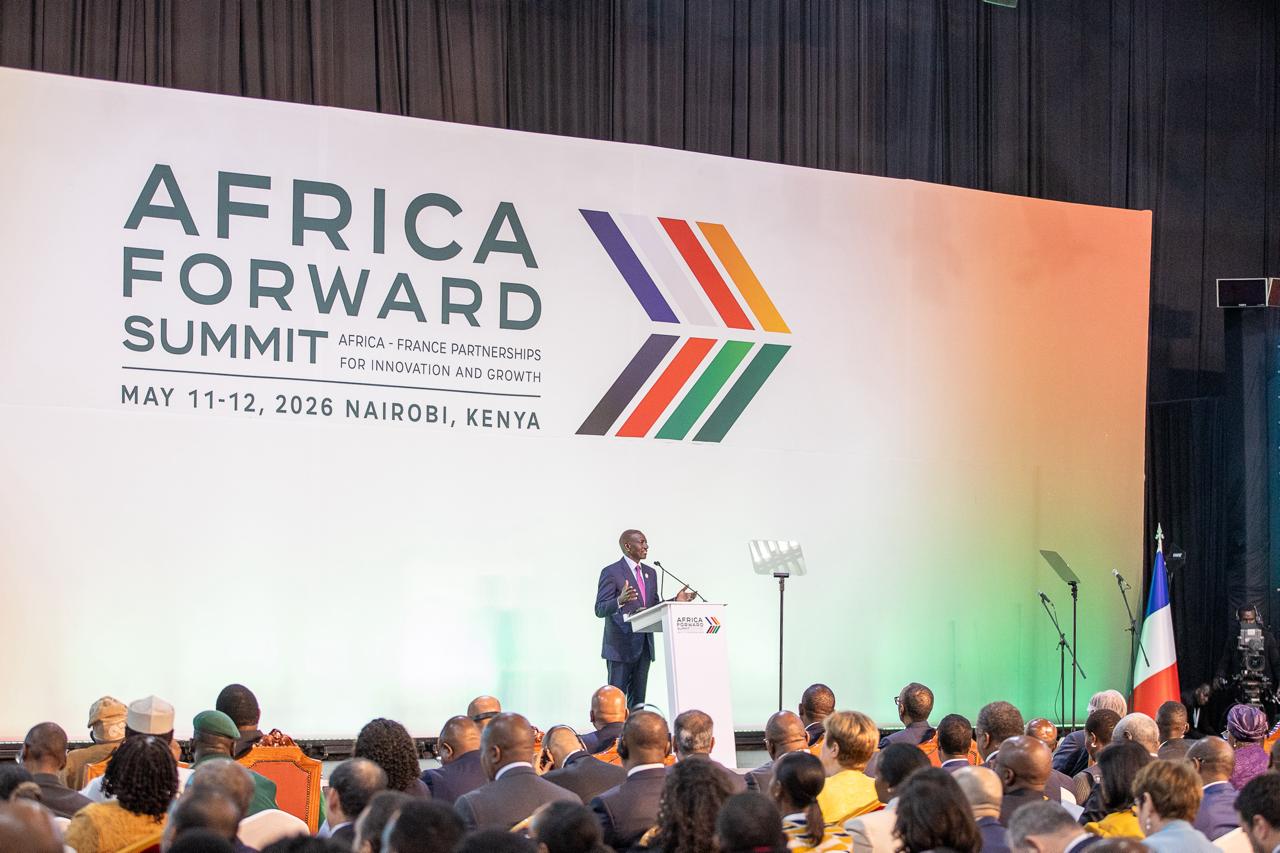
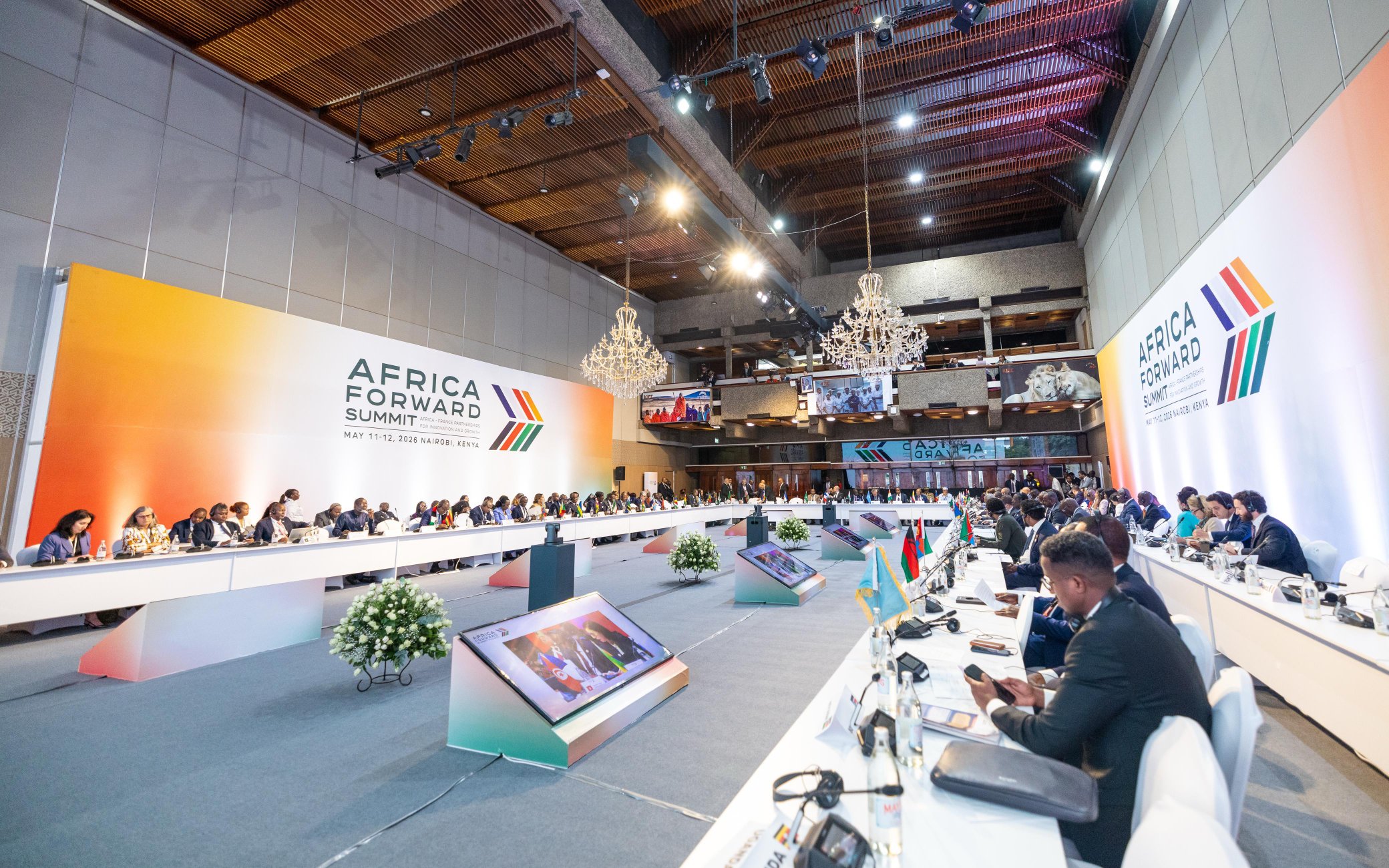
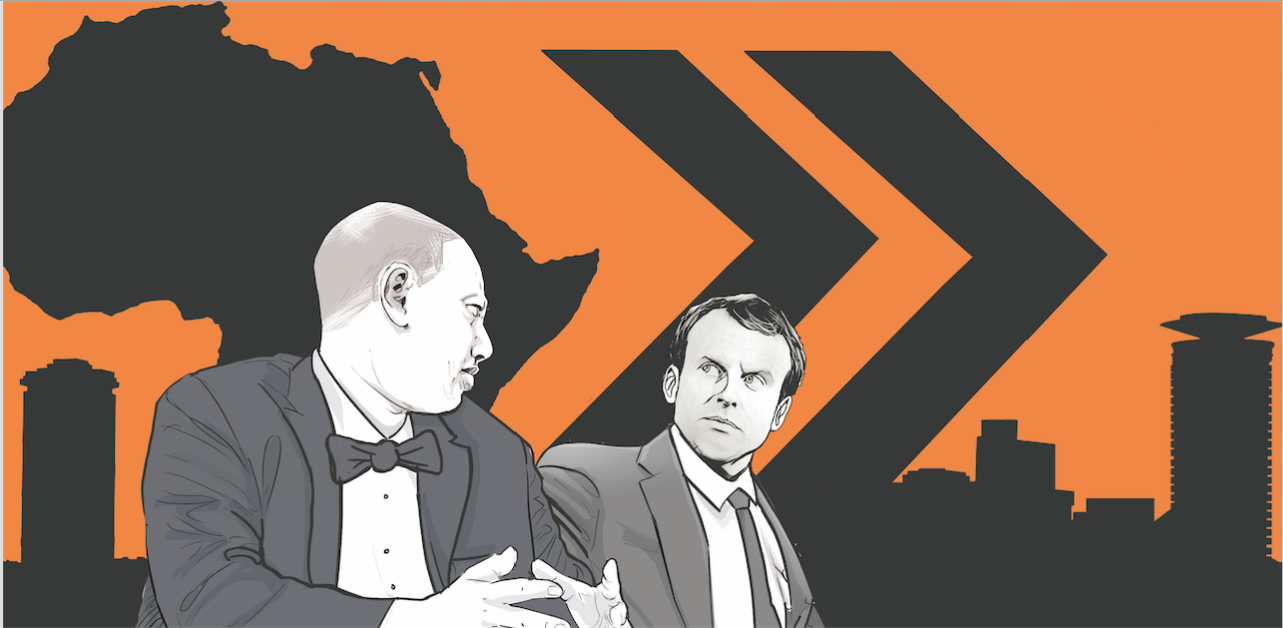
Kenya is emerging as a key channel through which African economic priorities are being transmitted into global governance discussions ahead of the G7 Summit in Evian, France.
This is after African leaders formally called on Nairobi, alongside France, to convey the continent’s concerns raised at the Africa-France Summit to the forum set for June 15-17.
Through the Call to Action document of the Nairobi Declaration issued at the Africa Forward Summit, African Heads of State and Government called on international financial institutions to take greater account of the vulnerabilities of African countries affected by conflict, climate shocks and structural development constraints.
“We call on France, together with Kenya, which is associated with the G7, to convey this important concern of the African continent to the Summit in Evian in June 2026,” the Call to Action statement said.
The summit brought together African leaders from at least 30 countries, President Emmanuel Macron of France and senior representatives of major international financial institutions.
The institutions include the IMF, World Bank Group, African Development Bank, European Investment Bank, the Green Climate Fund and the European Bank for Reconstruction and Development.
The summit was held against a backdrop of rising geopolitical tensions, including ongoing conflicts in the Middle East, global economic uncertainty and increasing fragmentation in trade and financial systems.
African leaders warned that these pressures are deepening structural vulnerabilities across supply chains, energy markets and food security on the continent.
In their declaration, leaders stressed that Africa stands at a critical economic crossroads, both as a continent of opportunity and structural constraint.
They pointed to the urgency of converting rapid population growth into a demographic dividend through job creation, industrialisation and value addition.
They highlighted persistent dependence on raw material exports, rising sovereign debt burdens, limited diversification and widening development financing gaps as key risks to Africa’s long-term transformation.
The impact of global macroeconomic imbalances and distortive trade practices was highlighted.
These are undermining industrialisation on the continent through depressing commodity prices, discouraging investment and weakening the competitiveness of emerging African industries, the African leaders said.
The declaration called for a stronger, rules-based, fair and inclusive multilateral trading system, and urged major economies to coordinate macroeconomic policies in ways that reduce structural imbalances and support sustainable global growth.
It also called for enhanced international financial surveillance, particularly by the IMF, to monitor global imbalances and support coordinated corrective action, alongside reforms to better reflect the vulnerabilities of developing and climate-exposed economies.
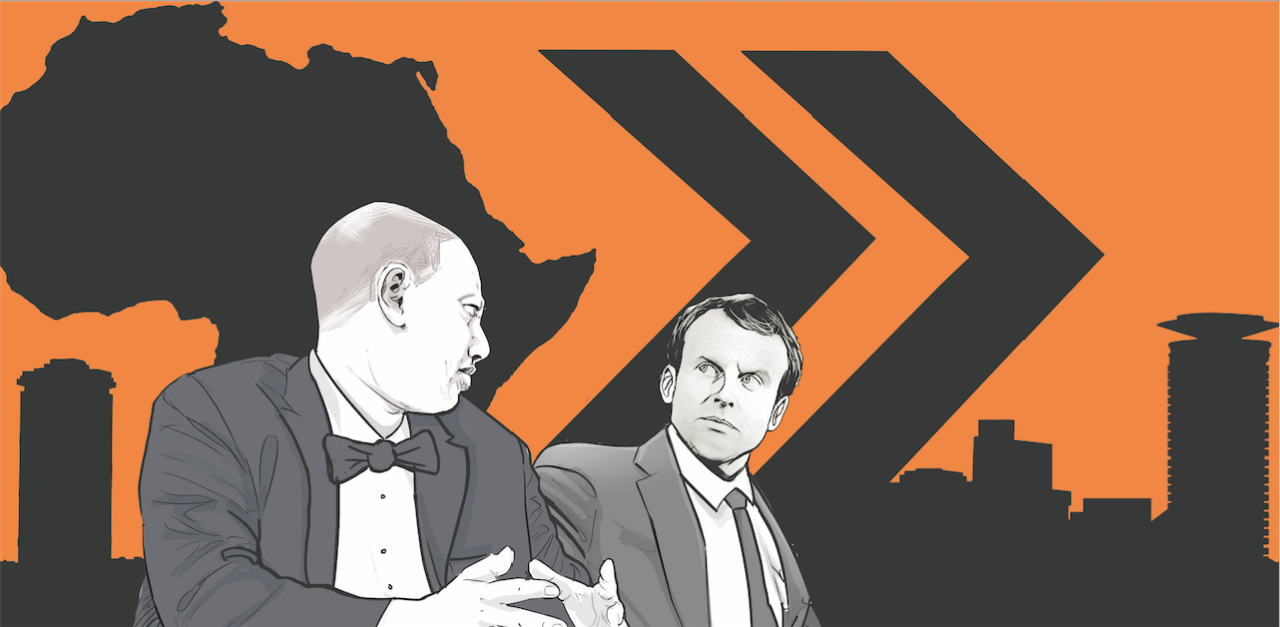
The tapping of Kenya, an anglophone country that also replaced South Africa‚ at the nudging of Washington, signals a key shift by Paris.
Beyond hosting the summit, Nairobi is increasingly being positioned not only as a new entrant at the G7 but as the voice of African priorities at the platform.
Foreign Affairs PS Korir Sing’oei argues that the French picked on Kenya because of its record as “a bridge builder, a consensus builder and mobiliser” on the continent.
“And given that Kenya plays a critical role on the continent, France thought that in order to advance Africa’s voice, Kenya would play just as good role as South Africa,” he said.
This significantly elevates Kenya into an intermediary role between Africa and the G7 system.
It also signals an evolving configuration in France’s Africa diplomacy, with a more networked approach that incorporates selected African partners into global agenda-setting processes.
Additionally, it reflects a diversification of African representation pathways, moving beyond established continental allies toward a more distributed set of interlocutors.
In effect, the Nairobi declaration positions Kenya as a key conduit for African economic messaging into G7 discussions.
This has, however, triggered some undertones that Kenya allowed a divide-and-rule approach by not siding with South Africa.
Sing’oei, however, argued that South Africa is not a member of the G7, and, therefore, “does not, as a matter of right, have to be the one representing Africa in the conversations of G7”.

![[PHOTOS] The new Ngong –Naivasha Road viaduct](https://cdn.radioafrica.digital/image/2026/06/64d4f771-4432-4aee-ba3c-2f304c4436ec.jpg)





![[PHOTOS] 'Mr Speaker Sir' Gen Z protester in court](https://cdn.radioafrica.digital/image/2026/06/b3e62d8e-25c3-4780-90f9-4eb48b1ce8a7.jpg)