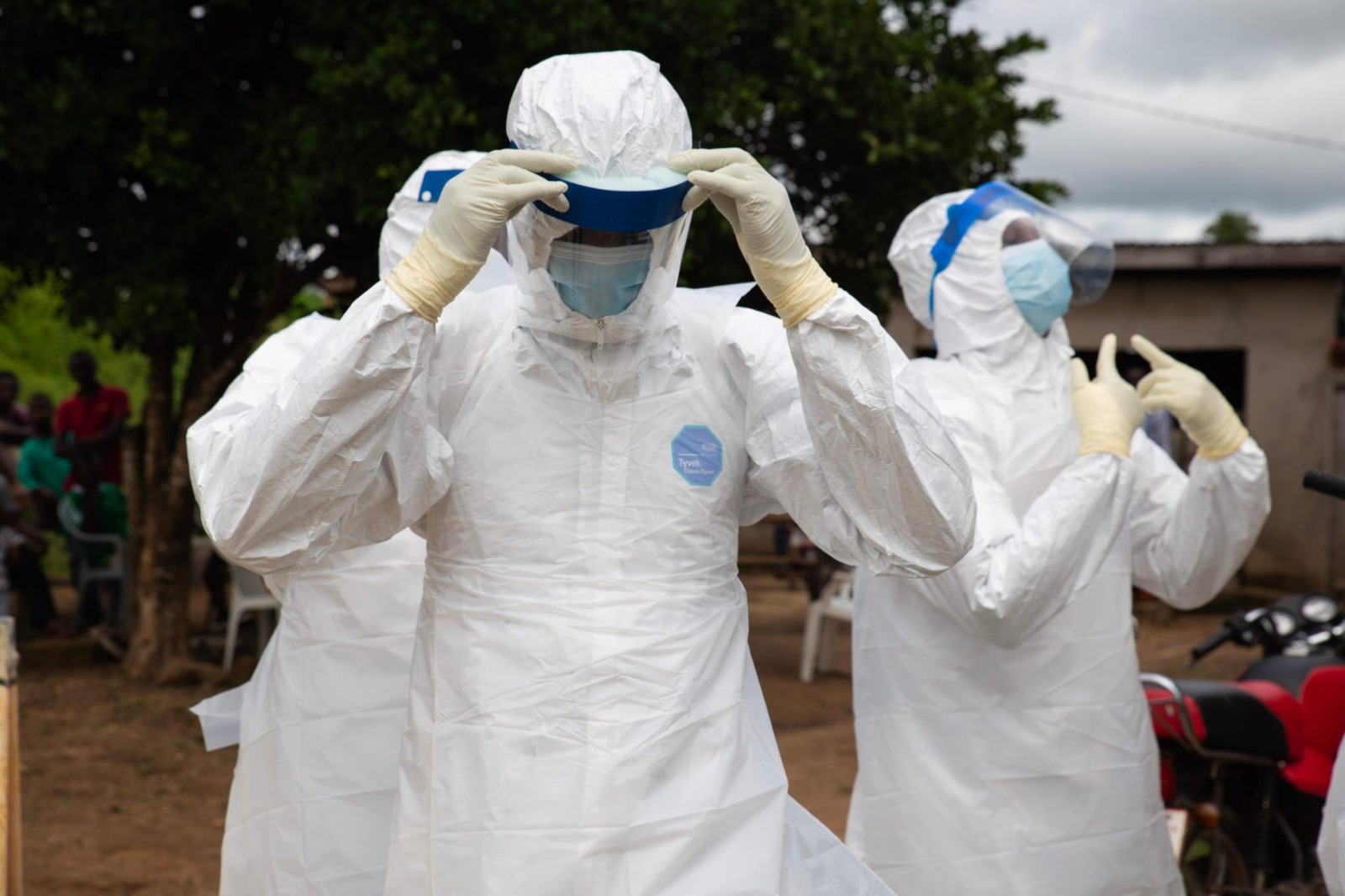
 Medics wearing protective gears
The Ministry of Health has increased monitoring and preparedness after an Ebola outbreak was confirmed in Ituri Province, Democratic Republic of Congo (DRC).
The outbreak has triggered heightened surveillance across East Africa due to the region’s porous borders and frequent cross-border movement.
The Ministry of Health in Kenya has, however, confirmed that no Ebola cases have been detected in the country as of Saturday, 16 May 2026.
"The Government of Kenya, through the Ministry of Health, has activated enhanced preparedness and response measures," a statement advisory by Director General Patrick Amoth stated.
It adds that laboratory testing in the DRC confirmed the virus in 13 out of 20 samples tested.
According to the advisory, preliminary findings indicate a non-Zaire ebolavirus strain, with further genomic sequencing still ongoing to determine the exact variant and transmission patterns.
Ebola Virus disease is a severe and often fatal illness transmitted through direct contact with infected bodily fluids, contaminated surfaces, or infected animals.
As of May 15, 2026, health authorities in the affected region had recorded 246 suspected cases and 65 deaths, including four confirmed fatalities.
"The affected areas are in the Eastern Democratic Republic of Congo, within a region characterised by significant cross-border movement through neighbouring countries, including Uganda and South Sudan, with onward travel connections across East Africa, including Kenya," the advisory reads.
Officials say the situation is being closely monitored in collaboration with regional and international health partners, including the World Health Organization (WHO) and the Africa Centres for Disease Control and Prevention (Africa CDC).
While reassuring the public that the overall risk remains low, the Ministry cautioned that there is a moderate risk of importation due to ongoing travel, trade, and population movement within the region.
This has prompted the activation of enhanced surveillance systems aimed at early detection and rapid response.
"The government is constituting a National Ebola Preparedness Team to coordinate readiness activities," Dr Amoth states.
In addition, the National Public Health Emergency Operations Centre (PHEOC) has been placed on heightened alert to ensure real-time monitoring and coordination of any potential threats.
Other preparedness measures include intensified screening at airports, border points, and other entry points into the country, as well as strengthened laboratory capacity for diagnosing viral haemorrhagic fevers.
Health authorities have also increased training and sensitisation of healthcare workers to ensure they are equipped to identify and respond to any suspected cases.
Public awareness campaigns have been scaled up as part of risk communication efforts.
Citizens have been urged to maintain high standards of hygiene, avoid contact with bodily fluids of sick individuals, and refrain from handling sick or dead animals.
"Seek immediate medical attention if experiencing symptoms consistent with Ebola Virus Disease, particularly after recent travel to affected areas," the ministry added.
According to the ministry, the symptoms include sudden fever, severe weakness, vomiting, headache and muscle pain, or unexplained bleeding.
Health officials emphasised that individuals are not contagious until symptoms begin to appear, a factor that makes early detection and isolation critical in preventing spread.
Authorities urged the public to rely only on verified information from official government sources and recognised international health agencies, warning against the circulation of unverified reports that could cause unnecessary panic.
![[PHOTOS] The new Ngong –Naivasha Road viaduct](https://cdn.radioafrica.digital/image/2026/06/64d4f771-4432-4aee-ba3c-2f304c4436ec.jpg)







![[PHOTOS] 'Mr Speaker Sir' Gen Z protester in court](https://cdn.radioafrica.digital/image/2026/06/b3e62d8e-25c3-4780-90f9-4eb48b1ce8a7.jpg)