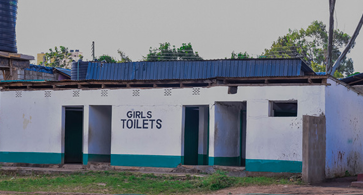
 Study found that most schools exceed the Ministry of Education and WHO recommended toilet-to-learner ratios.
Kenyan schools are grappling with severe sanitation and hygiene deficiencies, with a new study revealing that learners across the country are sharing toilets far beyond the levels recommended by the Ministry of Education and the World Health Organisation (WHO).
The Usawa Agenda Gender Equality in and through Education report paints a troubling picture of overcrowded sanitation facilities, inadequate menstrual hygiene infrastructure and limited access to handwashing points, exposing conditions that could undermine learner health, dignity and academic progress.
The study, conducted between June and July 2025, found that most schools fail to meet the recommended ratio of one toilet for every 30 boys and one toilet for every 25 girls.
At the primary school level, the national average stands at 61 boys per toilet and 47 girls per toilet, nearly double the recommended threshold for boys.
The situation is more severe in refugee community schools where 75 boys and 61 girls share a single toilet.
The findings also show notable disparities across school categories and locations. In rural schools, 56 boys use one toilet compared to 67 boys in urban schools, while girls in both rural and urban schools average 46 learners per toilet.
Public schools recorded significantly higher congestion, with 61 boys and 46 girls sharing one toilet compared to 42 boys and 39 girls in private schools.
At the senior school level, boys and mixed schools recorded greater pressure on sanitation facilities than girls’ schools.
The report found that about 46 boys in boys’ schools use one toilet compared to 38 girls in girls’ schools. In mixed schools, 40 boys and 35 girls share one toilet.
Nationally, the average in senior schools stands at 41 boys and 36 girls per toilet, still above the Ministry of Education and WHO guidelines.
Regionally, no part of the country fully met the recommended standards, although the Central region came closest.
The Rift Valley and North Eastern regions recorded the highest congestion levels, with 46 boys and 43 girls sharing one toilet.
Nairobi recorded relatively lower pressure, with both boys and girls averaging 33 learners per toilet, while the Central region posted the lowest ratios at 35 boys and 29 girls per toilet.
Beyond toilets, the report also highlights persistent gaps in menstrual hygiene management, particularly the lack of changing and bathing rooms for girls.
While many schools provide sanitary towels, the supporting infrastructure needed to ensure privacy and dignity remains largely inadequate.
Among primary schools, 85.2 per cent of public schools, 57.5 per cent of private schools and 77.8 per cent of refugee community schools provide sanitary towels to girls.
More than half of the schools also provide sanitary towel disposal facilities.
However, only 25.1 per cent of public schools, 42 per cent of private schools and 22 per cent of refugee community schools have bathing or changing room facilities for girls.
Nationally, only 28 per cent of primary schools provide bathing and changing rooms despite 81 per cent offering sanitary towels.
The situation is even more constrained at the senior school level, where only two in five schools provide sanitary towels and just one in 10 schools provide bathing or changing rooms for girls.
Girl schools were found to be more likely to provide changing rooms and disposal facilities compared to mixed schools, while mixed schools were more likely to distribute sanitary towels.
The report further revealed inadequate access to handwashing points, especially in public and refugee community schools.
Private schools recorded relatively better access, with 138 learners sharing one handwashing point compared to the national average of 173 learners per handwashing facility.
Refugee community schools again posted the worst outcomes, with 220 learners relying on a single handwashing point.
The findings are expected to renew pressure on education stakeholders to increase investment in school sanitation infrastructure and menstrual hygiene facilities, amid growing concerns that poor learning environments continue to expose learners to health risks and compromise their dignity and classroom participation.

![[PHOTOS] The new Ngong –Naivasha Road viaduct](https://cdn.radioafrica.digital/image/2026/06/64d4f771-4432-4aee-ba3c-2f304c4436ec.jpg)







![[PHOTOS] 'Mr Speaker Sir' Gen Z protester in court](https://cdn.radioafrica.digital/image/2026/06/b3e62d8e-25c3-4780-90f9-4eb48b1ce8a7.jpg)