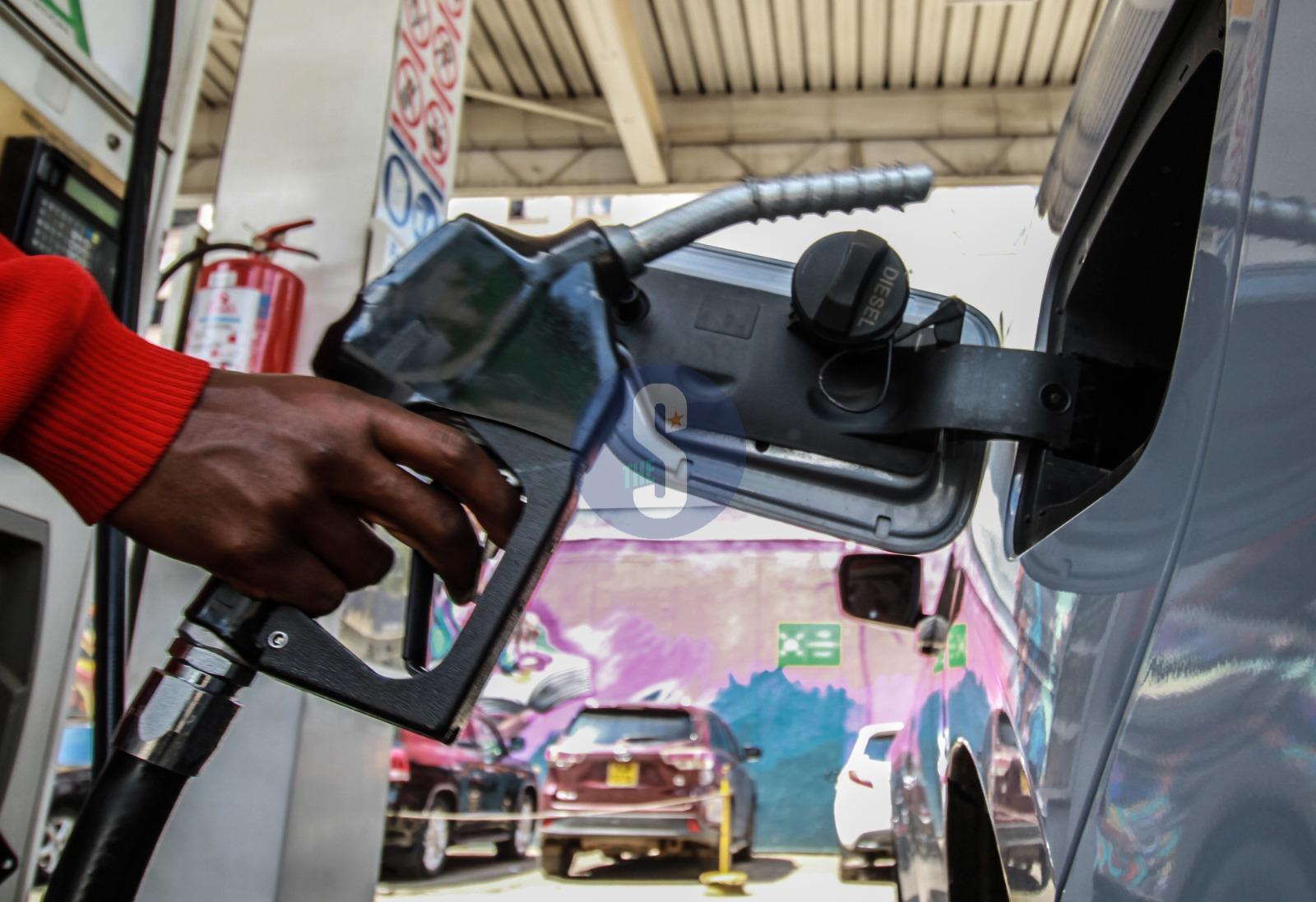
 A fuel pump at a filling station in Nairobi CBD on May 14, 2026. PHOTO/ENOS TECHE
The government will use approximately Sh5 billion from the Petroleum Development Levy (PDL) Fund to cushion consumers against rising fuel prices in the latest monthly review for the period running from May 15, 2026, to June 14, 2026.
Energy and Petroleum Cabinet Secretary Opiyo Wandayi said the intervention has been used to stabilise prices of diesel and kerosene, even as Super Petrol and diesel record sharp increases driven by global market pressures, including rising crude oil prices, freight costs and geopolitical tensions in the Middle East.
“To mitigate the impact of rising global petroleum prices on consumers and the wider economy, the government has utilised the Petroleum Development Levy (PDL) stabilisation mechanism to cushion the prices of Diesel and Kerosene during this review period,” Wandayi said in a statement.
"Approximately KSh 5 billion has been applied to moderate the extent of price increases while ensuring stability within the petroleum supply chain."
Despite the subsidy intervention, motorists will still pay more for fuel compared to the previous pricing cycle.
Super Petrol has increased by Sh16.65 per litre, while diesel has risen sharply by Sh46.29 per litre. Kerosene, however, remains unchanged.
The Ministry attributed the upward adjustment to sustained volatility in the global oil market, noting that Kenya remains exposed as a net importer of refined petroleum products.
“In the current pricing cycle, the average landed cost of imported Super Petrol increased from USD 823.27 per cubic metre in March 2026 to USD 906.23 per cubic metre in April 2026, representing an increase of 10 per cent,” the Ministry stated.
It added that diesel recorded the steepest increase, rising by 20.32 per cent over the same period, while kerosene posted a marginal 1.59 per cent increase.
According to the Ministry, global supply disruptions, higher insurance premiums linked to instability around the Strait of Hormuz, and elevated freight charges have all contributed to increased landed costs of imported fuel.
The government said it has also relied on policy measures such as the reduction of Value Added Tax (VAT) on petroleum products from 16 per cent to 8 per cent, alongside the Government-to-Government (G-to-G) importation framework, which it says has helped shield the country from even higher global cargo premiums.
“The Government-to-Government fuel importation framework has continued to shield the country in a great way from escalated petroleum cargo freight and premiums globally,” the Ministry said.
It further warned that global spot freight and insurance costs have more than doubled, creating additional pressure on countries that rely on open-market petroleum procurement.
The Ministry maintained that Kenya currently has adequate petroleum stocks and assured Kenyans that supply remains stable despite the price adjustments.
“We should all remain vigilant against possible profit-driven exploitative practices during this period of uncertainty, ensuring that consumers are not placed at any further disadvantage,” the statement read.
The review comes after the EPRA announced revised pump prices.
The Government said it will continue engaging stakeholders
in the energy, transport and manufacturing sectors to manage the impact of fuel
costs on the economy while safeguarding affordability for households.



![[PHOTOS] The new Ngong –Naivasha Road viaduct](https://cdn.radioafrica.digital/image/2026/06/64d4f771-4432-4aee-ba3c-2f304c4436ec.jpg)







![[PHOTOS] 'Mr Speaker Sir' Gen Z protester in court](https://cdn.radioafrica.digital/image/2026/06/b3e62d8e-25c3-4780-90f9-4eb48b1ce8a7.jpg)