While noting that the country remains one
of the more institutionally advanced states in the Horn of Africa, deep
structural weaknesses continue to undermine democratic consolidation.
The report is dubbed Democratisation Structural Constraints,
Political Dynamics and Future Prospects in the Horn of Africa.
The study argues that Kenya, like much of the region,
is struggling with weak institutional constraints, limited political
pluralism and the dominance of executive power.
This is despite performing better
than its neighbours in several governance indicators.
It notes that while Kenya has made significant democratic
gains since the return of multiparty politics in the 1990s, including
competitive elections and relatively strong institutions, these gains remain
fragile.
“Kenya has travelled a considerable distance from its
prolonged experience as a de facto one-party state. Since then, Kenya has
undergone significant democratic transformation, regularly conducted
competitive multiparty elections and experienced peaceful transfers of power,”
the report notes.
However, it warns that repeated electoral violence,
particularly the 2007-08 crisis, exposed the vulnerability of Kenya’s
political system in moments of intense competition.
At the heart of Kenya’s democratic challenge, the report
identifies ethnicisation of politics as a persistent problem. Political
competition, it says, is still largely organised around ethnic blocs rather
than ideology or policy platforms.
“Political parties, electoral coalitions and patronage
networks are largely organised along ethnic lines,” it states.
"Consequently, some groups enjoy privileged access to state resources, while others are systematically excluded, reinforcing perceptions of inequality and grievance."
The report further argues that this dynamic has turned
elections into contests for control of state resources rather than instruments
of accountability.
“Kenya exemplifies a polity in which communal contenders
compete for a share of centralized power rather than merely aiming at autonomy.
Kenya has yet to de-ethnicise national political life,” it adds.
Closely linked to this is the issue of elite capture, where
political and economic elites are seen to benefit disproportionately from
control of the state, reinforcing inequality and weakening public trust in
institutions.
The report also flags corruption as a persistent structural
problem, noting that despite legal and institutional frameworks, enforcement
remains weak.
Regional inequality and historical exclusion are also
identified as major democratic fault lines, particularly in Northeastern and
Coastal Kenya, where communities continue to feel marginalised from national
political and economic life.
The report highlights long-standing grievances linked to
state formation, securitisation and uneven development, arguing that these
conditions weaken trust in the state and fuel cycles of insecurity and
underdevelopment.
It also points to concerns over civil liberties and
governance constraints, including pressure on journalists, restrictive laws and
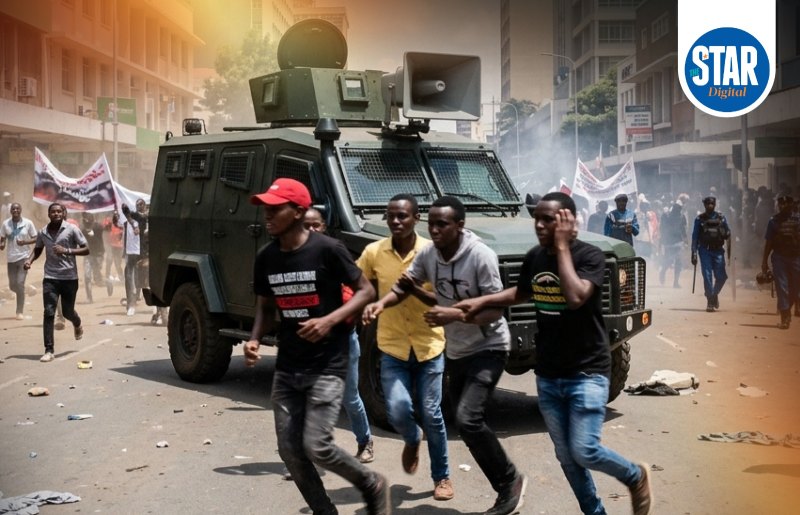
allegations of excessive force by security agencies, even in the context of a
relatively active civil society.
Despite these challenges, the report acknowledges Kenya’s
relative strengths in the region, particularly the independence of its
judiciary and the role of courts in checking executive power.
It cites landmark rulings, including the Supreme Court’s
handling of the 2022 presidential election petition and the High Court’s 2023
decision that nullified the housing levy, as evidence of institutional
resilience.
Still, the report concludes that Kenya’s democratic
trajectory remains uneven, with progress in formal institutions not yet matched
by deeper political transformation.
“Elections risk becoming arenas for elite rotation rather
than mechanisms of genuine popular accountability,” it warns.
The Horn Centre for Democracy argues that Kenya’s democratic
future will depend on addressing structural inequalities, reducing ethnic
polarisation and strengthening accountability institutions in order to move
from procedural democracy to substantive democratic governance.



![[PHOTOS] The new Ngong –Naivasha Road viaduct](https://cdn.radioafrica.digital/image/2026/06/64d4f771-4432-4aee-ba3c-2f304c4436ec.jpg)








![[PHOTOS] 'Mr Speaker Sir' Gen Z protester in court](https://cdn.radioafrica.digital/image/2026/06/b3e62d8e-25c3-4780-90f9-4eb48b1ce8a7.jpg)