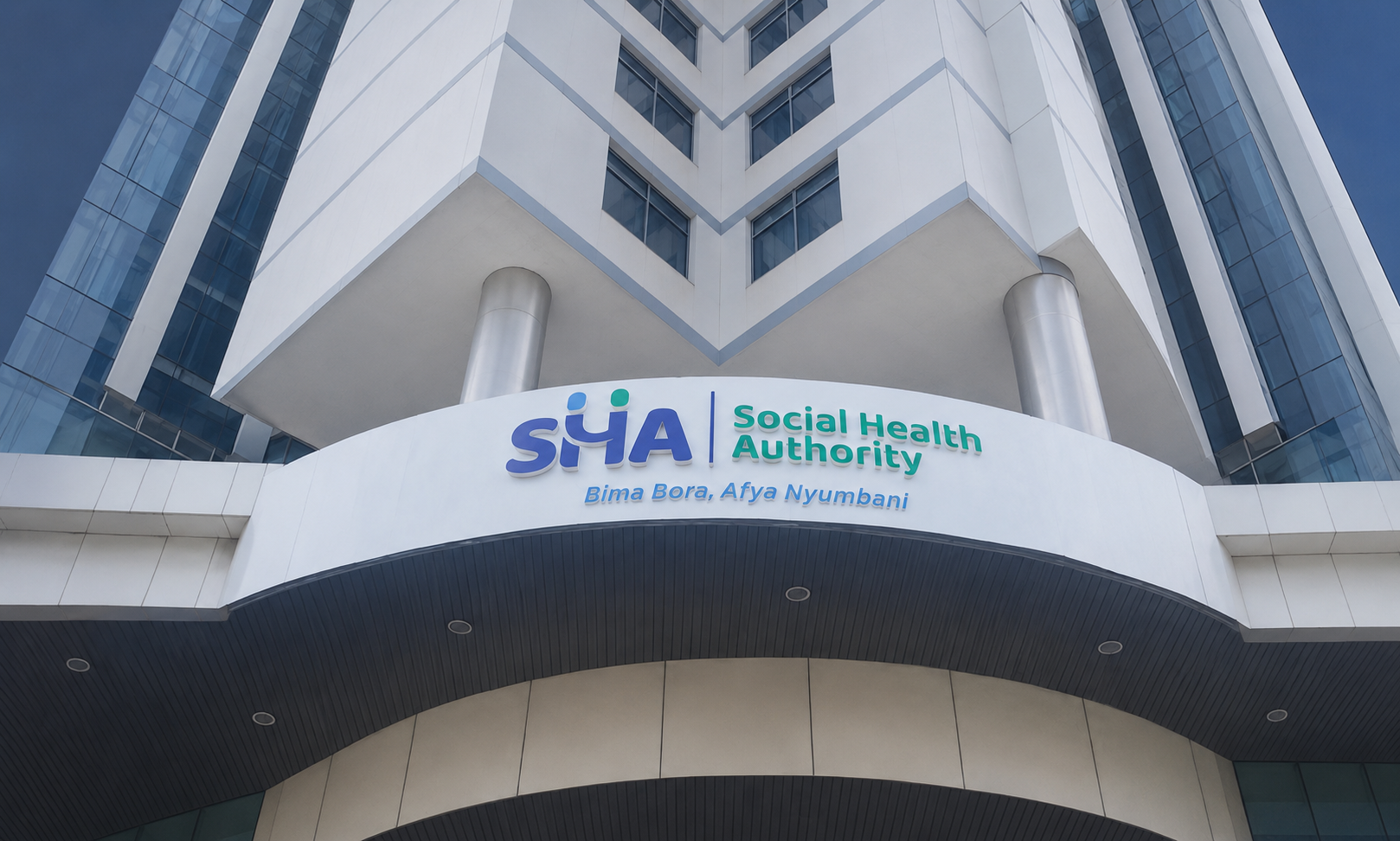
 Social Health Insurance Fund (SHIF) facility payment report shows that severe and chronic conditions are consuming most insurance spending.
Trauma, cancer, kidney disease and maternal care are consuming the largest share of funds under Kenya’s universal health insurance scheme at accredited health facilities, a new Social Health Insurance Fund (SHIF) facility payment report shows.
The Social Health Insurance Fund is the main scheme among the three health insurance programmes established under the Social Health Authority (SHA).
It is financed through member contributions charged at 2.75 per cent of gross income from both formal and informal sector workers and caters to services offered in Level 4, 5 and 6 hospitals.
The second scheme is the Primary Healthcare Fund (PHCF), which is financed by the government to provide essential health services at Level 1, 2 and 3 facilities, with a focus on community-level care.
Every registered Kenyan can access services under the Primary Healthcare Fund regardless of payment status.
The third scheme, the Emergency, Chronic and Critical Illness Fund (ECCIF), is also government-funded and supports treatment for severe illnesses, chronic conditions and emergency cases once SHIF coverage is exhausted.
SHA payment data shows that although respiratory diseases account for the largest number of claims processed between July 2025 and April 2026, they consume a comparatively smaller portion of overall expenditure.
Diseases of the respiratory system include illnesses affecting the airways, nasal passages, bronchi and lungs.
They range from acute respiratory infections to chronic conditions such as asthma, chronic obstructive pulmonary disease and lung cancer.
Analysis of the data shows that while respiratory illnesses accounted for 21.4 per cent of all claims processed during the period under review, they were generally cheaper to treat compared to trauma cases, cancer, kidney disease and maternal care, which generated the highest payouts despite recording fewer claims.
Lower respiratory infections such as pneumonia and bronchitis accounted for 5.7 per cent of total claims and 4.1 per cent of all charges linked to respiratory conditions, ranking sixth among the most expensive illness categories.
Acute upper respiratory conditions, including coughs, sinus complications and throat infections, accounted for 10 per cent of all claims.
“A consultation, basic medication and a few days of management handle most of them,” the report states.
“The condition accounts for only 8.6 per cent of SHA spending. Acute upper respiratory conditions, the single most common condition in the data set, cost just 4.1 per cent of the total bill,” it adds.
SHA payment data further shows that malaria was the third most expensive disease category, accounting for 9.8 per cent of all claims.
Data from the 2026 Economic Survey indicates that while SHA collected Sh57.7 billion in premiums, it paid out Sh91.5 billion in the 2024–25 financial year, including Sh33.4 billion in claim liabilities.
During the same period, the Primary Healthcare Fund received Sh10.2 billion and utilised Sh9.78 billion, translating to a payout ratio of 95.5 per cent.
The ECCIF received Sh1.3 billion and recorded a payout ratio of 95.2 per cent.
The Economic Survey further shows that respiratory diseases remained the leading cause of illness in the country, accounting for 15.4 million cases in 2025, or 19.4 per cent of all reported illnesses.
Malaria ranked second with 14.3 million reported cases, representing 18 per cent of the national disease burden.
The findings highlight respiratory illnesses as a growing public health concern requiring stronger interventions to reduce both mortality risks and the rising cost of managing the conditions.

![[PHOTOS] The new Ngong –Naivasha Road viaduct](https://cdn.radioafrica.digital/image/2026/06/64d4f771-4432-4aee-ba3c-2f304c4436ec.jpg)







![[PHOTOS] 'Mr Speaker Sir' Gen Z protester in court](https://cdn.radioafrica.digital/image/2026/06/b3e62d8e-25c3-4780-90f9-4eb48b1ce8a7.jpg)