
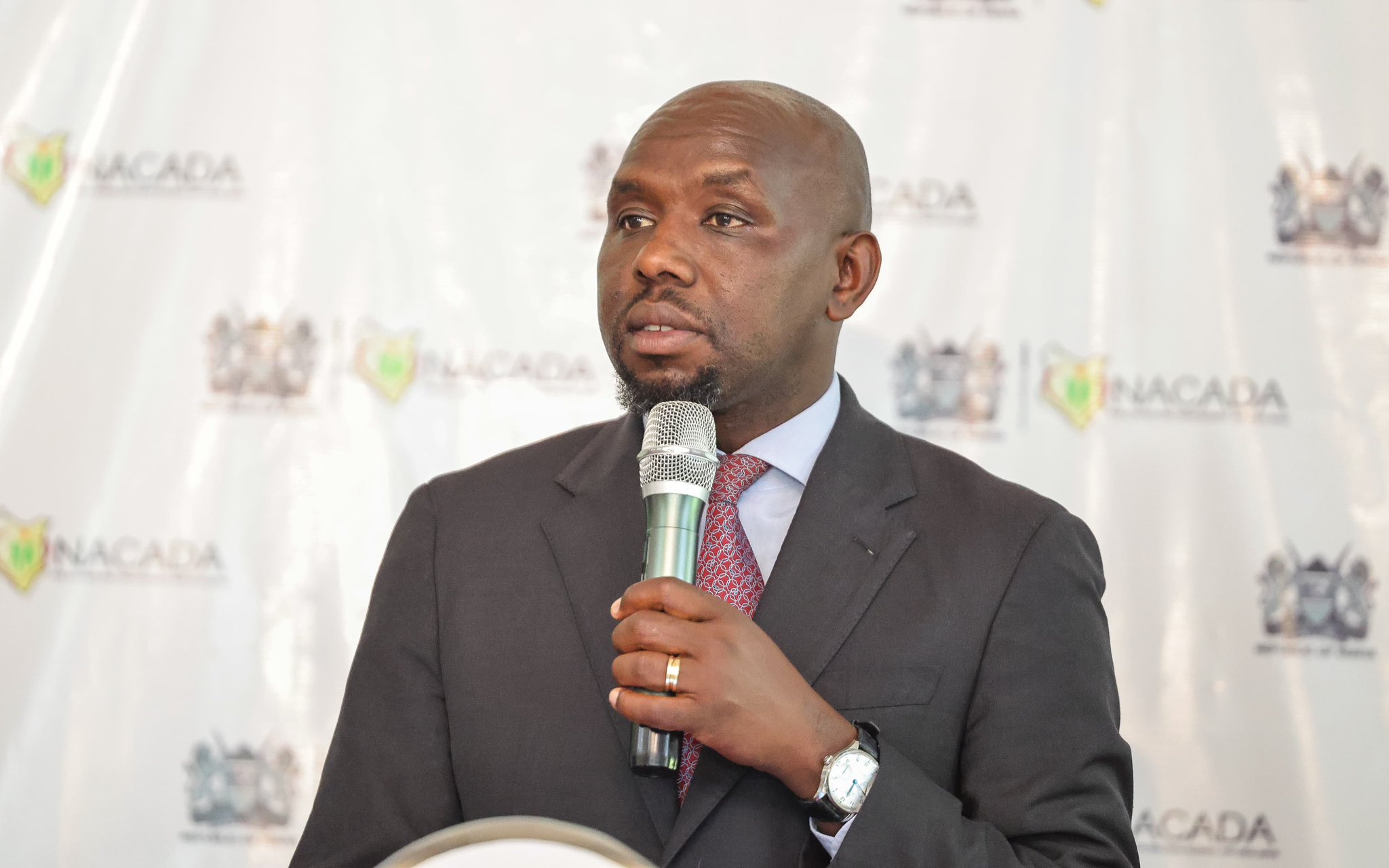
 Interior Cabinet Secretary Kipchumba Murkomen speaking during
the launch of the Wastewater Analysis Report on Emerging Psychoactive
Substances and Illicit Drugs by the National Authority for the Campaign
Against Alcohol and Drug Abuse in Nairobi on May 14, 2026/ MINA
Interior Cabinet Secretary Kipchumba Murkomen speaking during
the launch of the Wastewater Analysis Report on Emerging Psychoactive
Substances and Illicit Drugs by the National Authority for the Campaign
Against Alcohol and Drug Abuse in Nairobi on May 14, 2026/ MINAInterior Cabinet Secretary Kipchumba Murkomen has announced the rollout of a national wastewater surveillance system aimed at tracking drug and substance abuse trends across the country as the government intensifies the fight against narcotics and emerging psychoactive substances.
Murkomen said the new system will form part of a broader National Drug Surveillance and Early Warning System to be established across all 47 counties to help authorities detect patterns of drug use, strengthen public health interventions and support intelligence-led operations against traffickers.
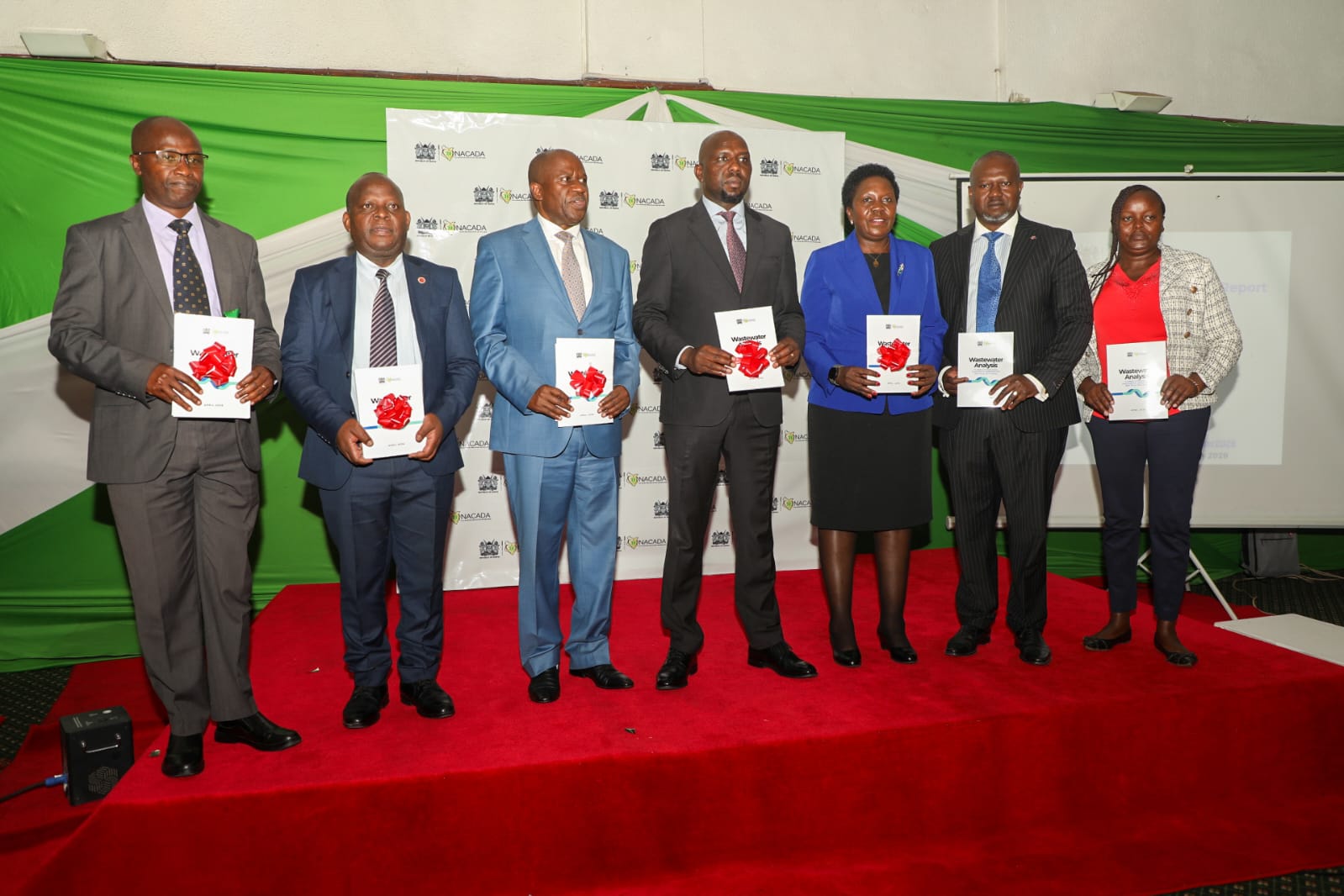
Speaking on Thursday during the launch of the Wastewater Analysis Report on Emerging Psychoactive Substances and Illicit Drugs by the National Authority for the Campaign Against Alcohol and Drug Abuse in Nairobi.
“We are taking targeted and bold steps in the fight against drug and substance abuse, including investing in research to strengthen evidence-based interventions,” Murkomen said.
He said the study, conducted by NACADA, had revealed alarming levels of exposure to illicit drugs and psychoactive substances in different parts of the country, underscoring the urgency of government intervention.
“The study strengthens our capacity to safeguard public health, enhance national security and anchor our policies firmly in evidence,” the CS said.
According to Murkomen, the government will also enhance the capacity of the Government Chemist through acquisition of advanced analytical technologies to improve detection and monitoring of illegal substances.
He added that security agencies would scale up intelligence-led policing and surveillance operations targeting drug trafficking networks operating within the country.
“These measures complement our other ongoing efforts, including improving detection, disrupting drug production and distribution networks, and intensifying the crackdown on perpetrators and their abettors,” Murkomen said.
The announcement comes amid increased anti-narcotics operations across the country targeting traffickers, distributors and drug dens.
In recent weeks, detectives from the Anti-Narcotics Unit and other security agencies have conducted a series of raids in Nairobi, Mombasa and other regions leading to the seizure of large consignments of narcotic drugs and arrests of suspects linked to trafficking syndicates.
Just this week, police in Mombasa recovered narcotics valued at more than Sh2 million during a raid on a suspected drug distribution network in Kwa Hola area.
Detectives recovered hundreds of rolls of cannabis, heroin and other substances during the operation.
In another recent operation in Nairobi’s Lang’ata area, officers seized several sacks of cannabis and packaging materials believed to have been used in drug distribution as investigations into suspected trafficking networks continued.
Authorities have also raised concern over the growing circulation of synthetic and emerging psychoactive substances, especially among young people and in urban areas.
Murkomen said the government would continue strengthening collaboration between law enforcement agencies, health institutions, researchers and county governments to combat the threat posed by illicit drugs.
He noted that the wastewater analysis approach would provide authorities with scientific data to identify emerging trends early and guide policy responses before the situation escalates.
The CS maintained that the fight against drug and substance abuse remains a key national security and public health priority.
Also present during the launch were Principal Administrative Secretary Beverly Opwora, NACADA board chair Stephen Mairori and chief executive officer Anthony Omerikwa among other stakeholders.

![[PHOTOS] The new Ngong –Naivasha Road viaduct](https://cdn.radioafrica.digital/image/2026/06/64d4f771-4432-4aee-ba3c-2f304c4436ec.jpg)









![[PHOTOS] 'Mr Speaker Sir' Gen Z protester in court](https://cdn.radioafrica.digital/image/2026/06/b3e62d8e-25c3-4780-90f9-4eb48b1ce8a7.jpg)