Police IG Douglas Kanja has raised concerns over the
country’s preparedness to provide adequate security during next year's general elections.
Kanja warned that a severe funding shortfall has stalled
plans to recruit 15,000 additional police officers to reinforce the National
Police Service ahead of the polls.
The IG disclosed that the government’s plan to recruit
25,000 officers during President William Ruto’s first term is now at risk after
only 10,000 officers were enlisted, leaving a deficit of 15,000 personnel.
The National Treasury has only allocated Sh2.9 billion
against a requirement of Sh6.3 billion to hire new officers in the next
financial year.
Kanja said the proposed amount is insufficient and will
largely be used to clear pending bills for the 10,000 recruits currently
undergoing training.
Appearing before the National Assembly Administration and
Internal Security Committee during deliberations on the 2026-27 budget
estimates, Kanja said the service urgently requires at least Sh6.3 billion to
recruit and train additional officers before the elections.
“The lion’s share of those funds will go towards settling
pending bills for operations of the 10,000 recruits currently under training,”
Kanja told lawmakers.
According to the budget estimates, the National Treasury
allocated the NPS a total of Sh143.19 billion for the next financial year, with
priority areas including police recruitment, officers’ welfare and
modernisation of the police air wing.
Despite the allocation, the police leadership argued that
the amount falls far below the service’s operational requirements at a time
when the country faces increasing security demands and preparations for the
next general election.
Kanja told MPs that the service is struggling to replace
officers exiting through retirement, resignation and death, even as demand for
police presence continues to rise across the country.
The Inspector General cautioned that unless Parliament
approves additional funding, the planned recruitment exercise may not proceed,
potentially undermining election security preparedness.
“For fresh recruitment to be undertaken, additional funding
must therefore be provided. There is a huge gap and this is an area that this
committee needs to look into seriously,” he added.
National Police Service Secretary and Accounting Officer
Bernice Lemedeket echoed the concerns, warning that the service risks falling
significantly short of its five-year recruitment target.
“Our strategic plan for the next five years was to recruit
25,000 police officers but we have only recruited 10,000 so far. We therefore
have a shortage of 15,000 officers as we prepare for the elections,” Lemedeket
told the MPs.
She explained that the officers currently in training are
only replacing those leaving the service and do not increase the overall
strength of the police force.
“The 10,000 recruits currently in training will only fill
attrition gaps. They are not an addition to the existing numbers. For the
interest of the country and election preparedness, we still need funding to
recruit the remaining officers,” she said.
The NPS also appealed for more funding to modernise the
police air wing and improve transport capacity within the service.
Kanja disclosed that the police currently have only three
operational aircraft out of a fleet of nine, with the rest grounded and in need
of refurbishment.
“We have three operational aircraft — two fixed-wing
aircraft and one Mi-17 helicopter — while nine aircraft remain at the hangar
awaiting restoration through investment,” he said.
The Inspector General explained that the aviation unit had
deteriorated after aircraft were previously transferred away from the National
Police Service, forcing the agency to rebuild its air support operations almost
from scratch.
He said the service had already budgeted Sh102 million for the
refurbishment of the Mi-17 helicopter and additional resources to repair
another helicopter grounded due to gearbox problems.
Kanja further appealed for the acquisition of two new
fixed-wing aircraft with a carrying capacity of between 19 and 24 passengers to
strengthen police operations, disaster response and surveillance capabilities.
The Inspector General noted that the existing Mi-17
helicopter has been critical in operations in North Eastern Kenya and other
emergency deployments in difficult terrain.
“We are almost starting from scratch and we need a lot of
support in that direction,” he told MPs.
The police service also raised concerns over inadequate
transport resources, revealing that it currently operates at only 50 per cent
of its required transport capacity.
Kanja says NPS requires about 8,400
vehicles but currently has only 2,833 operational vehicles, while another 1,066
are grounded, leaving a deficit of 4,481 vehicles nationwide.
He said the service is now considering a transition to
electric vehicles for urban policing, while diesel-powered vehicles would
mainly be deployed in rural areas.
INSTANT ANALYSIS
The National Police Service has warned that inadequate
funding could undermine security preparedness for the 2027 General Election.
Inspector General Douglas Kanja told MPs that the Sh2.9 billion allocated for
recruitment is insufficient, as most of it will clear pending bills for current
trainees. The NPS says it still needs 15,000 officers to meet its target under
President William Ruto’s first term and strengthen election security operations
nationwide.

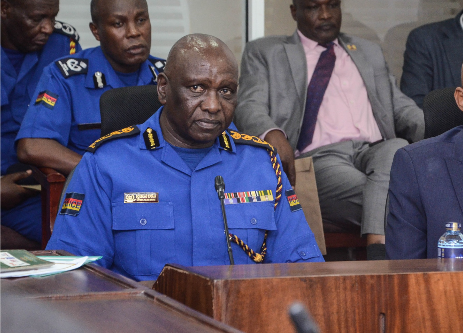
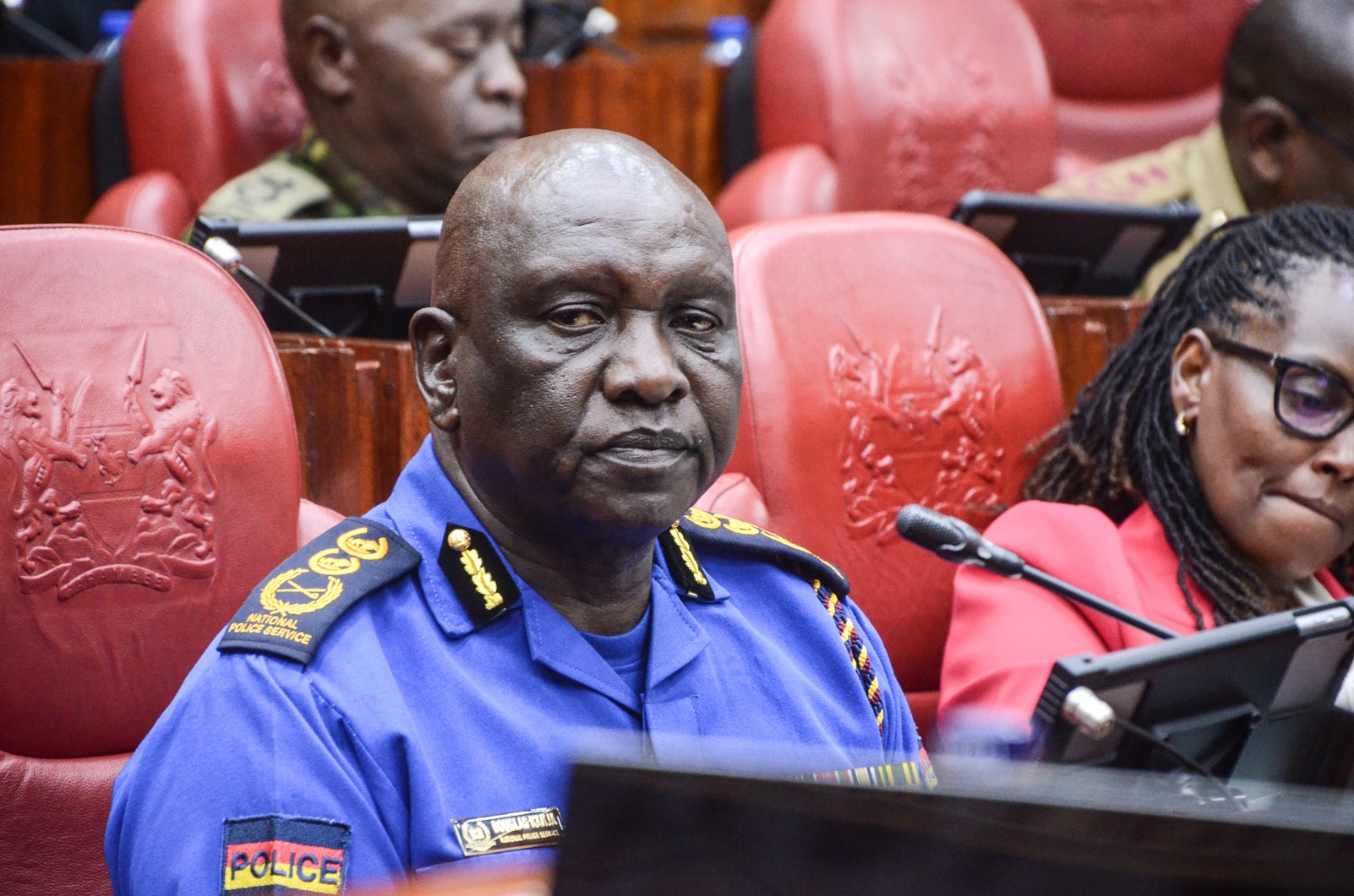 IG Douglas Kanja before the Departmental Committee on National Administration and Internal Security to consider the Budget Annual Estimates for the 2026/2027 Financial Year at Parliament Buildings on May 11, 2026./DOUGLAS OKIDDY.


![[PHOTOS] The new Ngong –Naivasha Road viaduct](https://cdn.radioafrica.digital/image/2026/06/64d4f771-4432-4aee-ba3c-2f304c4436ec.jpg)


![[PHOTOS] 'Mr Speaker Sir' Gen Z protester in court](https://cdn.radioafrica.digital/image/2026/06/b3e62d8e-25c3-4780-90f9-4eb48b1ce8a7.jpg)