For mama mboga sellers, sugarcane vendors and boda boda
riders, the rain is not just weather it is a wrecking ball.
When the rain starts over Nairobi, Damaris Mwendwa doesn't
look at the clouds. She looks at her stall. Then she looks at the rising water.
Then she does the math she has done a hundred times before.
"Once the water enters, everything is finished,"
she says, "Tomatoes float away. Spinach turns into soup. Customers see the
flood and walk to the other side of the road. That day is gone," she says.
Damaris is 38 years old and has sold vegetables for five
years. Every morning, she spreads her produce on a wooden table by the roadside
, onions, potatoes, cabbages, tomatoes and greens. On a good day, she makes Sh800 to Sh1,000 in profit. On a rainy day, she makes nothing.
"The rain floods our stalls completely. I cannot
display anything. The vegetables rot within hours. And buyers? They see muddy,
flooded streets and they turn back. Nobody wants to step in that water. So my
sales go to zero," she says.
Across Nairobi, thousands of small business owners like
Damaris are counting the cost of a rainy season. For workers who earn daily,
the rain does not just wet their clothes. It empties their pockets.
Damaris wakes up at 4 am every day to buy vegetables from
the market. By 9 am, her stall is set up and ready. But when it rains, all
that effort disappears.
"The moment the rain starts, water flows straight into
my stall," she says. "There is no drainage here,The ground becomes
mud. My table sinks. My vegetables may even fall into the water. Even the ones
that stay on the table get soaked and start rotting."
She estimates a loss of almost Sh2,000 and above for the
produce she bought.
"Less produce sold means less money for daily household
needs," she explains. "No money for milk. No money for flour. No
money for fare for my children to go to school. I have to borrow from friends
just to put something on the table. You can only pray that the sun returns
before your vegetables turn black."
Moses sells sugarcane at a busy junction in Babadogo. His setup is
simple a machete, a plastic stool, a
wheelbarrow full of green cane and a small umbrella that barely covers him. On
a normal day, he sells between 30 and 40 pieces at Sh50 each. That is Sh1,500 to Sh2,000. Enough to feed his family.When it rains, his business collapses.
"The rain damages my whole setup," Moses says, ’’The
sugarcane gets wet and slippery. My stool sinks into the mud. The umbrella
flips inside out. And the roads become so flooded that I cannot even stand in
one place. I have to pack everything and run for shelter."
"People are less likely to buy when they are getting
soaked or wet," he explains. "Nobody wants to hold a wet sugarcane in
the rain. Nobody wants to stand and wait for me to peel it while water is
pouring on their head. They just want to get home. Dry. Fast. So I sell
nothing."
He says the rainy seasons have become harder to predict. And
harder to survive. It rains when it wants. Sometimes he tries to sell to people
stuck under bus shelters. But even they are counting their coins.
Aron Mutai, a boda boda rider, knows rain from a different angle.
For him, it is about passengers who simply disappear.
"When the sun is out, I make good money," Aron
says, I do 15 to 20 trips a day. Sh500 to Sh700 profit. Enough to save a
little. But when it rains? That number drops to three trips. Sometimes
zero."
The problem, he explains, is that passengers avoid riding
during storms.
"Nobody wants to sit on a wet motorcycle seat. Nobody
wants rain hitting their face while they are dressed for work or church. So
they choose other options like Bolt, Uber, matatu anything with a roof."
He says the roads become flooded and cannot ride fast, cannot
go to certain areas which means fewer trips.
"The cold breeze while riding can give you a nasty
cold. I have been sick twice this year just from riding in the rain. When I am
sick, I cannot work at all. So I lose even more days."
He estimates that each heavy rain week costs him at least Sh2,000 in lost income. That is money he would have used for rent, food and
savings. Aron says some passengers do call him during light rain, but they
usually want to go very short distances. He has tried buying a bodaboda
umbrella but it still does not protect him and his passengers from the rain.
The damage goes beyond spoiled vegetables, unsold sugarcane and empty motorcycle seats. When small business owners and daily earners lose
income, they stop spending. The woman who buys milk every morning delays. Aron request
is for the government to fix the drainage on our roads.
As of this week, the Kenya Meteorological Department has
warned of continued heavy rainfall in several parts of Nairobi. For Damaris,
that means more sleepless and hungry nights.

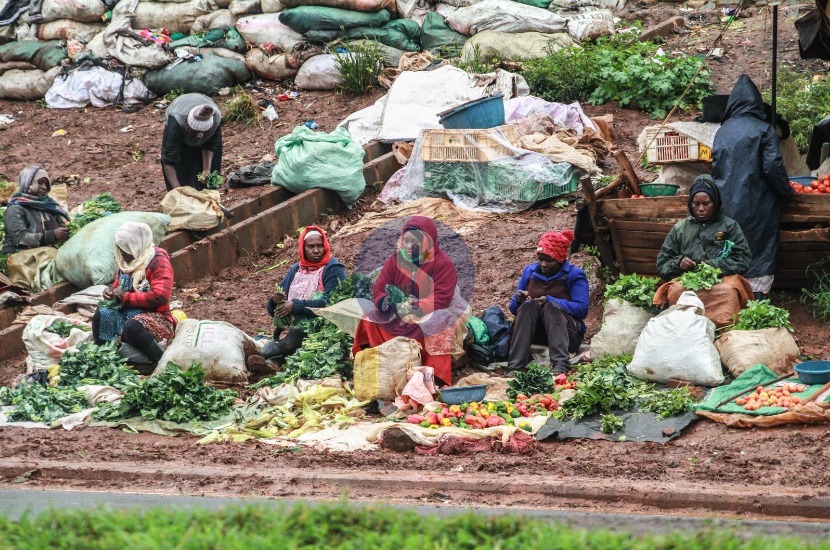 Traders at Kangemi Market pressed on with business, braving the chilly weather on March 24 /ENOS TECHE


![[PHOTOS] The new Ngong –Naivasha Road viaduct](https://cdn.radioafrica.digital/image/2026/06/64d4f771-4432-4aee-ba3c-2f304c4436ec.jpg)










![[PHOTOS] 'Mr Speaker Sir' Gen Z protester in court](https://cdn.radioafrica.digital/image/2026/06/b3e62d8e-25c3-4780-90f9-4eb48b1ce8a7.jpg)