

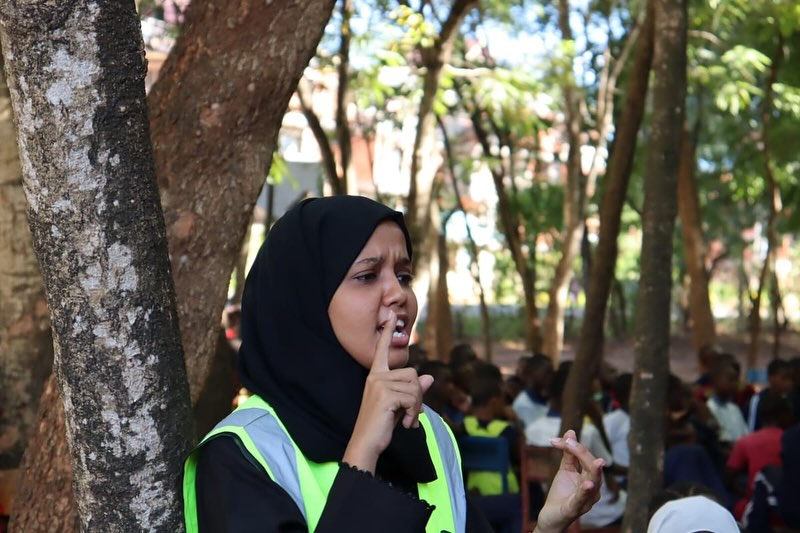
In many vulnerable communities across Kenya, girls continue to face barriers that limit their opportunities — from poverty and early marriages to limited access to technology and digital education.
For Gheida Abdallah, these challenges are deeply personal.
Growing up in Malindi, Kilifi county, Abdallah watched several girls around her drop out of school before completing their education.
“I watched my elder sisters leave school one by one, pulled into early marriage before they could finish,” she recalls.
“When I was in Form Two, my best friend faced the same fate. That moment changed me permanently.”
To her, the problem was larger than individual cases.
“This was not bad luck,” she says. “It was a pattern repeating itself across my community, year after year, girl after girl.”
Those experiences would later inspire her mission to create opportunities for girls through technology and digital empowerment.
Today, through the Girls I-Save Africa (GiSave) initiative in Mombasa, Abdallah is helping girls from vulnerable communities gain access to digital skills, mentorship, and safe learning spaces aimed at preparing them for opportunities in STEM fields.
“The biggest barrier girls face is the digital divide,” she says.
“Many girls are simply not exposed to STEM early enough. Some lack access to computers, stable internet, and even safe learning spaces.”
The initiative began during Abdalla’s time at Matuga Girls High School, where she developed a basic web application prototype designed to connect girls with STEM mentors and online learning resources.
“That experience showed me how powerful technology could be in bridging opportunity gaps, especially for girls who lack guidance and exposure,” she explains.
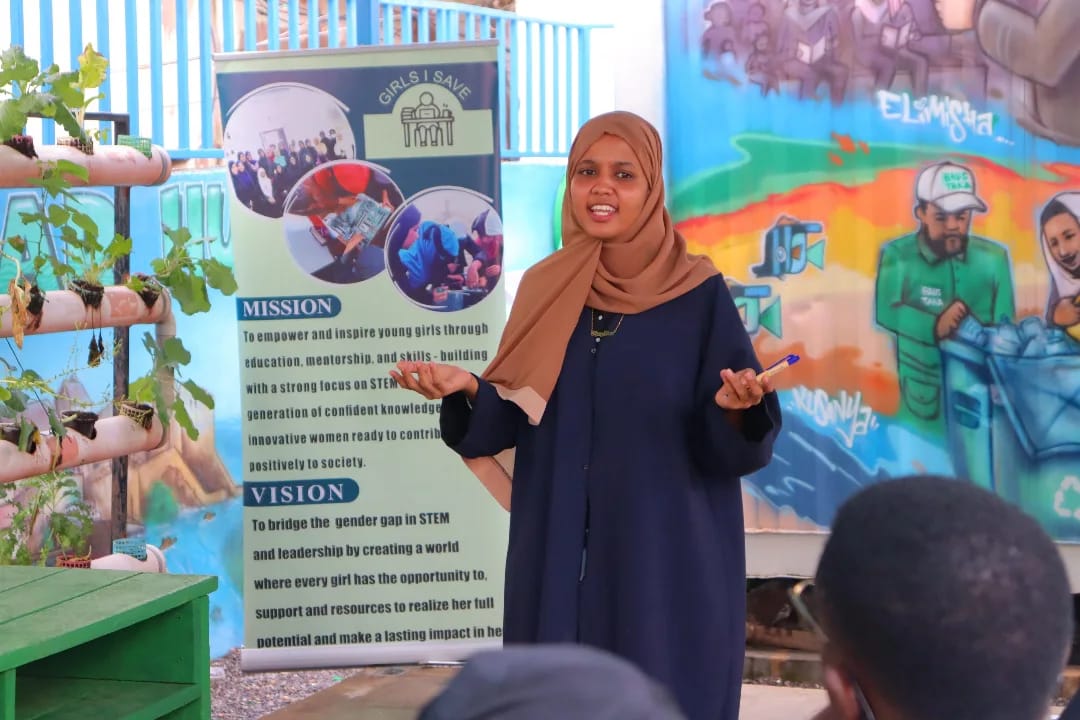
What started as a simple idea has since grown into a structured initiative focused on mentorship, training, and holistic empowerment.
At the GiSave hub, girls are introduced to basic computer literacy before progressing into web design, web development, digital marketing, and design thinking.
The programme also focuses on communication and self-expression, helping participants build confidence in presenting ideas and engaging professionally.
“The goal is not just technical skills. It’s about helping girls believe they can also become creators and leaders in technology,” Abdallah says.
So far, the initiative has directly mentored more than 300 girls and reached over 5,000 students through outreach programmes conducted in more than 20 schools across five counties.
For many beneficiaries, the impact goes beyond learning how to use computers.
Jumma’ah Abdallah Omar says that before joining the programme, she had little exposure to technology and lacked confidence in using digital tools.
“Access to reliable devices and learning resources was also a challenge, which made it difficult for me to fully participate in the digital world,” she says.
“It often made me feel left behind in a fast-growing, technology-driven environment.”
Since joining the programme, Jumma’ah says she has gained practical skills in computer use, internet navigation, and digital applications.
She now helps train and support other students using the knowledge she acquired through the initiative. “One of the biggest changes is confidence,” she says.
“Being able to train other students has helped me believe in my abilities and leadership potential.”
She adds that the training has improved her academic work by helping her conduct research, complete assignments more efficiently, and access online learning resources.
It has also motivated her to pursue opportunities in the technology field. “I now feel more prepared for the job market and more confident about my future,” she says.
Despite the progress, Abdallah says scaling the initiative remains one of the biggest challenges.
Limited funding, inadequate equipment, and lack of enough training spaces continue to affect expansion efforts.
To sustain operations, the organisation currently uses a hybrid model where participants contribute affordable registration or programme fees ranging from Sh500 to Sh1,500, depending on the training programme.
The initiative is also seeking partnerships and sponsorships to support long-term growth. Community support, however, has continued to grow.
“At first, there was hesitation because many people did not fully understand what we were doing,” Gheida says.
“But once parents and teachers started seeing changes in the girls’ confidence, communication skills, and academic direction, the support became stronger.”
Now, Abdallah hopes to expand the initiative beyond Mombasa by establishing similar hubs across different counties.
Her vision is to create a future where girls — regardless of where they come from — have access to digital skills, mentorship, and opportunities to thrive in technology-driven spaces.
“We want girls not just to use technology,” she says, “but to become creators and leaders in the tech space.”

![[PHOTOS] The new Ngong –Naivasha Road viaduct](https://cdn.radioafrica.digital/image/2026/06/64d4f771-4432-4aee-ba3c-2f304c4436ec.jpg)








![[PHOTOS] 'Mr Speaker Sir' Gen Z protester in court](https://cdn.radioafrica.digital/image/2026/06/b3e62d8e-25c3-4780-90f9-4eb48b1ce8a7.jpg)