
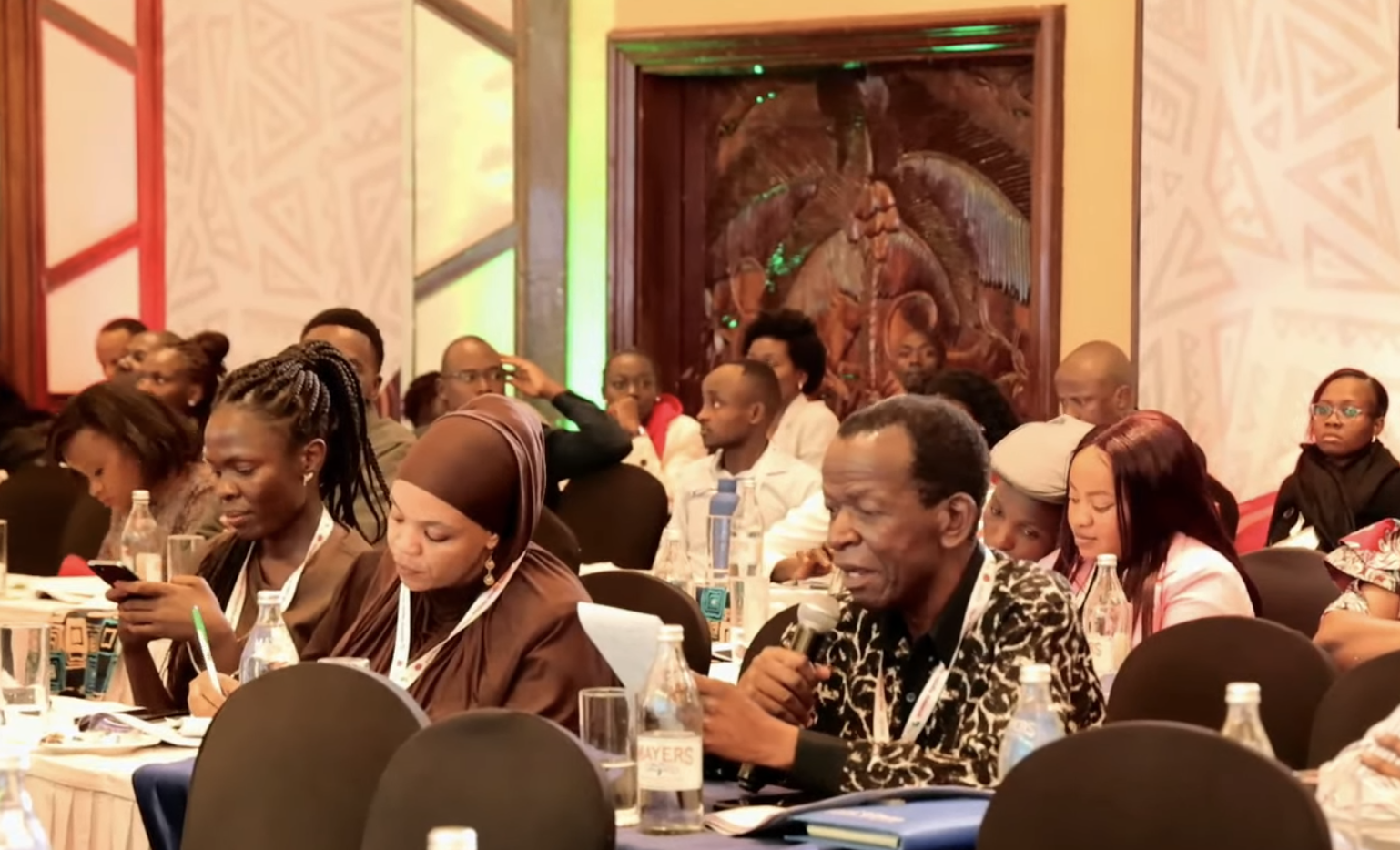
Media sustainability and viability took centre stage at the Annual Pan-African Media Summit 2026 in Nairobi, where delegates warned that the future of journalism depends on stronger institutional support, public trust, and adaptation to artificial intelligence.
Principal Secretary for Broadcasting and Telecommunications Stephen Isaboke reaffirmed Kenya’s commitment to a free and responsible information ecosystem anchored in constitutional safeguards and supported by digital governance reforms, cybersecurity frameworks, and broadcasting regulations.
“Our approach is anchored in the Constitution and supported by progressive broadcasting regulations, cybersecurity frameworks, and digital governance reforms that promote integrity while safeguarding freedom of expression,” he said.
Isaboke said Africa’s digital landscape is expanding rapidly, citing more than 615 million internet users across the continent, mobile penetration nearing 67 per cent, over 408 million social media users, and 98 per cent of internet traffic flowing through mobile devices.
Media Council of Kenya Chief Executive Officer David Omwoyo said the rapid evolution of the media landscape has intensified concerns over trust and accountability in journalism.
“The media ecosystem has evolved rapidly, and the integrity of information is at stake. We are gathered here for accountability; to chart a credible path forward and build trusted information systems,” he said.
Panelists said journalism is increasingly shifting toward verification and fact-checking in the AI era, as artificial intelligence becomes both an enabler of newsroom efficiency and a source of misinformation. They said future newsrooms will rely more heavily on trained professionals capable of distinguishing fact from fiction.
Royal Media Services Group Editorial Director Linus Kaikai said the role of journalism must continually be redefined within changing media environments.
“Do we still serve the public interest, bearing in mind that the definition of public interest is often contested?” he said, adding that the watchdog role remains unevenly interpreted across media systems.
Namibia Media Trust Director and Global Forum for Media Development steering committee member Zoe Titus said there has been progress in media freedom, including the decriminalisation of criminal defamation laws and increased media diversity, but warned that advertising constraints continue to undermine sustainability.
“We cannot talk about supporting independent media if the broader ecosystem itself does not support independent journalism,” she said.
Participants also pointed to uneven regulatory environments across the continent, including opaque media ownership structures in Zimbabwe and instances in Malawi where broadcasters have been shut down during election periods.
They raised concerns over enforcement gaps in access-to-information laws and the growing influence of algorithmic platforms in shaping news consumption.
A recurring theme was that financially strained newsrooms are increasingly unable to consistently produce credible journalism, with delegates concluding that media viability is a governance and political economy issue as much as a technological one.
Director of Governance, Peace and Security at GIZ Kenya Thomas Ansorg said there is no single model for sustainability, noting that digital creators and influencers are now competing directly with traditional media for audiences and advertising revenue.
“There is no one-size-fits-all model,” he said, urging media organisations to rethink financing strategies in a shifting attention economy.
Internews Regional Programme Manager for East and Southern Africa Fatuma Sanbur called for more structured collaboration and low-cost innovation, including the use of AI tools, to support struggling newsrooms facing rising operational costs.
The summit continues with further discussions on artificial intelligence, digital platforms and information integrity.

![[PHOTOS] The new Ngong –Naivasha Road viaduct](https://cdn.radioafrica.digital/image/2026/06/64d4f771-4432-4aee-ba3c-2f304c4436ec.jpg)




![[PHOTOS] 'Mr Speaker Sir' Gen Z protester in court](https://cdn.radioafrica.digital/image/2026/06/b3e62d8e-25c3-4780-90f9-4eb48b1ce8a7.jpg)