“Excuse me, everybody. Hey, hey, hey!”
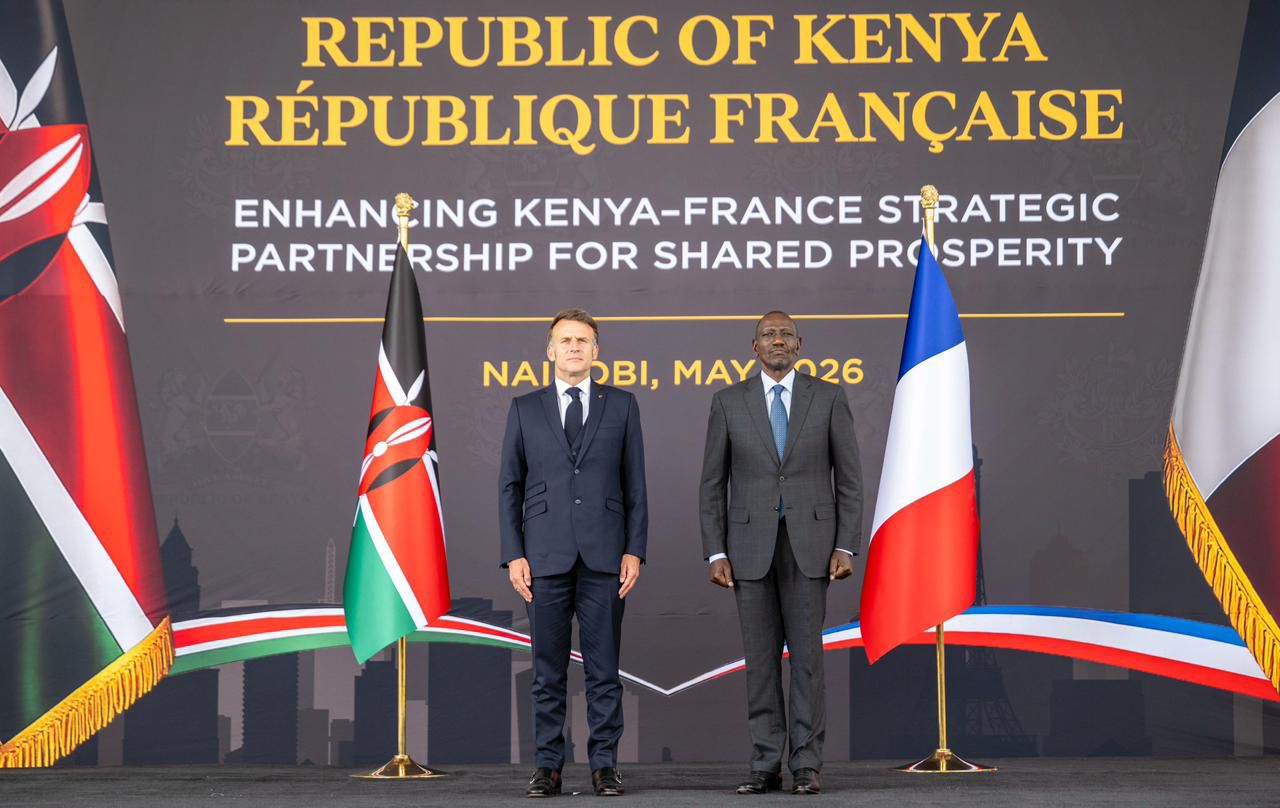
With those words, French President Emmanuel Macron drew attention at the University of Nairobi during his visit to Nairobi for the Africa Forward Summit.
While the visit focused on strengthening ties between France and African countries through discussions on technology, infrastructure and innovation, much of the online conversation centred on a short video clip showing President Macron asking an audience at the University of Nairobi to quiet down as young speakers addressed the gathering.
The moment sparked divided reactions on social media. Some users viewed it as an example of firm leadership and respect for the speakers on stage, while others focused on the tone of the exchange and the broader symbolism of a visiting world leader addressing an African audience in that manner.
The discussion was further amplified online, where fast-moving and emotionally driven reactions often circulate widely across platforms.
Beyond the online debate, the incident also underscored how political moments are increasingly consumed through short video clips and reposted content, which can shape public perception before audiences engage with the full context of an event.
For many online users, the clip became the primary lens through which the interaction was understood, despite the broader agenda of the summit.
The interaction also drew attention in part because it took place at a time when France’s relationship with parts of Africa continues to evolve politically and diplomatically. The visit itself focused on discussions around technology, culture, innovation and economic partnerships between Kenya and France.
However, as clips from the summit circulated online, public attention increasingly shifted to the brief exchange, highlighting how viral moments can sometimes overshadow wider policy discussions in the digital space.
Mohamed Maalim, a lawyer with a background in political science, says the rapid spread of the clip reflects the growing influence of short-form digital content in shaping political discourse.
“With the rise of technology and short-form content like TikTok reels, people are increasingly drawn to short clips that capture emotionally charged moments quickly,” he says.
“These clips often spread faster because they immediately grab public attention.”
According to Mohamed, audiences today focus not only on what political leaders say, but also on how they present themselves in public.
“Body language and gestures are also forms of communication,” he says.
“When leaders speak publicly, people do not only focus on the words being said, but also on tone, facial expressions and how the message is delivered.”
He also notes that once political moments begin circulating online, context can easily be overtaken by reaction.
“People often react to a short clip without watching the full discussion or understanding the environment in which it happened,” he says.
Precious Agesa, a university student, says her initial reaction to the clip changed after she watched the full exchange.
“At first, before I watched the whole clip, I thought it was disrespectful because he stood up and interrupted the speaker,” she says.
“But after listening to what he was saying, I understood that he wanted the audience to quiet down so people on stage could be heard.”
After reviewing the full interaction, Precious says she interpreted the moment differently.
“I saw it as strong leadership,” she says.
She also believes online audiences are often influenced by whichever opinion gains traction first on social media.
“Once something becomes a trend online, many people follow the most popular opinion without forming their own views,” Precious says.
Bayern Madegwa, however, says his initial reaction to the viral clip was confusion.
“I was wondering why he was interrupting the speaker and walking to the centre of the stage,” he says.
“At first I thought maybe something had gone wrong.”
However, after watching the interaction more closely, Bayern says he interpreted President Macron’s actions as an attempt to restore order rather than disrupt the event.
“He was trying to create order,” he says.
“Even though it was not his country, he still carried that authority as a leader.”
According to Bayern, the framing of political moments online can strongly influence audience interpretation.
“Someone can post the clip with a negative caption, and viewers will immediately see it negatively,” he says.
“Another person can frame it positively, and people will interpret it differently.”
He adds that short-form content has become a major way younger audiences encounter political discussions online.
“Most young people are constantly scrolling on their phones,” Bayern says.
“Sometimes political content appears while they are online, and it ends up sparking interest or reactions even when they were not actively looking for news.”
While some viewers defended President Macron’s actions, Maimuna Hassan says her initial reaction to the clip was shaped by the fact that he was visiting another country.
“I felt he could have approached the audience differently,” she says.
At the same time, Maimuna believes social media has significantly changed how political moments are remembered and discussed.
“Before social media, something could happen, and people would move on quickly,” she says.
“Now people keep sharing, reposting and discussing moments online long after they happen.”
As political engagement continues to shift toward digital platforms, viral moments are increasingly shaping how audiences understand leadership, public conduct and international events.

![[PHOTOS] The new Ngong –Naivasha Road viaduct](https://cdn.radioafrica.digital/image/2026/06/64d4f771-4432-4aee-ba3c-2f304c4436ec.jpg)





![[PHOTOS] 'Mr Speaker Sir' Gen Z protester in court](https://cdn.radioafrica.digital/image/2026/06/b3e62d8e-25c3-4780-90f9-4eb48b1ce8a7.jpg)