There are two kinds of people when it comes to bathing: those who treat the shower as a sacred ritual and those who stand outside it negotiating with themselves.
Victor Budi belongs to the latter. Asked if he likes bathing, he is direct.
"No," he says flatly. And when asked why, he responds, "Because it's something I have to do without wanting to. Like it's a must."
On the opposite end is Esther Ngege, who approaches hygiene with enthusiasm and discipline.
"A girl should remain fresh and smelling nice always," she says. And for her, bathing is not limited to twice a day. "If I can, I bathe thrice. That's when I have nothing to do."
Between Victor and Esther lies a wider, more relatable reality for many Kenyans, one that goes beyond how often people shower and into what they use when they do. Beneath the routine is a growing conversation about preference, comfort, and skin sensitivity, in which even ordinary soap choices carry personal meaning.
Samwel Ng'ang'a offers a middle-ground perspective.
"It depends with my moods," he says when asked if he likes bathing.
Most days, he bathes once in the morning, though circumstances sometimes change that routine.
"I can bathe twice if rained on or something has happened."
His last bath was the previous morning. When he showers, he uses a scented soap. The product, he says, is a matter of preference.
"It is personal preference," he says.
"It makes me feel confident."
For him, scented soap carries more than fragrance. It is tied to confidence. He is clear that he does not prefer traditional soap.
"Traditional soaps are for clothes," he says with a laugh.
"Right now, I am fully in love with scented soap."
However, medical experts caution that personal preference does not always align with what is best for every skin type.
Dr Samson Kigera, who operates a clinic in Kikuyu, explains that different products affect skin differently.
"Shower gels can be gentler and more moisturising, but the added fragrances or chemicals may irritate sensitive skin."
Another user, Rebecca Kanaga, has developed a routine based on experience and trial. She bathes twice daily, in the morning and evening, to maintain comfort throughout the day.
But her bathroom shelf reflects compromise rather than uniformity.
"I use all of them," she says.
Her facial skin does not tolerate scented products, so she uses a traditional bar soap for her face. For the rest of her body, she alternates between a different bar soap and a shower gel.
"I love bubbles. They all give me bubbles. But most importantly, coming out of the bathroom smelling that nice is what makes me even bathe twice."
Her approach is also shaped by shared household use.
"When you have a sister, you'll definitely share your things. So yes, my sisters."
Dr Kigera notes that such mixed routines are common but should be approached carefully, especially for people with sensitive skin.
"Some fragrances or chemicals can cause irritation or allergies, especially in sensitive skin. That is why one should be keen on what they pick, and if they know their skin is sensitive, they should avoid such."
He also points out that misuse of products can worsen skin conditions.
"Over-washing, using hot water, scrubbing hard, or using the same soap or gel for face and body can all irritate skin."
Brian Chegema presents a more pragmatic approach.
"Yes and no," he says when asked if he enjoys bathing.
"Yes, because it makes me feel fresh. No, because it's tiresome."
He bathes once in the morning and uses a bar soap together with a shower gel. His choice, he says, is based on scent rather than other considerations.
He does not share personal toiletries.
"I am selfish with my personal things."
Asked what he would recommend, he is straightforward.
"For the shower gel, I'd recommend a shower gel. It's worth it."
Victor, however, takes a simpler view. He bathes once in the evening or after a long day, depending on fatigue.
His last bath was the previous night. He does not prioritise brand choice.
"I am not really invested," he says. "I buy the cheaper soap. Anyway, because they don't really matter as long as you are clean."
Dr Kigera advises that simplicity can also be effective when guided by skin needs.
"Short, lukewarm showers with any gentle cleanser are enough. The key is consistency, not the brand."
At the household level, another voice adds a generational perspective. A mother who prefers to be identified simply as a female parent bathes twice a day, morning and evening. But unlike her daughters, who prefer scented products, she remains loyal to traditional soap.
Not because she resists change, but because of concern over skin health.
"Just to avoid complications," she says.
"I see my daughters using these scented soaps and shower gels, and I wonder: do they really know how healthy it is to use soaps without any scent?
"They call me analogue. But that's how I was raised."
She believes traditional soap remains the safer option, not just the cheaper or older one.
Dr Kigera supports a careful, individualised approach when choosing bathing products.
"Pick gentle, pH-balanced products suited to your skin type. Avoid strong fragrances if your skin is sensitive."
He adds further guidance on selection.
"One should be careful and research more on it. They should pick gentle, pH-balanced products suited to their skin type and avoid strong fragrances if their skin is sensitive. Mostly, ladies should be keen on which shower gel or scented soap they use because they are more sensitive."
In the end, he says, the decision is less about branding and more about understanding individual skin needs.
The contrast between different bathing products reflects more than personal preference. It highlights varying approaches to hygiene, comfort and skin care among Kenyans.
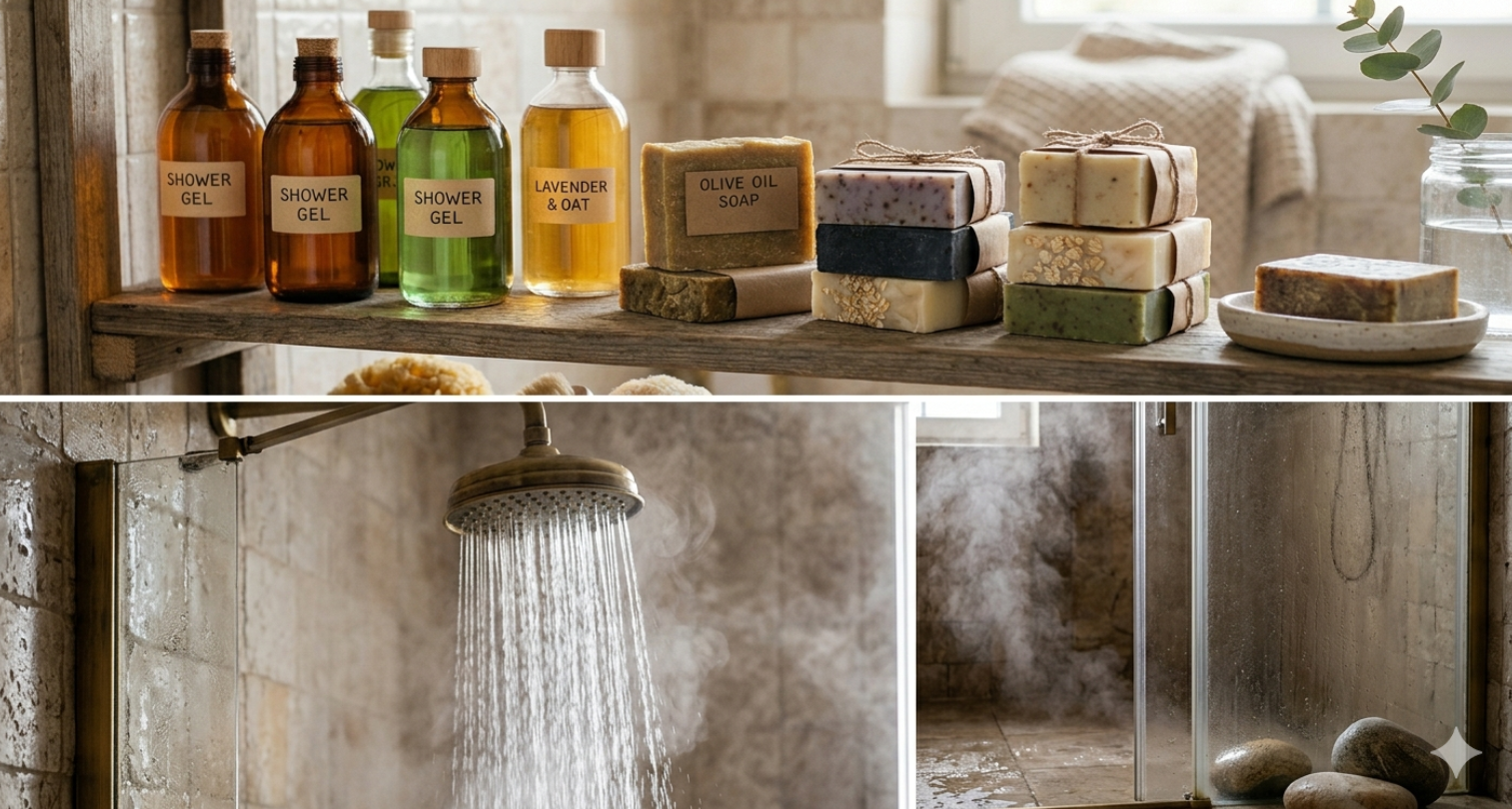
Scented products continue to promise confidence and freshness, while shower gels emphasise foam and experience. Yet traditional soap remains a constant presence, often chosen for its simplicity and perceived gentleness.
As Dr Kigera notes, healthy skin depends less on fragrance or packaging and more on informed choices suited to individual needs.




![[PHOTOS] The new Ngong –Naivasha Road viaduct](https://cdn.radioafrica.digital/image/2026/06/64d4f771-4432-4aee-ba3c-2f304c4436ec.jpg)











![[PHOTOS] 'Mr Speaker Sir' Gen Z protester in court](https://cdn.radioafrica.digital/image/2026/06/b3e62d8e-25c3-4780-90f9-4eb48b1ce8a7.jpg)