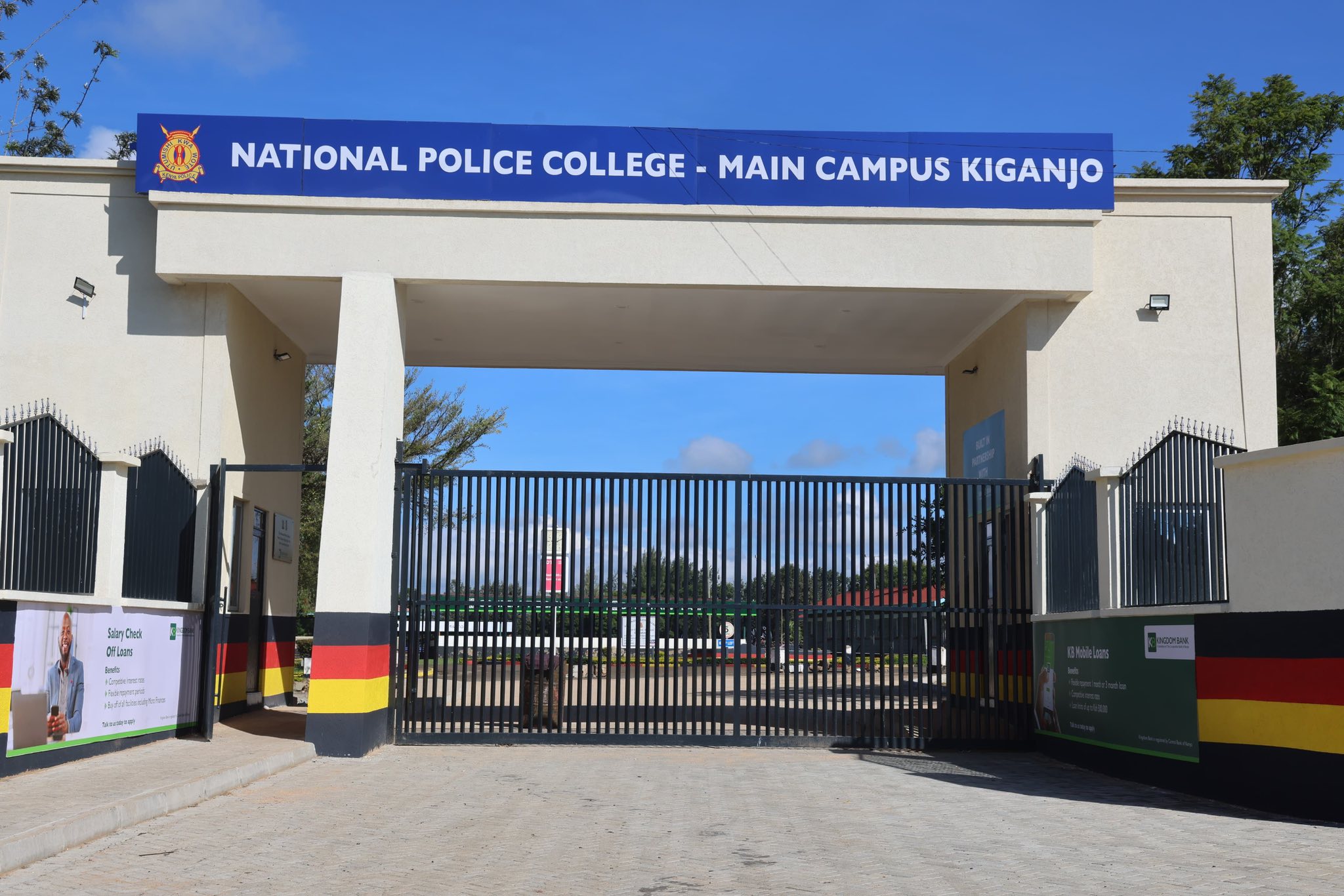
 National Police College-Maina Campus Kiganjo./HANDOUT
The government has announced plans to elevate the Kiganjo Police Training College in Nyeri into a fully-fledged police university as part of ongoing efforts to reform and modernise training within the National Police Service.
Interior Cabinet Secretary Kipchumba Murkomen said the move is aimed at improving the professional capacity of police officers by creating a specialised institution capable of offering university-level education alongside advanced law enforcement training.
According to Murkomen, the current policing environment requires officers with stronger academic grounding, specialised investigative skills, and a deeper understanding of modern security challenges.
“We think it is now time that we upgrade this institution from just a mere training college to become a police university,” said Murkomen during a visit to the college.
He added that the proposed institution would allow police officers to pursue degree programmes while receiving professional policing training within the same institution.
“So that police officers can have an institution where largely we are training them up to the university level to get their degree from this institution,” he stated.
The CS said the government also intends to transform Kiganjo into a regional centre of excellence for police education and collaboration.
He explained that the institution is expected to support partnerships with police training academies across East Africa, Africa, and beyond.
“But also it shall be a resource centre for other police officers in the region from other policing services in East Africa, Africa and beyond,” Murkomen said.
He noted that the university model would open opportunities for international exchange programmes and joint training initiatives aimed at exposing Kenyan officers to global policing standards and best practices.
“Through this institution we can put in place better exchange programmes with other policing institutions globally so that we continue training our police officers to be the best in the world,” he added.
At the same time, Murkomen revealed that the government is reviewing the police training curriculum to align it with emerging trends in crime and modern policing demands.
The revised programme is expected to place greater focus on human rights, constitutional law, investigations, forensic studies, and other specialised areas critical to modern law enforcement.
The CS also directed the Inspector General of Police, Douglas Kanja, to expedite the completion of the National Police Service Training Policy, which will guide reforms in police education and training across the country.
This, he said, should be ready ahead of the passing out parade of the current recruits later this year.
“I am hoping by the time we come here with President William Ruto for the passing-out parade, we should be able to have launched a new Training Policy Strategy,” said Murkomen.
He said the policy would incorporate proposals and concerns raised by wananchi during the Jukwaa la Usalama public engagements held across the country.
The planned elevation of Kiganjo is expected to significantly reshape police training in Kenya while positioning the country as a key regional hub for professional police education.
![[PHOTOS] The new Ngong –Naivasha Road viaduct](https://cdn.radioafrica.digital/image/2026/06/64d4f771-4432-4aee-ba3c-2f304c4436ec.jpg)




![[PHOTOS] 'Mr Speaker Sir' Gen Z protester in court](https://cdn.radioafrica.digital/image/2026/06/b3e62d8e-25c3-4780-90f9-4eb48b1ce8a7.jpg)